
Tag: Chinese Painting
-

A Conversation with a Skull
In this post, I share one of my favorite Daoist stories: Zhuangzi’s “The Death’s-Head.” It offers a clear, direct perspective on life, death, and the burdens we carry. To accompany the text, I included several of my own skull paintings that reflect my thoughts on form, emptiness, and the natural balance of yin and yang.
-
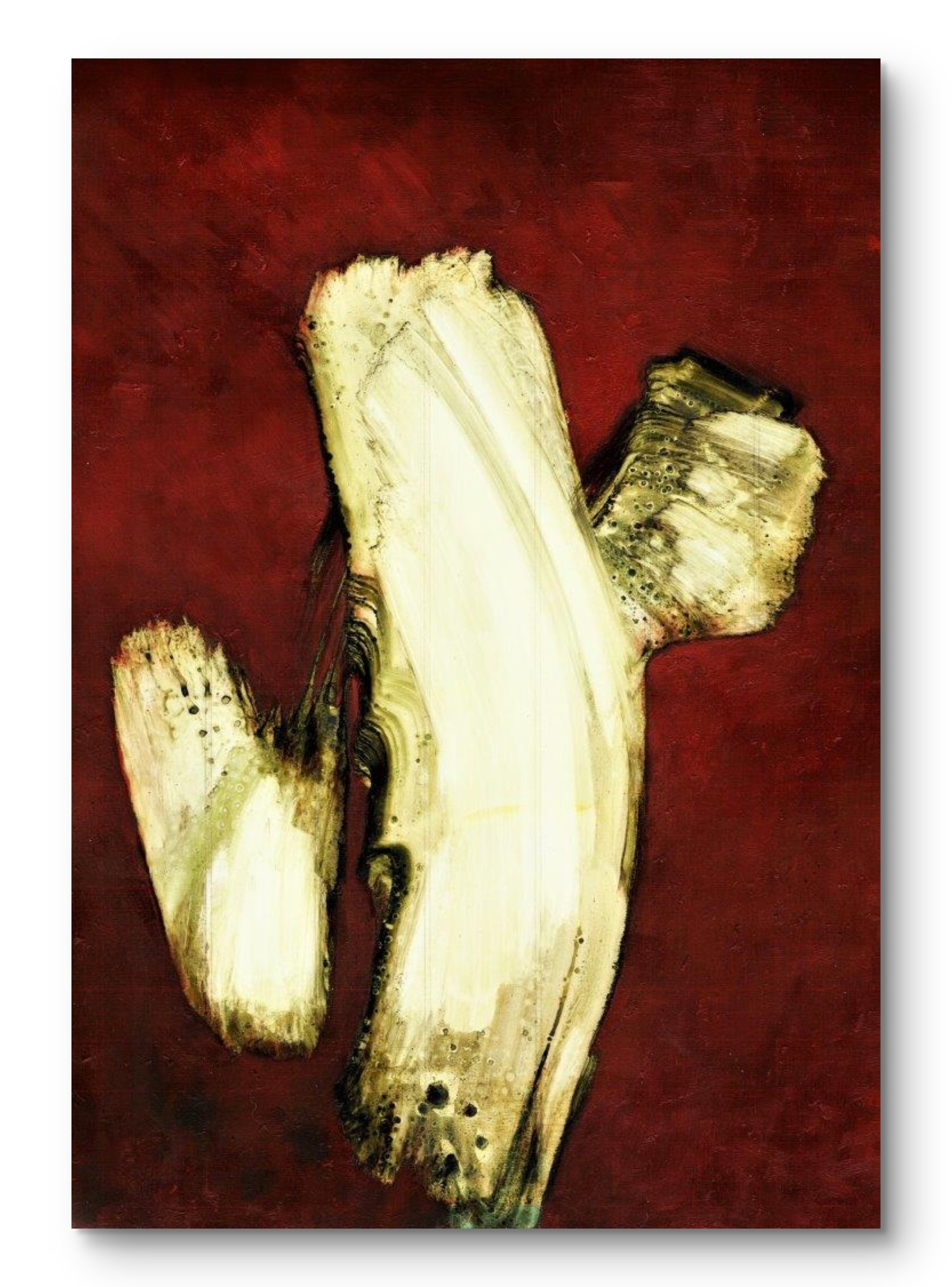
When the World Shatters
Recent paintings, unfinished works and studies accompany my reflections on war, lost trust and environmental destruction. When the World Shatters explores how fragmented forms and expressive brushwork can echo both global upheaval and the inner distress of the individual, while leaving room for renewal.
-

Dot and Emptiness: The Essence of Chinese Art
A lecture on the dot and emptiness in Chinese painting — how Daoist and Zen principles turn a single brushstroke into a universe, illustrated through Liang Kai’s “Li Bai Strolling.”
-
Don’t let the Old Man in
Don’t let the old man in is more than just a song title; it is a directive for maintaining an open spirit against bitterness. This article explores that mindset by contrasting striking political imagery with the artistic independence of my 2025 Yearbook, proving that staying young is a matter of attitude, not age.
-
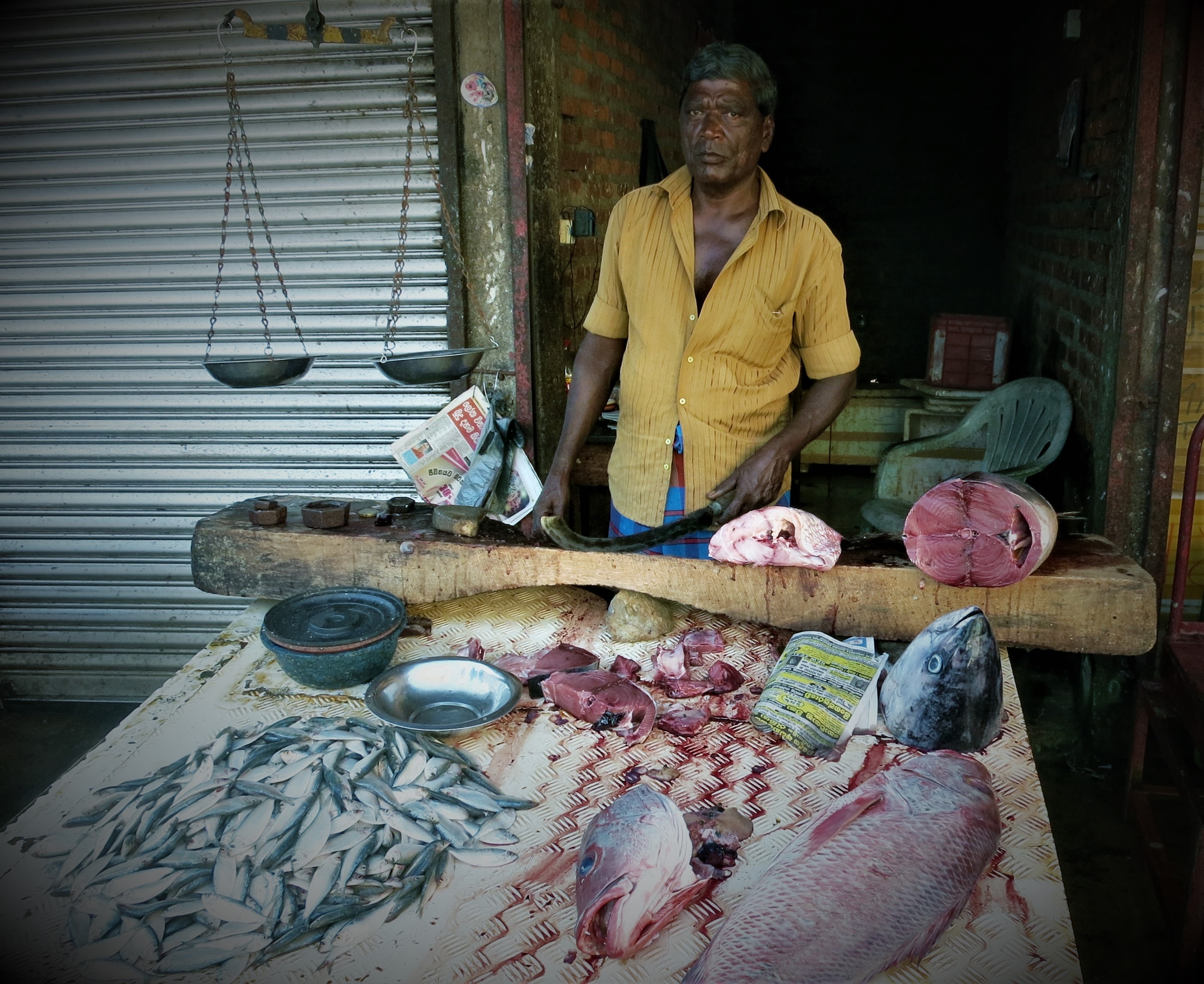
Dao and Zen again: Applying Eastern Philosophy to Contemporary Ink Painting
Tao and Zen, along with minimalism, became my focus during a forced pause due to illness. This short article shares how fever dreams led to abstract works that explore the tension between Yin and Yang—an attempt to artistically grasp our world, which has been thrown off balance.
-
Terra Dystopia
Terra Dystopia, a new series of artworks, serves as the starting point for an essay on the core characteristics of a dystopian society, questioning how many of these once-fictional traits have become our reality.
-
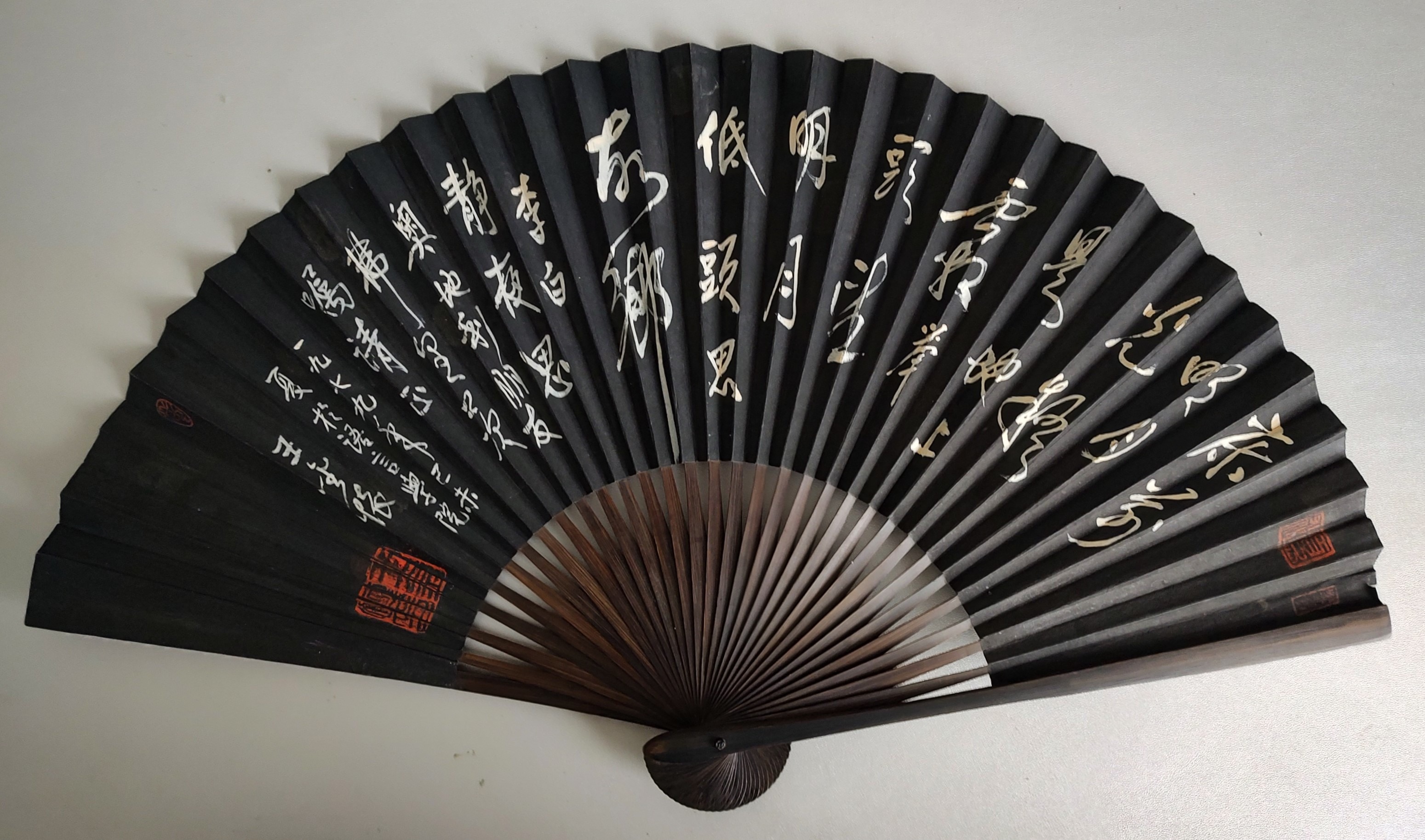
The Abundance of Modesty
Delving into Daoist philosophy and the pictographic wisdom of Chinese calligraphy, this article unpacks the ancient proverb that “Modesty Brings Abundance” (謙受益). Grounding this profound concept in personal experiences, the author reflects on how the humility of an “empty vessel” allows one to receive a true overflow of friendship, knowledge, and spiritual wealth.
-
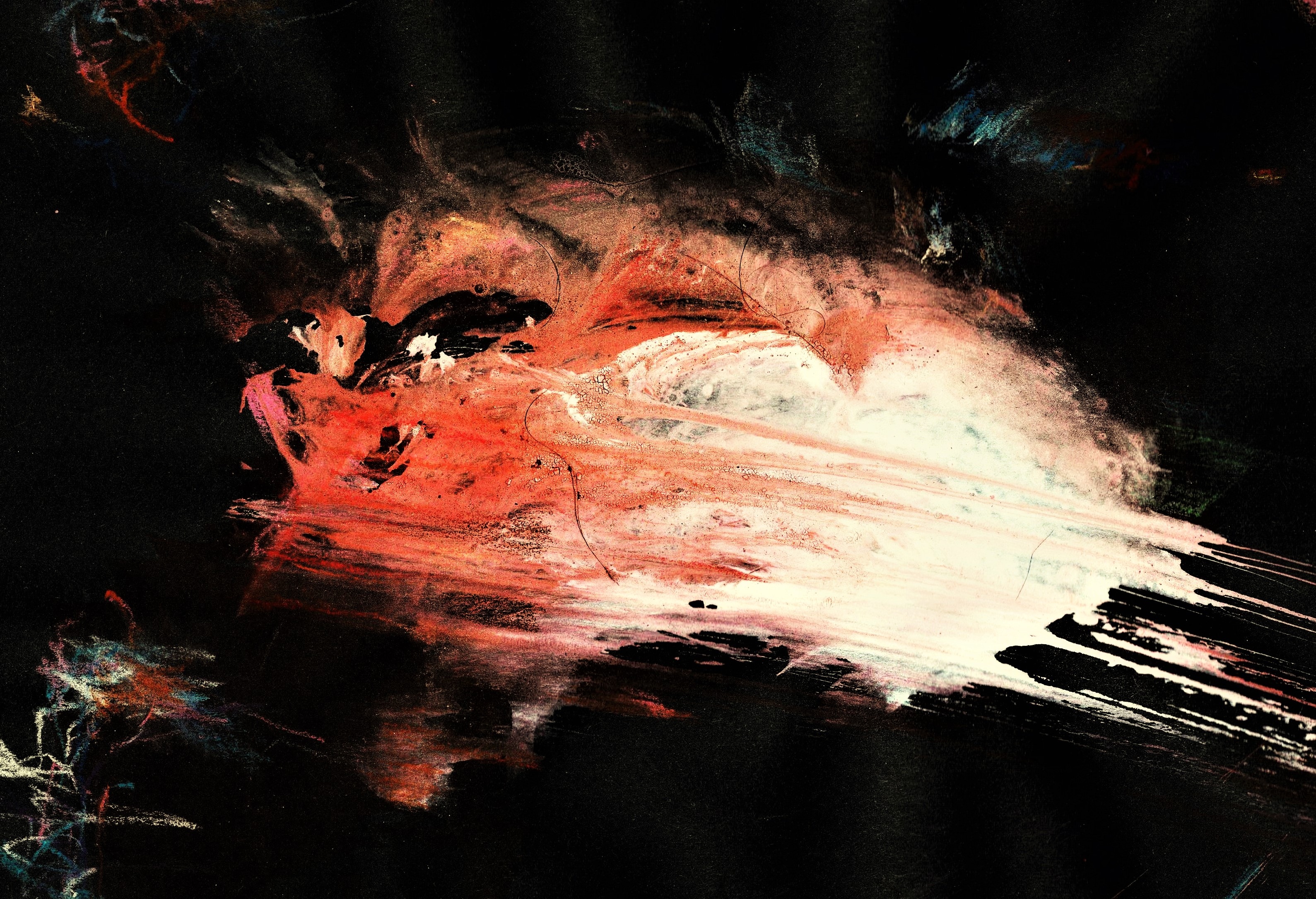
Cracks in the Silence
“Cracks in the silence” is about our fractured times and the eroding foundation of global rules and humanity. I initially wanted to write a political article about this rising pressure and fading reason. But I discarded the idea—those who would read it already know how the game is played. In this post, I reflect on…
-

State of the Art 2025
State of the Art 2025 is my contribution this year to an ongoing series of “self-portraits.” For years, these pieces have documented my creative journey, reflecting the current status of my work.
-

Spring Potpourri
Spring potpourri. Embrace spring! My latest post shares moments of peace found in nature’s embrace, as well as delicious seasonal delights.
-
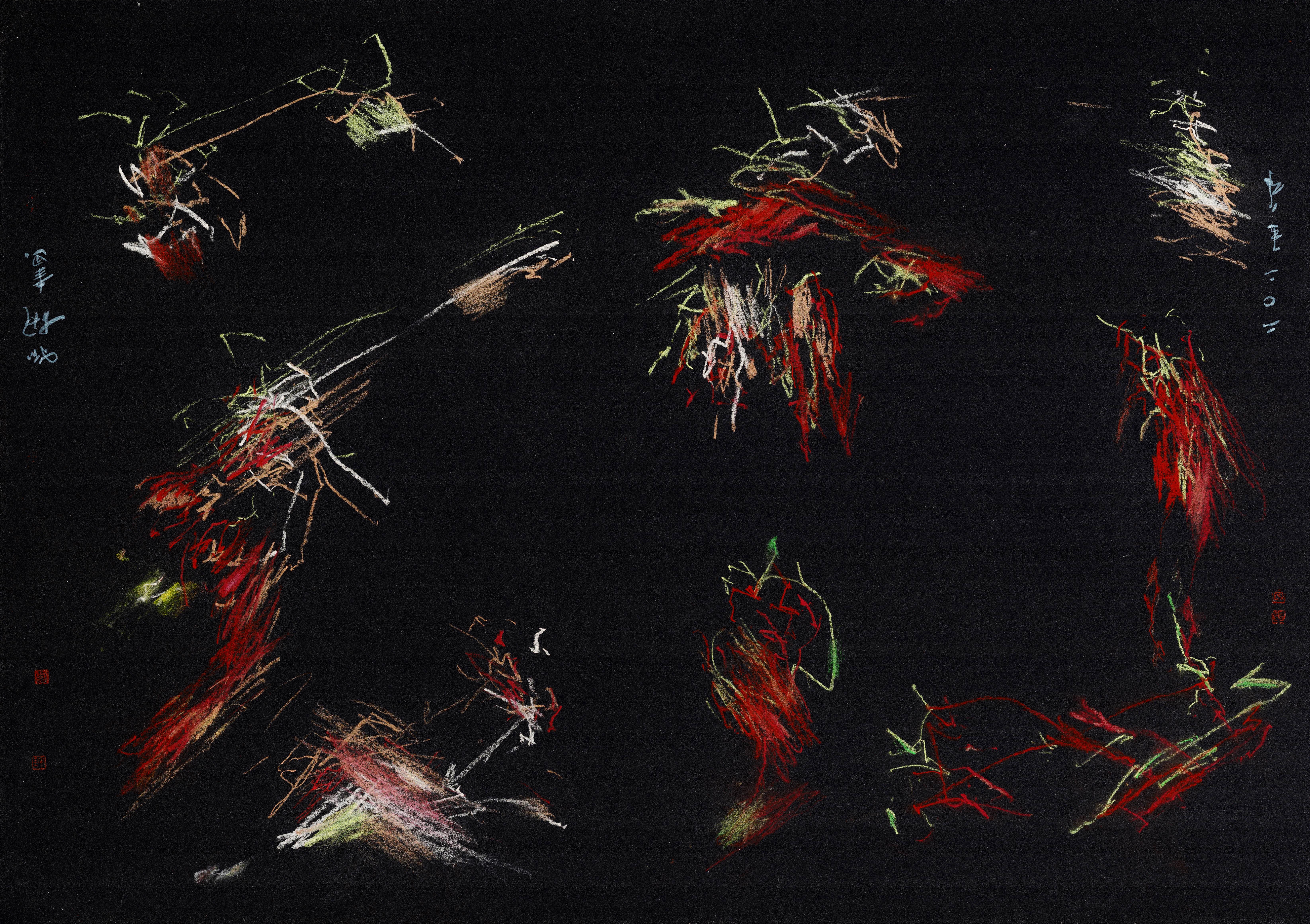
Nothingness in Color
Nothingness in Color continues the thought experiment that began with the journey to the Zen master—evolving beyond monochrome, embracing color, and preserving the essence of minimalism
-
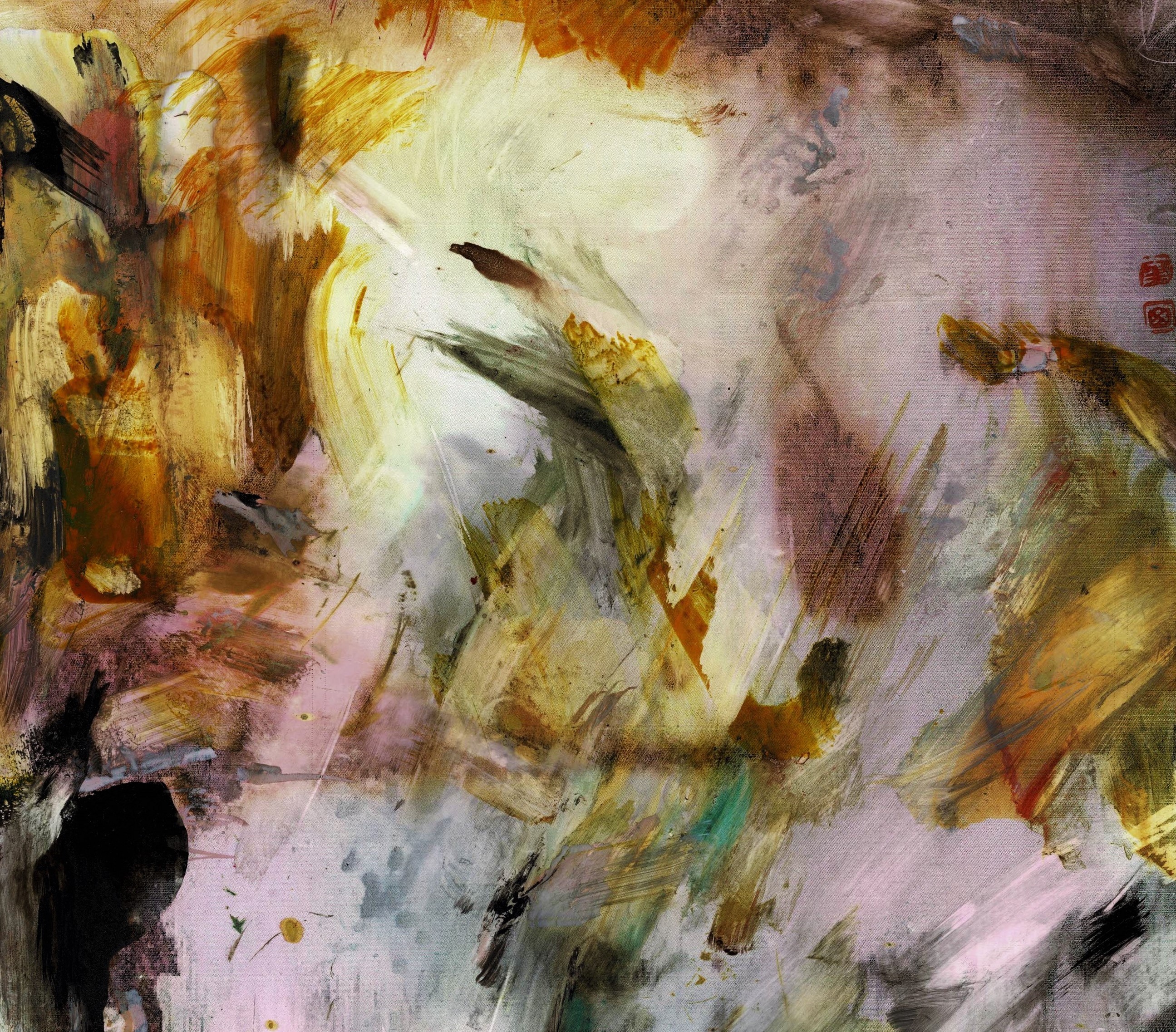
Goodbye to the Winter
In traditional Chinese painting, the unpainted white space is often considered more important than the black ink. In this post, I challenge this balance of opposites by painting on black paper, shifting the focus so the unpainted black areas demand special attention. I share three new abstract works that explore the journey from winter’s darkness…
-
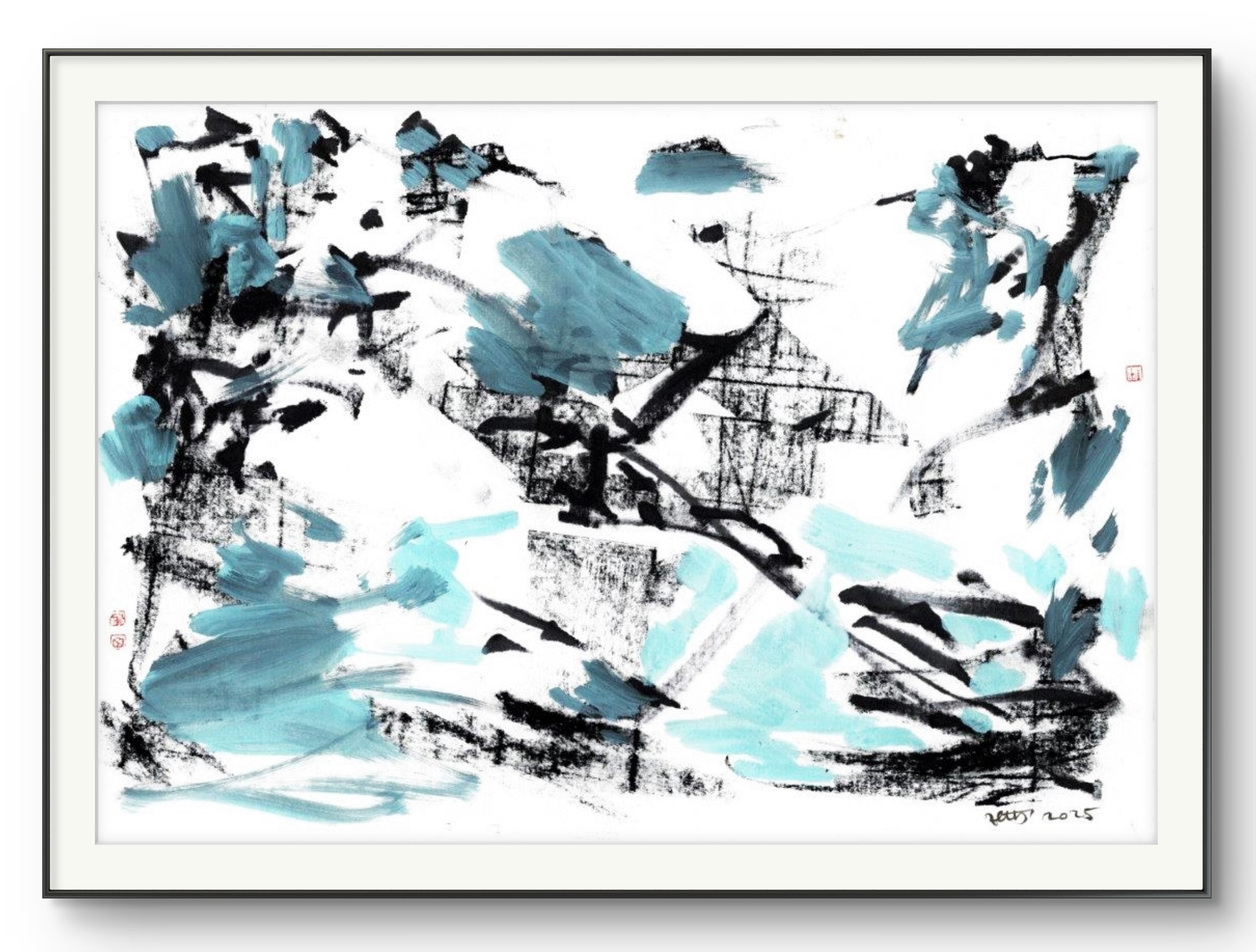
Depression: A Journey Through the Long Winter.
A long, seemingly endless winter is finally behind me. I tried to channel this extended dark period into my art, looking deep within myself. In this post, I share these new works. They are not a collection of horrors, but rather a creative passage through the cold and darkness before the promise of spring brings…
-
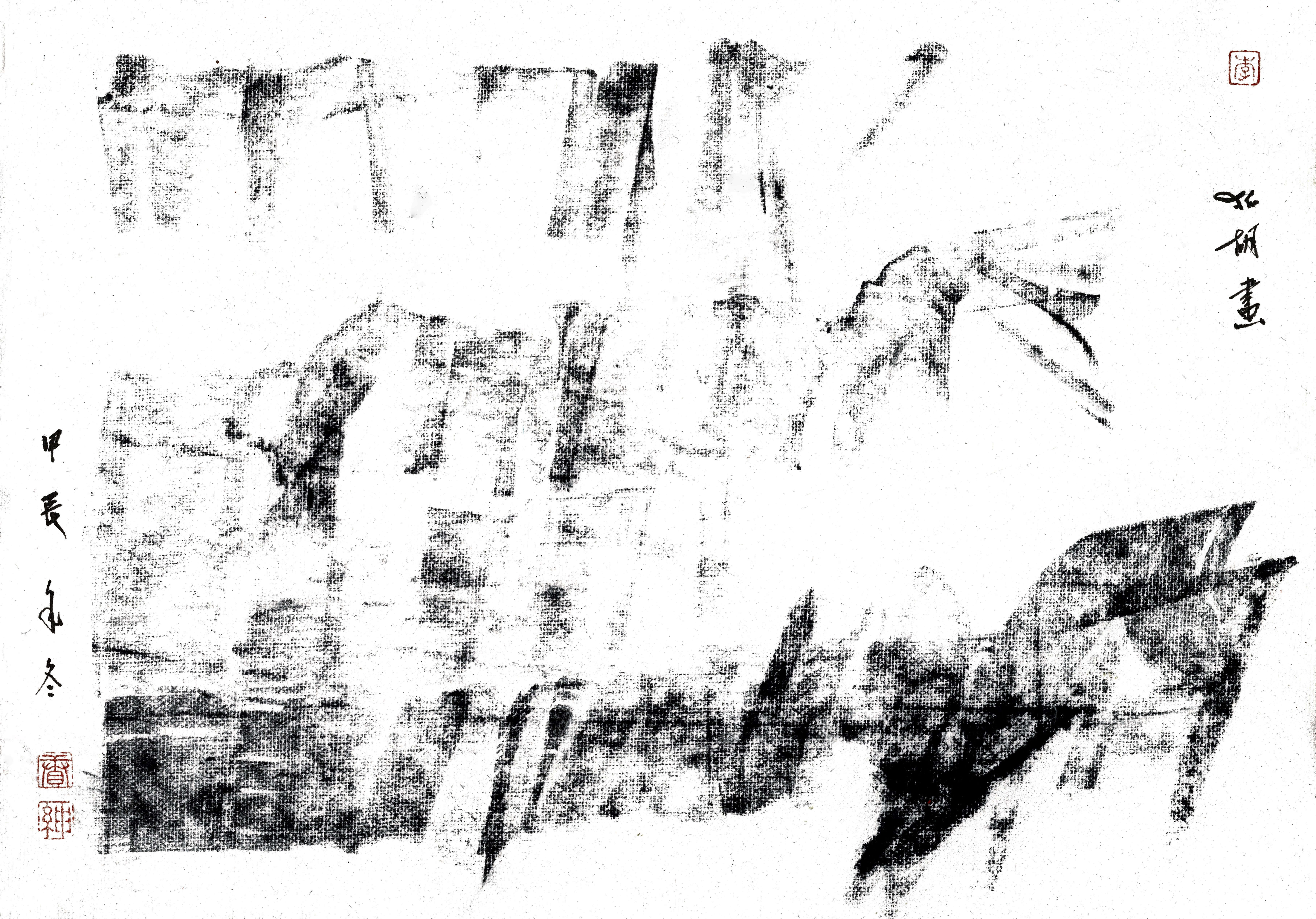
Journey to the Zen Master
In the second part of our journey to the Zen Master, I reflect on what originally sparked this project: my past experiences traveling on the Trans-Siberian Railway. I share an unexpected photo that connects to part one and explain why I discarded my initial concept of depicting a child’s journey. Instead, as the series progresses,…
-
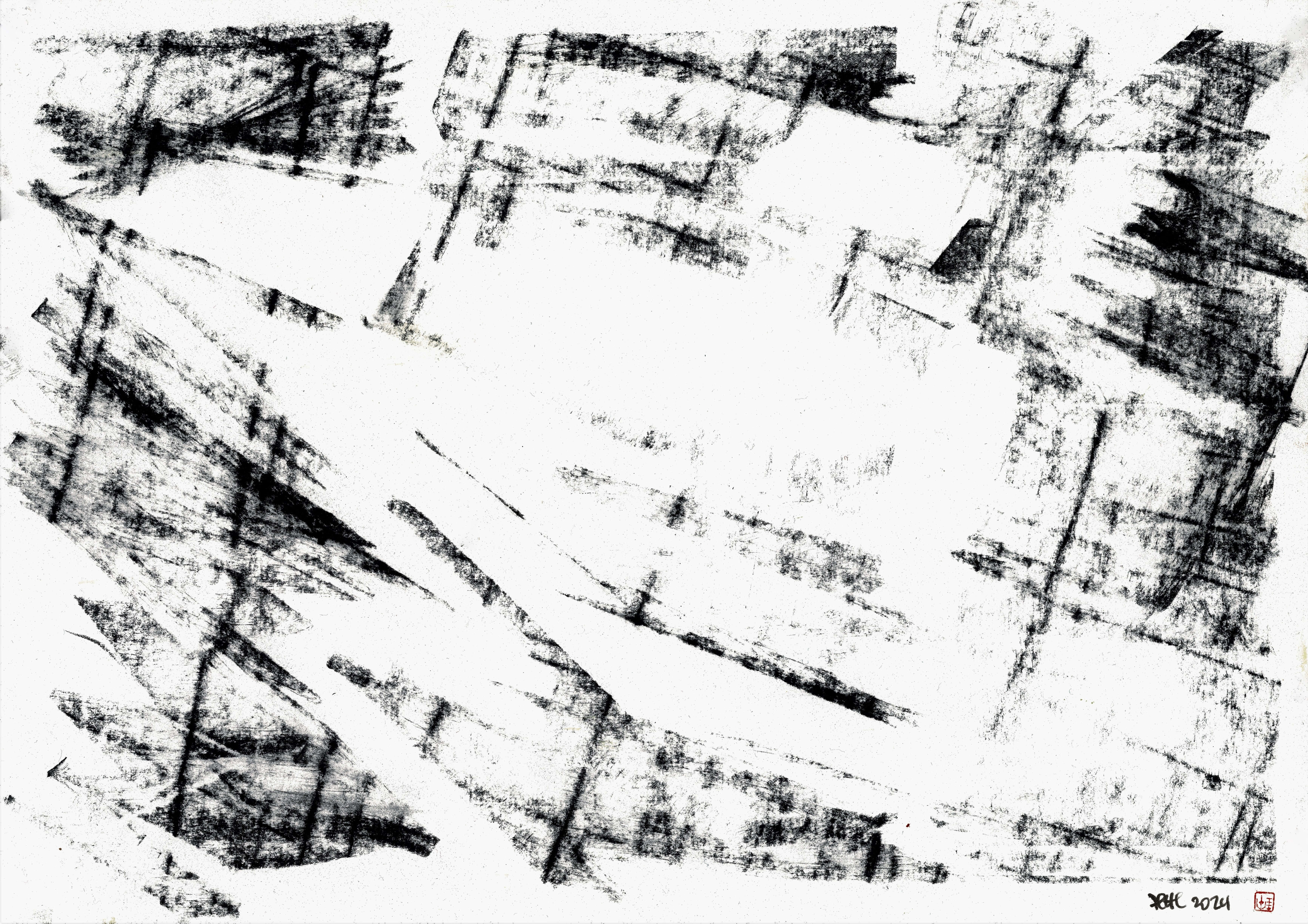
The Journey to the Zen Master
In the first part of our journey to the Zen Master, I reflect on my five-decade philosophical connection to Zen and Daoism. Since I do not have a physical master, this journey is purely a mental exercise. In this series, I attempt to capture an abstract experience through my artwork, highlighting the essential balance of…
-
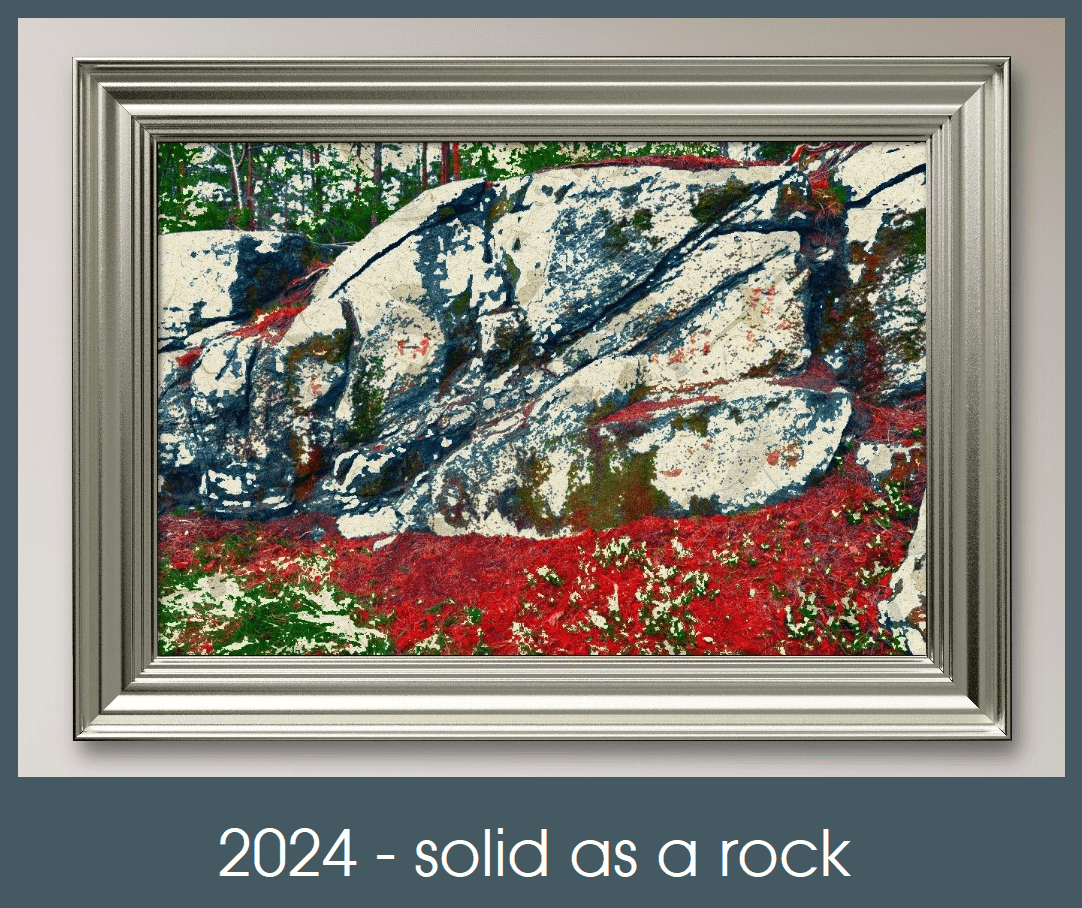
The Dao of Annual Planning in 2024
A look at annual artistic planning and how creative priorities evolve over time. The article reflects on long‑term projects, shifting focus, the balance between structure and intuition, and the ongoing process of aligning artistic goals with personal development.
-
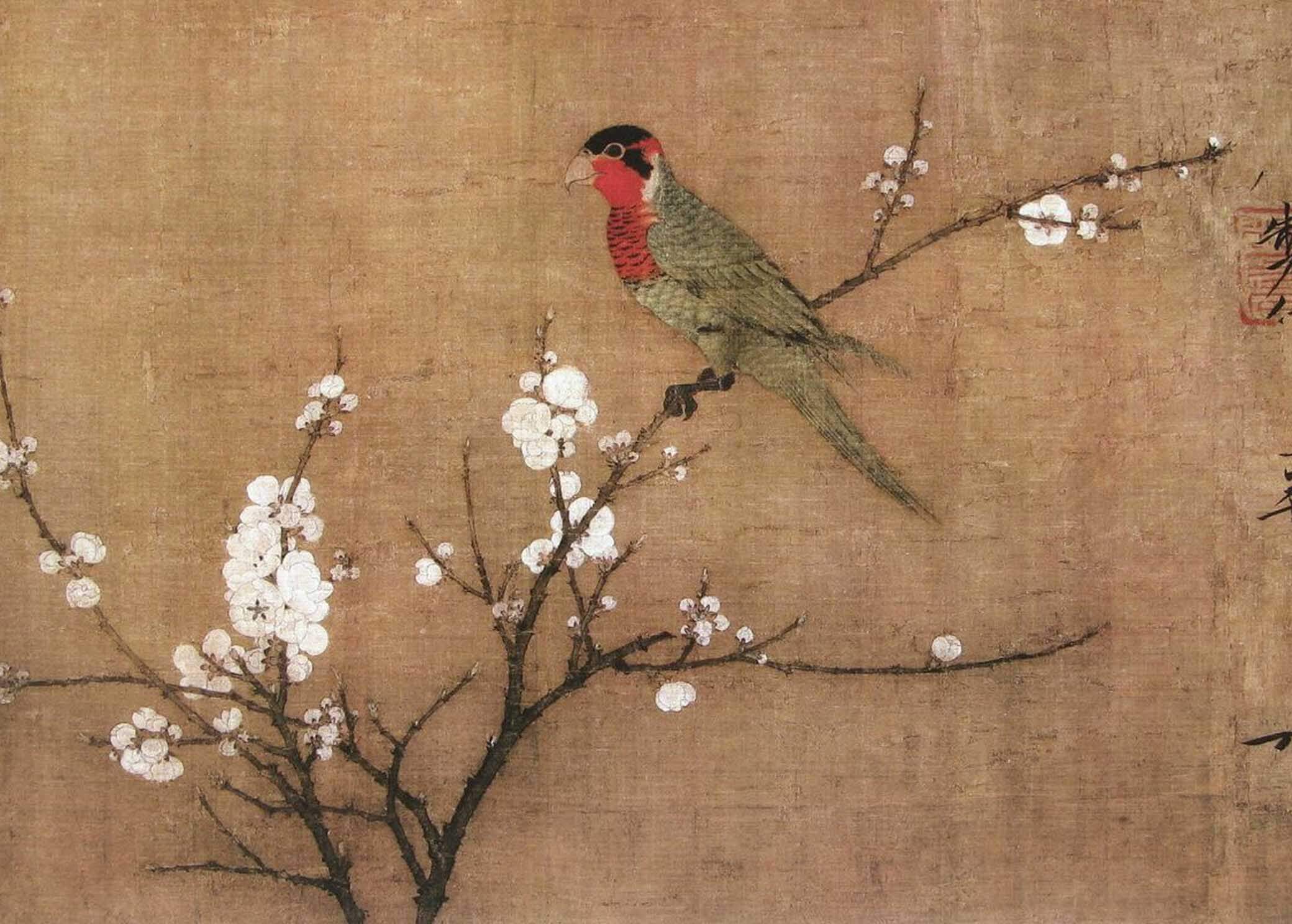
Emperor Huizong: When Rulers Still Loved Art
A reflection on Emperor Hui Zong’s unique artistic vision, his elegant brushwork, Daoist‑inspired aesthetics and the refined cultural atmosphere of his court. The article explores how his sensitivity, poetry and innovation shaped Chinese art and continue to resonate today.
-
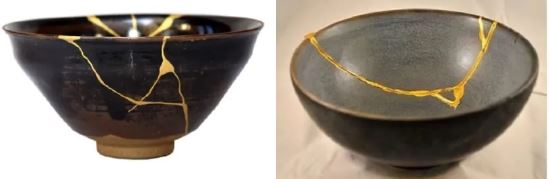
Wabi Sabi and the Aesthetics of Imperfection
In this article, I share my personal approach to Wabi Sabi, a philosophy deeply rooted in Zen Buddhism and Daoism. Going beyond the well-known art of repairing broken pottery, I explore the natural balance of perfection and imperfection through my own recent paintings.
-

Theme and Variations
In the series “Theme and Variations about a Blossom in Autumn,” the delicate image of a fading blossom takes center stage, offering an allusion to the graceful aging of a young lady.
-
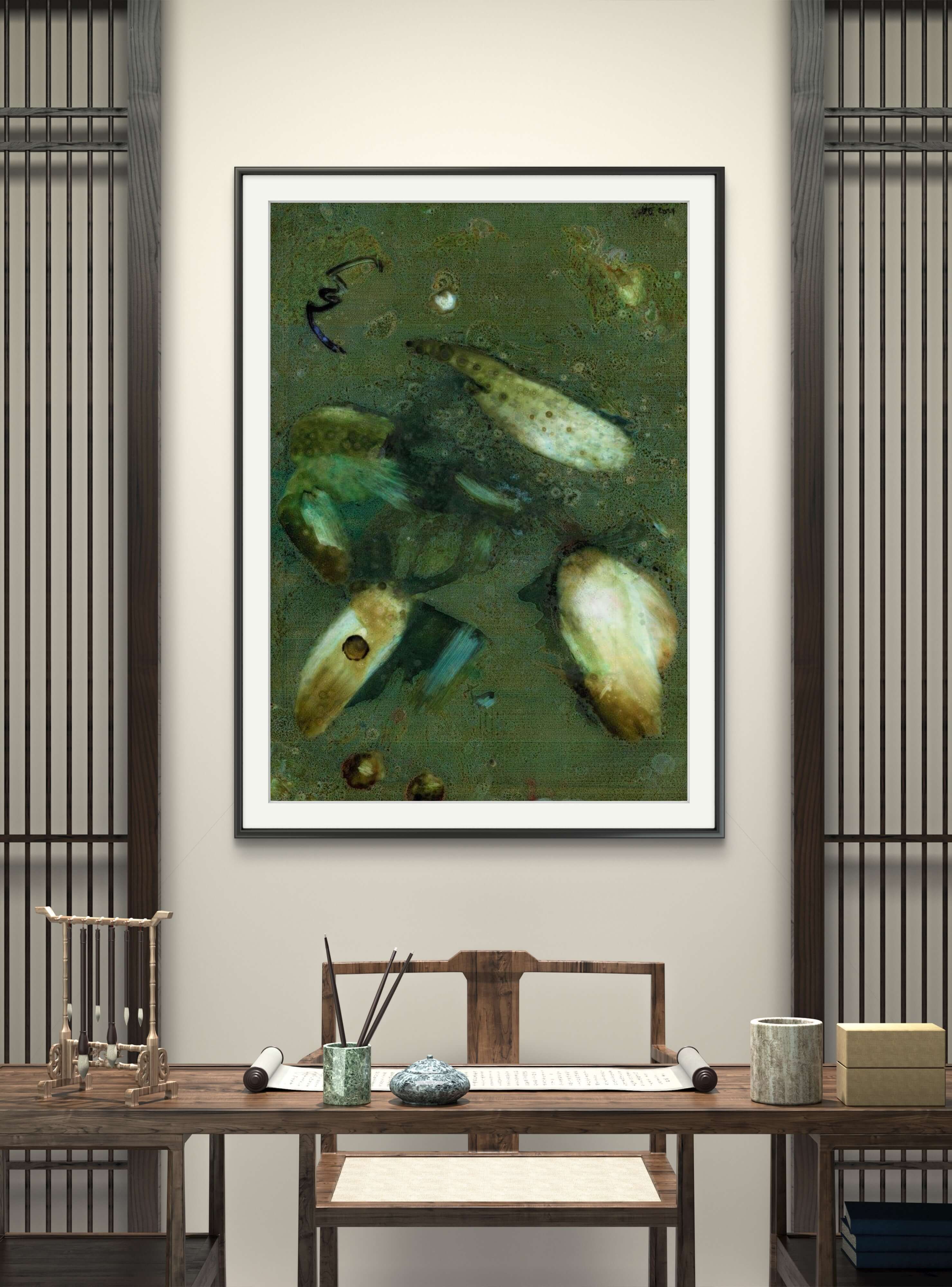
Daoist Aspects in My Paintings
A deep dive into Daoist influences in contemporary ink painting, focusing on emptiness, opposites, Zen elements and the interplay with quantum‑physics concepts. This article reflects on Nothingness, minimalism, perception and the resonance between philosophy and artistic practice.
-
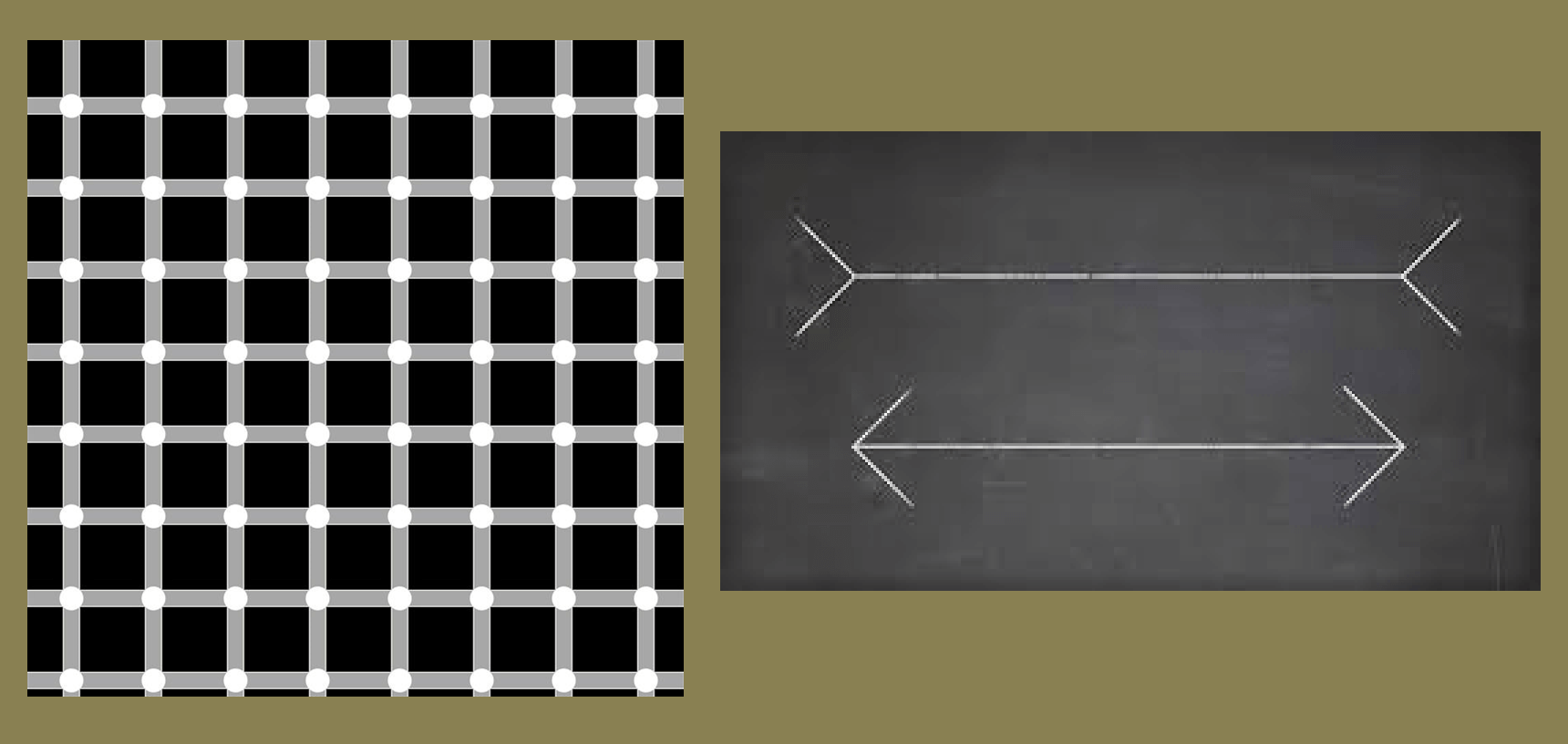
What is Reality? What is Nothingness?
What is reality? Our understanding of it constantly evolves—from once believing the Earth was flat to now observing the universe through the Hubble Space Telescope and quantum computing. In this post, I examine how modern science and different philosophical traditions perceive reality and nothingness. It is especially fascinating to see how quantum physics is beginning…
-

Visit of the old Zen Master and other Nonzens
I don’t actually know a physical Zen master, but his presence is still felt. In this post, I explore him as a teacher through a few grains of wisdom and semi-haiku. I also share my attempts to visually portray this master by finding the exact line where the concrete and the abstract meet. It is…
-
Summer Inventory
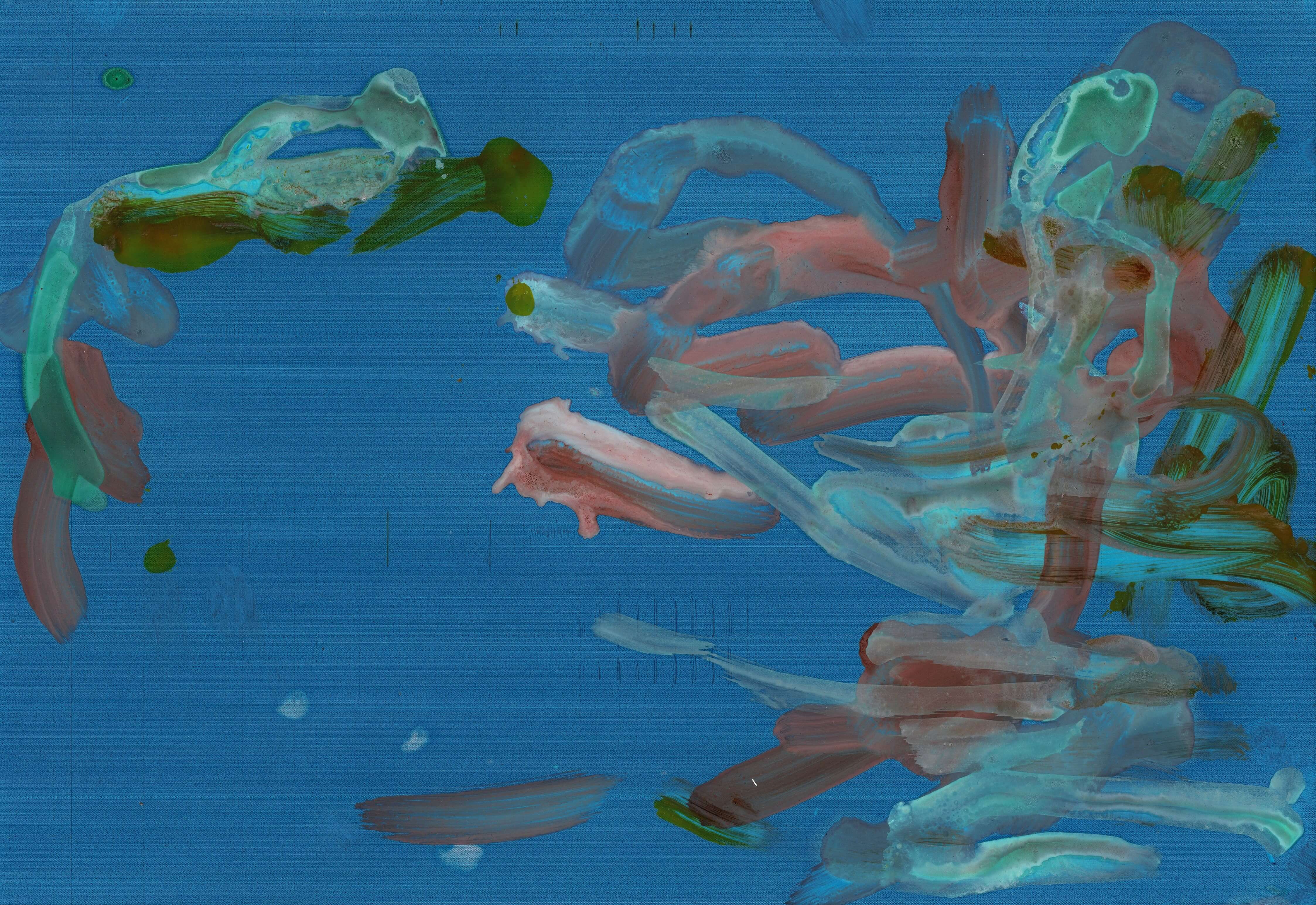
I conduct a summer inventory twice a year to bring a sense of order to my paintings. In this post, I share a diverse collection of hidden works and high-quality “leftovers” that did not quite fit into previous articles. Revisiting and reworking these forgotten pieces reflects the essential balance of opposites—finding value in what was…
-
Can We Hear a Painting?
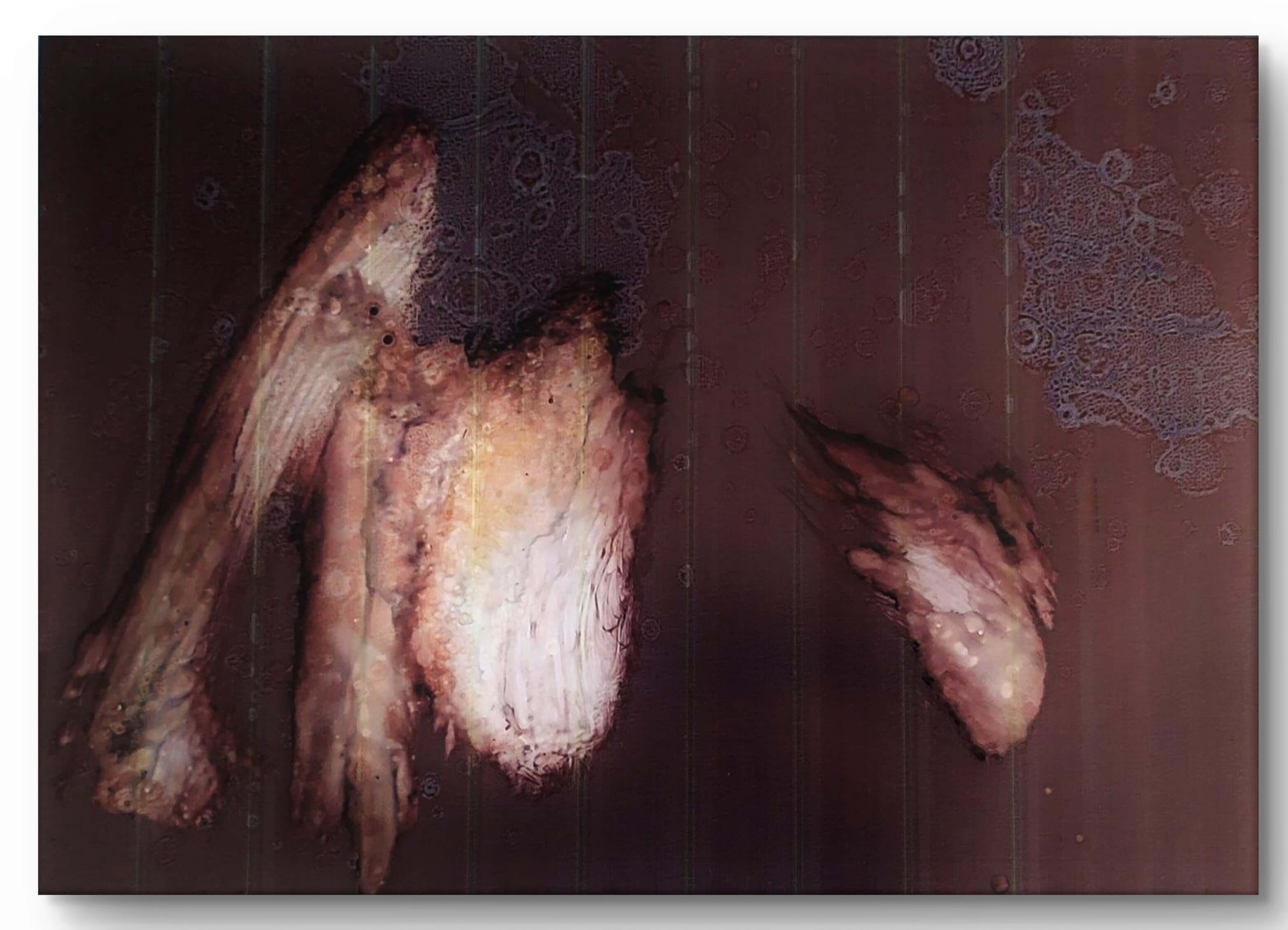
Can music be translated into painting? An exploration of rhythm, silence and sound through abstract art inspired by Wagner, Bruckner, Bach, Shakuhachi, Arvo Pärt and Brian Eno.
-
Emptiness, Space, and Depth
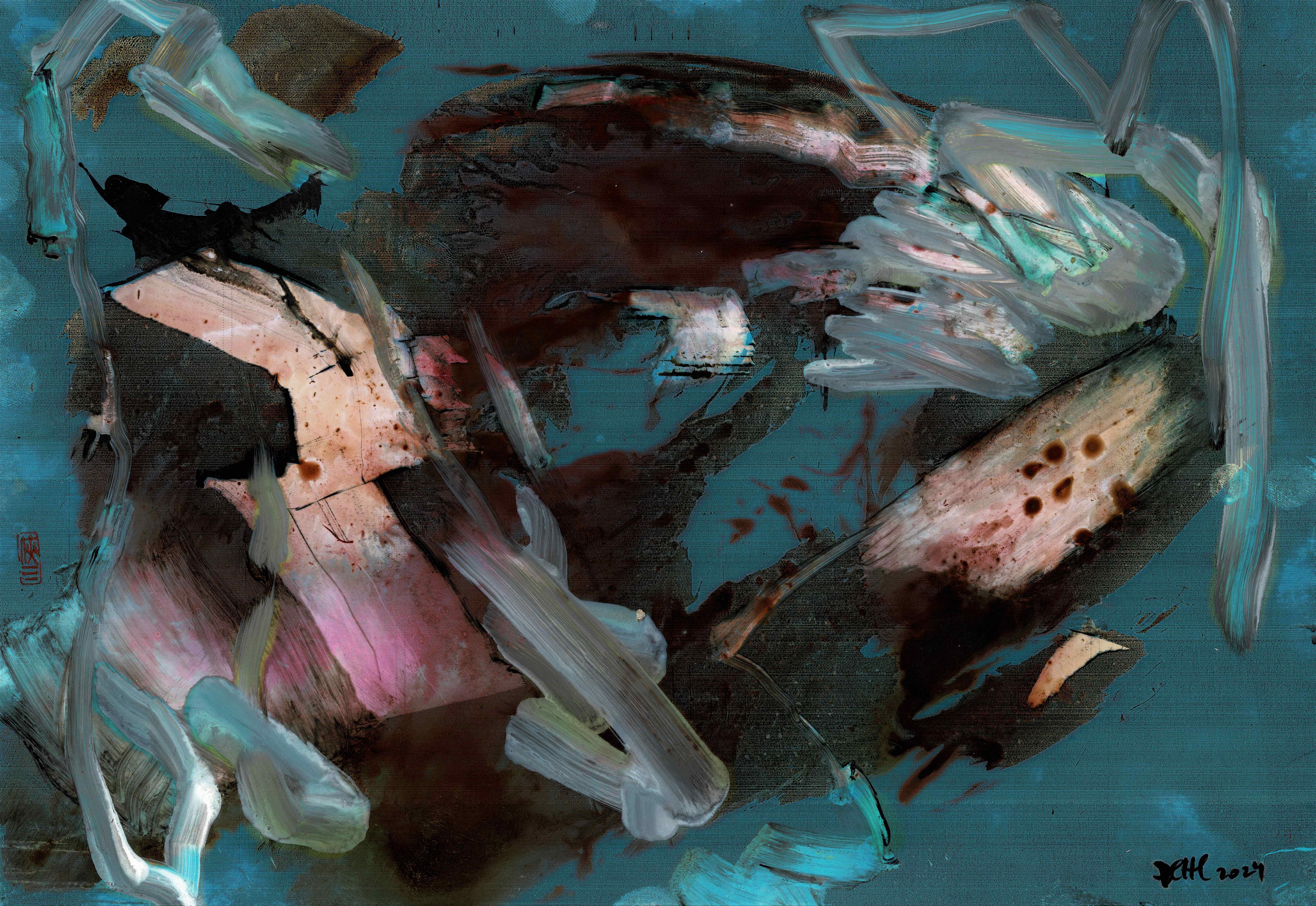
Many artists explore space and depth in their work, qualities that are often less prominent in modern painting. In this post, I examine these themes and share how navigating a recent crisis led me to simplify and reduce my own art to its core. This process of release is deeply inspired by Zen Buddhism and…
-
Essence in Art: Less is More
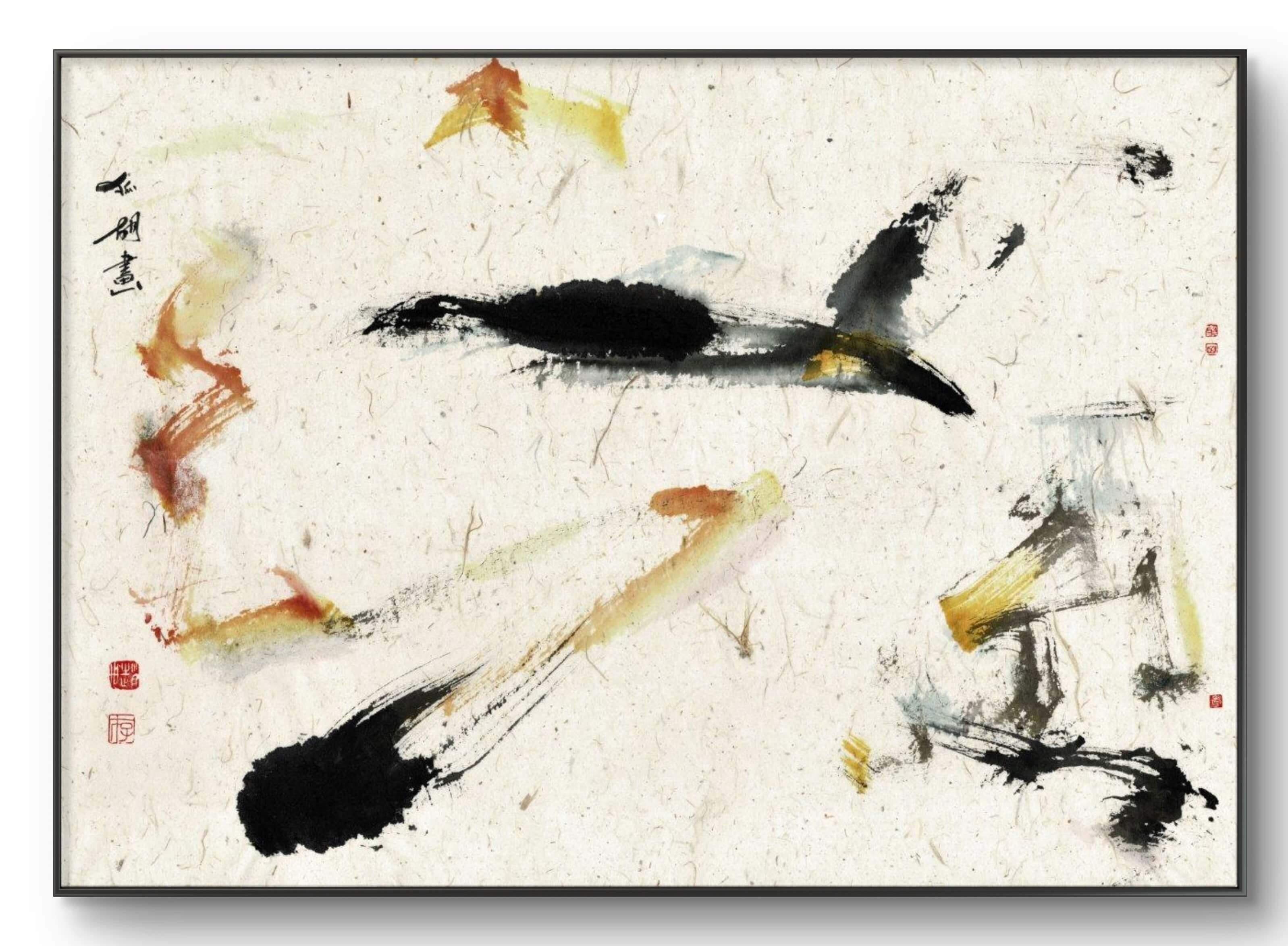
A reflection on the essence in art, exploring reduction, clarity and presence. The article examines how removing the non‑essential reveals deeper meaning, how simplicity sharpens perception, and how artistic expression becomes more direct when guided by essential qualities.
-

Wu Wei: Effortless Action in Daoism and Chinese Painting
An exploration of Wu Wei (無為), the Daoist principle of effortless action, through Zhuangzi’s Cook Ding, Chinese painting, Qi and spontaneous artistic practice.
-

Day Dream Job
A reflection on daydreaming as a creative state, exploring drifting thoughts, intuitive imagery and gentle abstraction. The article examines how imagination flows into artistic expression, how wandering attention reveals new motifs, and how daydreams shape subtle shifts in perception.
-

The Flow of Qi in Chinese Ink Painting
A personal exploration of Chinese painting, examining the flow of Qi, negative space and compositional movement through two experimental ink works.
-
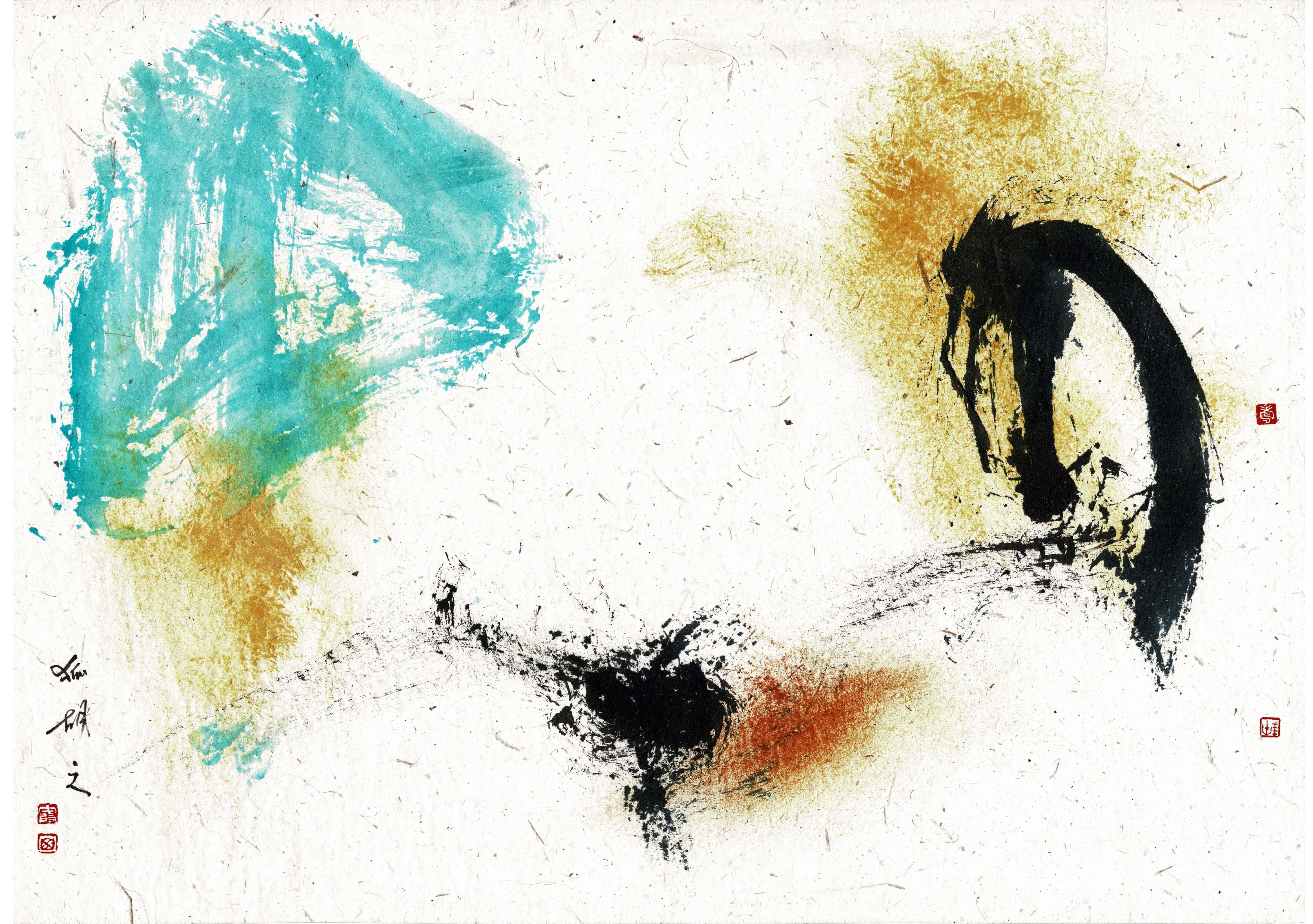
Wabi-Sabi, Japanese Paper & the Beauty of Empty Space
On wabi-sabi minimalism, the sensory beauty of Japanese and Chinese paper, and Tanizaki Jun’ichiro’s reflections on white space and shadow in Asian aesthetics
-

Bada Shanren & the Daoist Concept of Ziran (Naturalness)
Ziran is a fundamental concept in Taoism that can be understood as “naturalness” or “spontaneity.” It refers to the inherent nature and self-so of all things, emphasizing the importance of following the natural flow of the universe rather than resisting or attempting to control it.
-
Ego vs. Self in Daoism: A Western & Asian View
We all have an ego, but a misguided one can lead to suffering for ourselves and others. In this post, I contrast the Western understanding of the ego with the perspectives of Daoism and Zen Buddhism, and explore how an untamed ego can make even the most powerful people stumble.
-

Dao in Chinese Poetry: Li Bai and Du Fu
A brief note on Daoist ideas within Chinese poetry. The post comments on themes such as emptiness, nature, balance and the subtle way classical poets hint at the Dao without naming it. It keeps a calm, reflective tone and pairs the text with a small ink piece echoing the same spirit.
-
Daoist talks (VI) Principles of Dao in Painting
As discussed in my previous art theory articles, Chinese painting over the last millennium is deeply rooted in Daoist ideas. It is safe to say that Chinese xie-yi (freehand painting) is essentially applied Daoism. Today, I examine an often overlooked aspect of Asian art theory that is crucial for understanding this style: living in harmony…
-
Liang Kai: The Story of Eight Eminent Monks – Daoist talks (IV)
As both a painter and an art historian, Liang Kai’s “The Story of Eight Eminent Monks” holds a special place in my heart. In this post, I examine this important scroll and discuss the fluid boundaries between Daoism, Zen, and Buddhism in China. Unlike the strict religious divisions often found in the West, Chinese philosophy…
-

Daoist Talks (III): The Cosmos in One Dot
In this third Daoist Talk, Friedrich Zettl explores the dot as the smallest yet most powerful element of Chinese painting. Drawing on Daoist philosophy, mindfulness, xieyi and the work of Shi Tao, the essay examines how a single brushstroke can express the principles of nature, consciousness and the cosmos.
-

Daoist Talks (II): The Basics
In Daoist Talks II, Friedrich Zettl explores the relationship between Daoism and Chinese painting, from xieyi and calligraphy to yin and yang, qi, wu wei and the different ways Chinese and Western artists approach nature.
-

Hakuin’s Koan: The Sound of One Hand Clapping
I will continue posting new articles every two weeks. Today, we revisit the challenging concept of the “existence of the nonexistence” through Hakuin Ekaku’s famous kōan, “The sound of one hand clapping.” I am sharing an older painting where I explored this paradox graphically. Rather than literally illustrating a sound, this piece of Zen-inspired art…
-
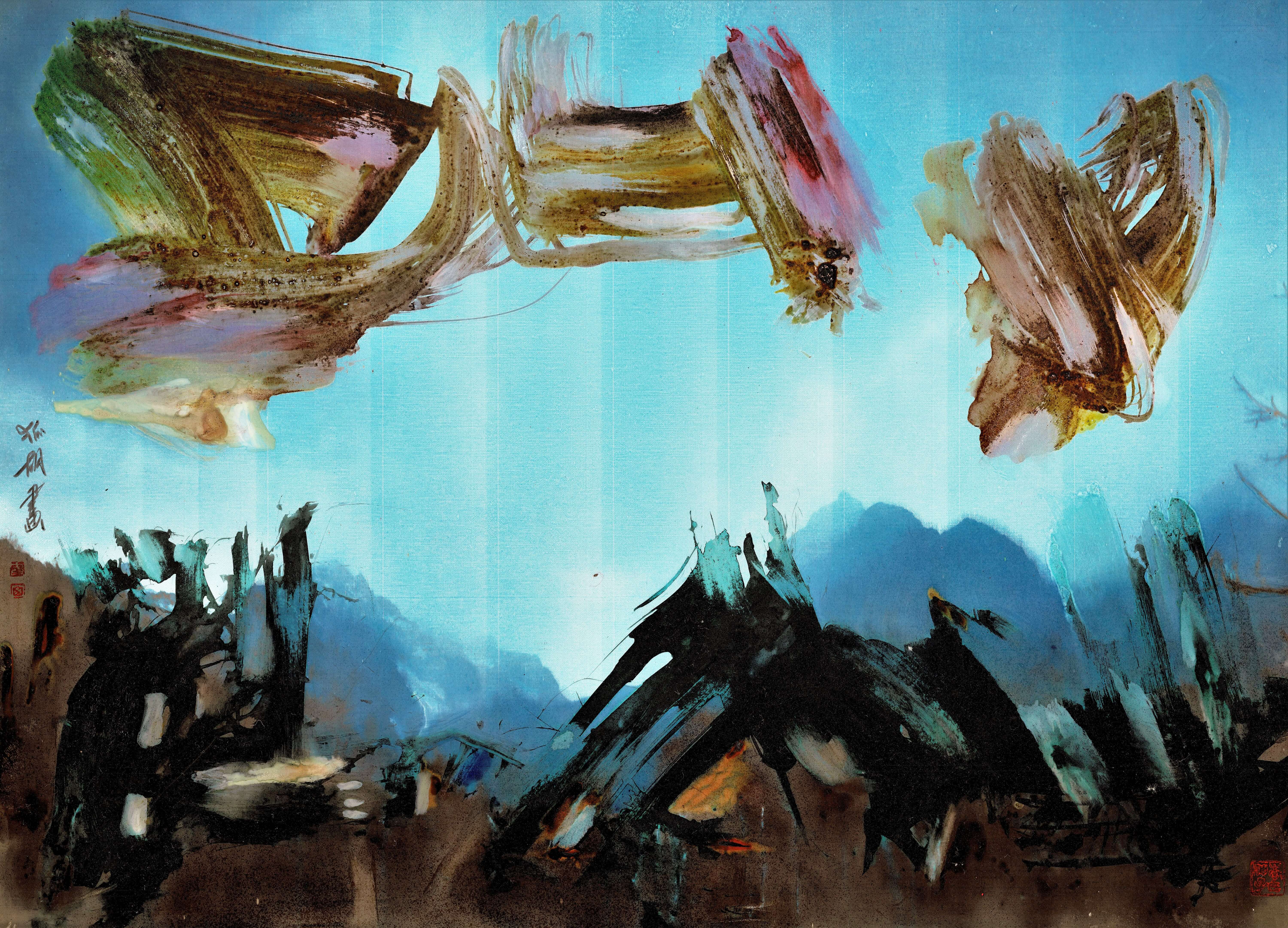
Farewell Beijing, Hello Chongqing: A Traveling Exhibition
Travel memories from China — a 1979 journey up the Yangtze, encounters with painter Xue Mingde, and reflections on decades of change in Chongqing.
-

Zen and the Arts: Emptiness, Simplicity and Presence
An introduction to Zen aesthetics in painting and calligraphy, exploring emptiness, simplicity, spontaneity and the importance of direct artistic experience.
-

Ophelia Painting (2022) – A Quiet Contemporary Study
A brief note on a 2022 Ophelia painting. The post comments on mood, composition and the way a familiar motif can be approached in a quiet, contemporary manner. It keeps the tone simple and reflective, paired with the finished piece.
-

At Front page of Chinese Newspaper Again
The 光明日报 guangming daily has published a quite detailed report about me, and that on the front page. Last year an article about me, with a focus on calligraphy, appeared in this important newspaper,
-

teaser for next exhibition
I’ve been needing a few short video clips for my work for a long time. With a little effort I was able to get something going myself, but then the result was too boring for me and I left this task to someone else.
-

Études – Small Studies and Quiet Experiments
Etudes: If one looks up the English-language equivalent of the French term études in conventional dictionaries, the result is generally “studies”. Only when you translate it from a music-theoretical point of view do you come up with “etudes”.
-

metaverse (III)
the beginning and the end Short preliminary remark If I just started with my thoughts, there would be a certain danger of someone shouting: “Hey, that’s not scientific!” Two preliminary remarks are therefore permitted. All our thinking is based on previously thought and mostly we deal with premises. Such as A $100 bill has a…
-

Studies for Oil Paintings – Early Ideas on Paper
A brief note on studies made in preparation for oil paintings. The post shows early ideas, loose sketches and small brush experiments that help clarify composition and mood. It keeps the tone simple and practical, treating these studies as quiet steps toward larger pieces.
-

my kind of metaverse (I)
In February I started playing around with an idea, but I don’t know if it will become a series yet: It’s dedicated to the metaverse.
-

Flyer for my Beijing Exhibition
Flyer for my exhibition in Beijing this spring. Honoring 50 years of cultural exchange between Europe and China.
-
Cats in Chinese Painting
A brief note on cats in Chinese painting. The post comments on symbolism, traditional brushwork and the way this motif shifts between elegance and humour. It pairs the reflection with a small ink sketch that keeps the tone light and direct.
-

The Meaning of a Dot in Chinese Painting & Calligraphy
On the surprising depth of a single dot in Chinese calligraphy — qi, the play of opposites, and how a beginner learns to paint with meaning.
-

New Abstract Surrealist Ink Paintings
Why stepping away from an unfinished painting matters — three new abstract surrealist works and reflections on knowing when to stop.
-

Waltzing Corona: A Triptych on Balance and Yin-Yang
An abstract triptych reflecting on Vienna’s ball season during the pandemic, explained through Chinese principles of balance and yin-yang.
-

Remembering a Landscape: Yin and Yang in Ink Painting
A simple landscape composition, reworked across 30 years, exploring memory, imagination and the balance of yin and yang.
-

State of the Art: A Self-Portrait Series
A personal self-portrait series from 1977 to 2021, tracing the evolution of style, memory, and even a damaged early canvas.
-
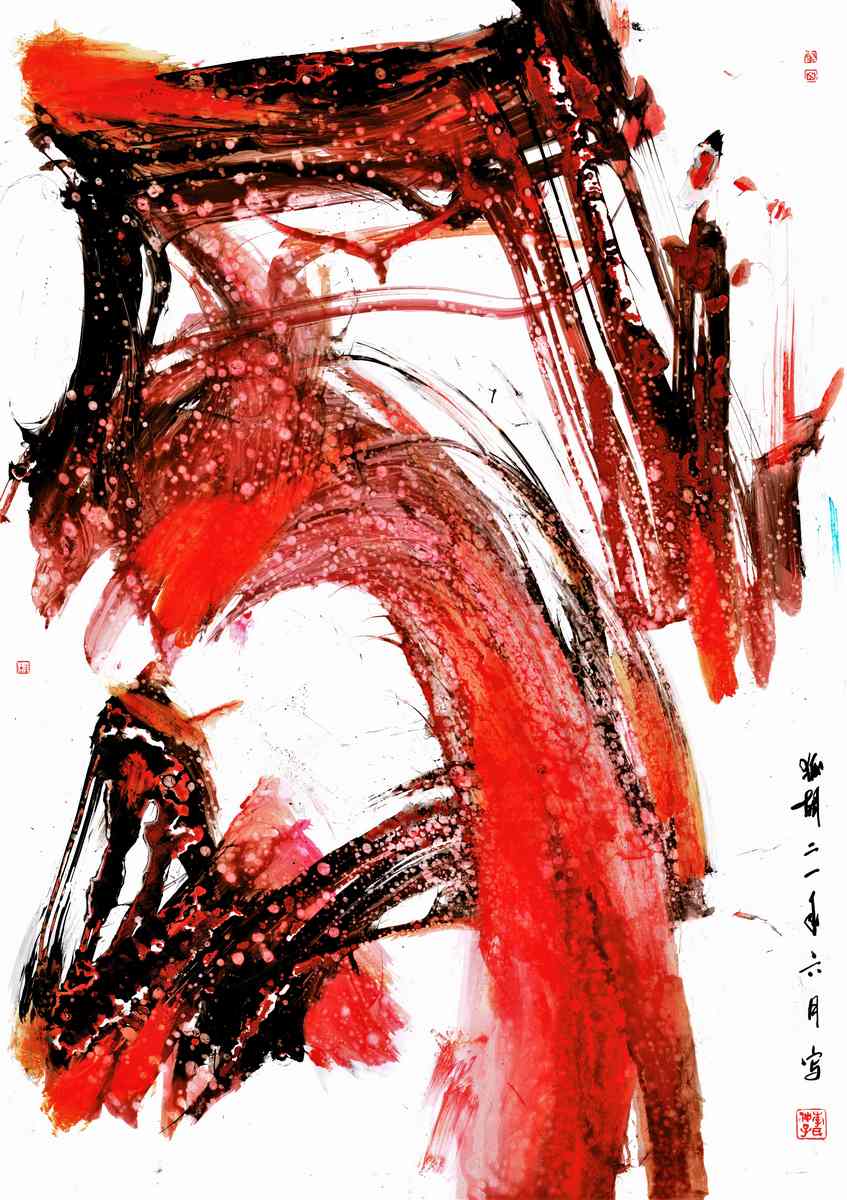
Power, Elegance and Savageness: New Abstract Works
New abstract paintings exploring elegance and savageness, including an upcoming dragon series.
-

The Essence of Chinese Painting: Emptiness and the Meaning of White
An exploration of emptiness and negative space in Chinese painting, from Daoist and Chan thought to the works of Bada Shanren and Liang Kai.
-

Mu Qi’s Six Persimmons: An Interpretation
An interpretation of Mu Qi’s celebrated Six Persimmons, examining its composition, symbolism, expressive brushwork and connection to Chan Buddhism and traditional Chinese ink painting.
-

A Second Painting After Huang Binhong – 黄宾虹
A second painting after Huang Binhong, honored with calligraphy from a fellow painter — and a look at inscriptions and collector’s seals.
-

Zha Shibiao: A Simple Painting and Yet a Treasure
A close reading of a small album leaf by Zha Shibiao, exploring composition, brushwork, empty space and the close relationship between Chinese painting and calligraphy.
-

Copying Old Masters: Huang Binhong (黄宾虹)
My studies and copies after Huang Binhong explore how copying old masters can deepen an understanding of brushwork, ink, rhythm and the spirit of Chinese painting.
-

The Essence of Chinese Painting (III)
How does a painting guide the eye? I explore beginning, development, turn and resolution through Pan Tianshou’s compositions, implied connections and the active role of empty space.
-
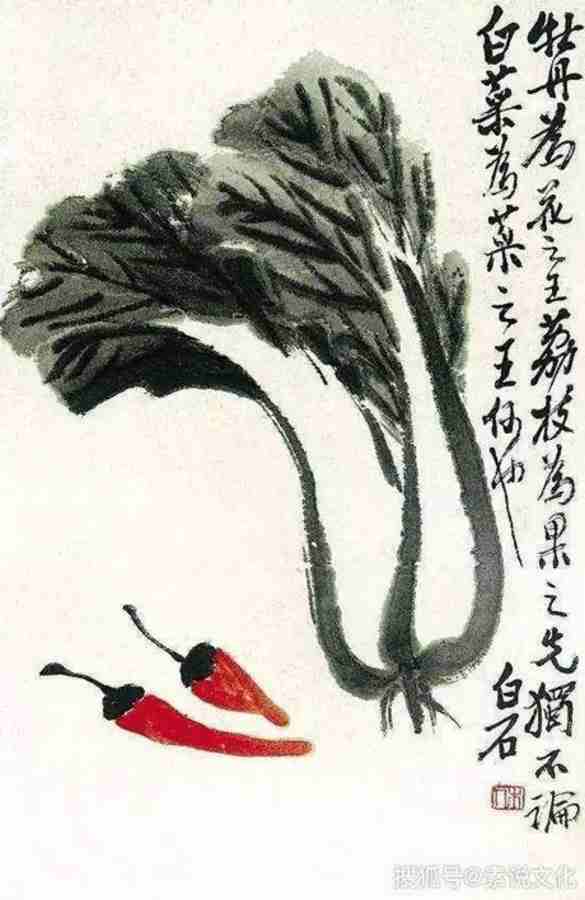
Analyzing a Simple Painting by Qi Baishi 齐白石
A cabbage, two red chilies and an inscription: I look closely at how Qi Baishi turns an everyday subject into a lively composition of brushwork, color and open space.
-

The Principle of Balance in Chinese Painting
How can a small bird balance a heavy branch? I explore the relationships between brushstrokes, painted forms and empty space through nine illustrations from Chinese painting and calligraphy.
-

Protective Masks in 1979 Beijing: An Oil Painting
An oil painting from Beijing depicting people in masks reading news at the Democracy Wall on Chang’an Avenue, decades before the pandemic.
-

Student Prank with Wang Ziwu 王子武
During my studies in Beijing, I copied a painting Wang Ziwu had given a fellow student. A harmless swap became awkward when our professor admired the copy.
-
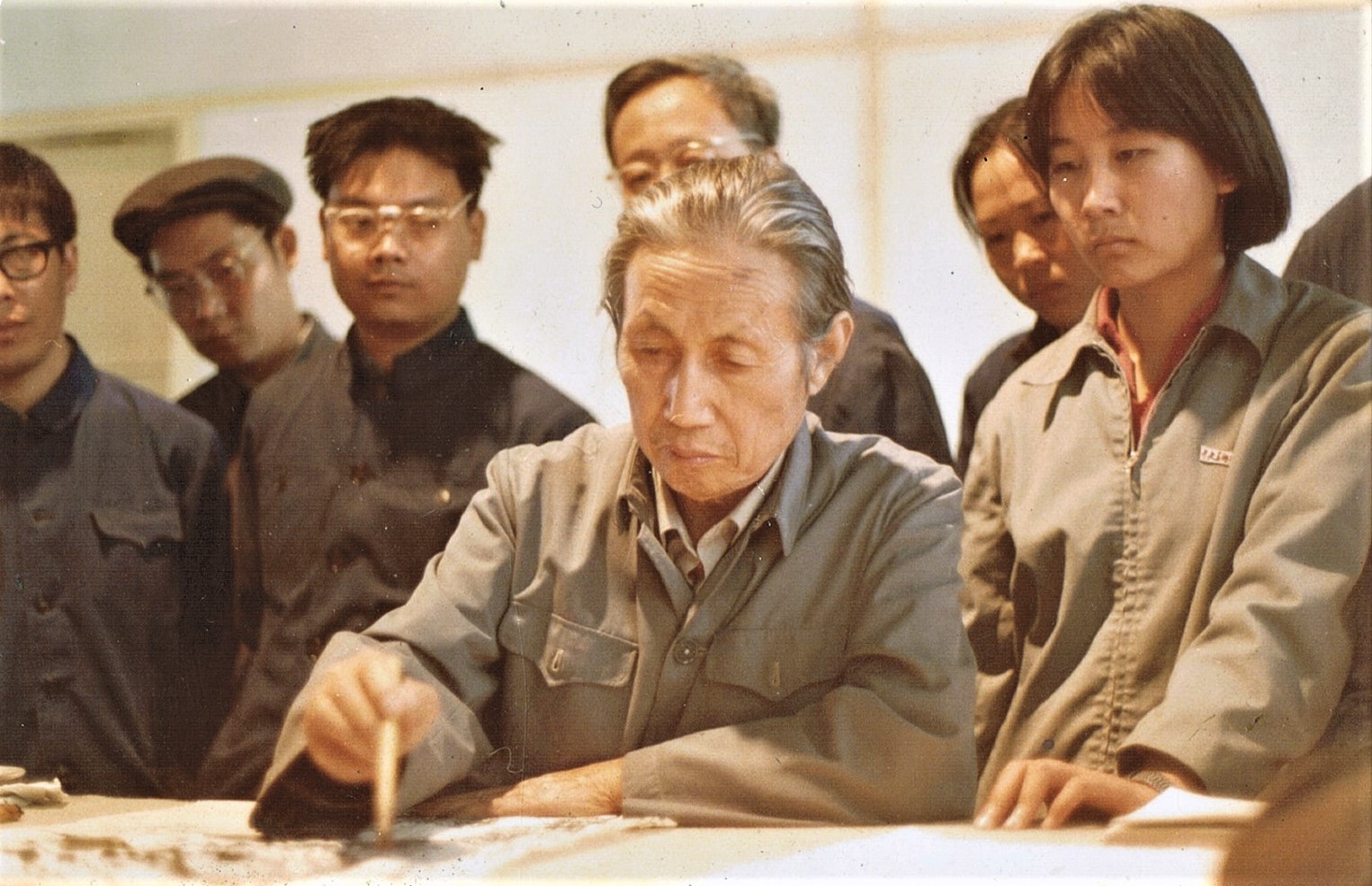
When I First Met Lu Yanshao 陸儼少
Watching Lu Yanshao paint at the Central Academy of Fine Arts in Beijing challenged my assumption that the energy of a landscape must come from speed.
-

Chinese Seal Carving: History and Key Terms
A small red seal can change the balance of an entire painting. I reflect on my fascination with Chinese seal carving, look at four examples and explain how the stone, its inscription and its printed impression belong together.