
Some minimalism, and a dream
Dao and Zen, or Dao and Chan 禅, [1] have once again found a stronger foothold in my thinking, along with a heavy dose of minimalism – and a dream. But that comes at the end of the article.
Like many others, I’ve been heavily distracted in recent months by the increasingly unbearable developments in our daily lives, both politically and geopolitically. A lingering flu-like infection reminded me that I needed some rest. And so, wrapped up and sweating, I surrendered myself to dreaming, or rather, to dreams.
Since my last few articles have been a bit long anyway, and I’m still feeling a bit weak, this is a good opportunity to write more or less nothing about the latest pictures and leave it to everyone to enjoy them—or detest them—largely uninfluenced.

Dream Sequences
After a few very intense dreams, the kind you often have when you’re sick in bed, I got up in between and tried to capture those moods. They are abstract works but, as usual, are firmly rooted in Daoism and Zen and have been realized in a minimalist way.

In the first works, I wasn’t concerned with a figurative representation, but rather with an attempt to convey the emotional state of a nightmare, for example. That indefinite tension of fear, being captivated, or fascinated, all at the same time.

Minimalism
After a few attempts, I felt the urge, as I so often do, to let go, to leave out everything superfluous, to concentrate on the essence, and to condense it.

If anyone is wondering where exactly Dao and Zen can be found in a piece like the following—not very likely, since we’ve already covered the topic extensively—well, in an image like this one, it’s as follows:

On the left, very dominant, is the Yang aspect: hot, aggressive, commanding. In the upper right, the Yin aspect: cool, peaceful, reserved.


Between them, land and water represent our globe, our material existence. The dialectical aspect is, of course, the interplay of Yin and Yang, both in the image as a whole and in the individual brushstroke formations. The Zen aspect is the philosophical superstructure, the representation of great thoughts in the small, the inconspicuous. Here, Yin and Yang are like a pendulum with an ever-shifting force. We are currently living in a phase where Yang—the destructive, the aggressive—is swinging far out. Only when Yin—the calming, the peaceful—is strengthened again will our society return to a state of harmony. By embracing a pervasive lie—and using AI to cement it as our new reality—we have entered the antechamber of hell, which will only delay the pendulum’s swing back toward harmony That’s enough philosophy for today. 😊

Dream
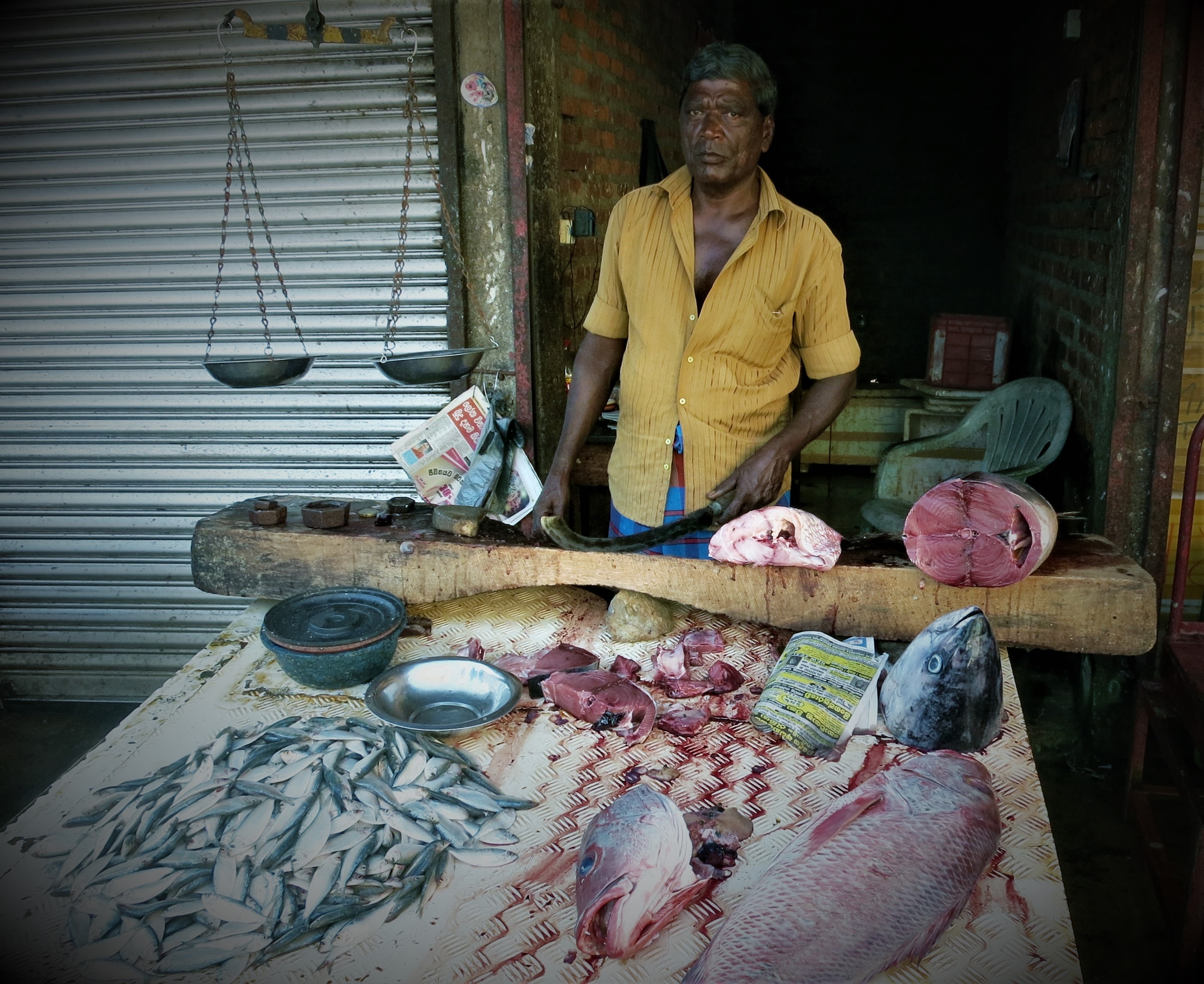
The following photos are from previous trips to various countries, are not content-related and are intended only to lighten the mood.

I’m with Z., on our way to an online broker’s office, but a nagging confusion takes hold. I can’t find it, despite a phantom memory of having been here countless times. We enter a mall, and it’s immediately clear we’re in the wrong place. This should be an ordinary building. Z. decides to go home. I keep searching the area, which is not just unfamiliar but utterly alien. It has morphed into a labyrinthine marketplace, much like the medina in Fes, a sensory assault of unknown sounds and the bewitching scent of spices.

The sights are breathtaking. I raise my phone to photograph them, but horror jolts through me when I see the display—it’s infected with a virus, a parasitic game icon squatting on the screen. I try to delete it without activating it. Suddenly, Z. is back, claiming she can defeat the virus, but her efforts are as futile as mine.
I walk on alone, shaken by the strangeness of it all, yet captivated by a beauty I can’t capture and promise myself I’ll return. I need to figure out where I am. The 3rd district? With every corner I turn, my desire to escape this labyrinth intensifies, a maze whose fascinating scenes pull me deeper. Small women in hijabs pass me like ghosts. I buy unusual groceries, planning to cook a special meal at home, a small anchor to reality. After the next corner, a bizarre tableau: strange, gray creatures, like bloated cats or rats or perhaps beavers, huddle in a gray, undefined space. Another animal appears from nowhere and sinks a sharp tooth deep into my thumb. I ask a passerby how to get to the city center.

A little further on, I discover a wider street—perhaps Landstraße Hauptstraße?—and head toward it. But when I reach it, I realize it’s wrong, another dead end in this distorted blueprint of my own city. I retreat into an alley and find myself in a kind of Chinatown made of dark wood and ornate carvings.

A woman’s table is overturned; tiny, exquisite scent bottles are scattered on the ground. I try to steal one, but she sees me, and her gaze locks on mine, sharp and knowing. Again, I ask someone for the way to the center. Finally, an answer: the subway. The man confirms it, and an entrance materializes before me. I try to memorize the station’s name, wanting to bring Z. back to prove this place exists. But there are no normal street signs, only square, blue plaques with an alien script.

I see another incredible scene and instinctively raise my phone to photograph it. The virus icon is there, waiting. It begins to bloom, creeping across the screen, growing into a pulsating, malignant entity that threatens to shatter the device in my hand.
Someone I ask for directions suggests taking a taxi. And there they are—two taxi stands. I walk toward the first, but as I approach, the car pulls away smoothly, its two occupants giving me a strange, knowing look. The same thing happens with the next taxi, and the next. I cross the intersection to the other stand. It happens again. Every taxi leaves without me.
A thought begins to form, hardening from a fleeting fear into certainty: I’m out of control. Or rather, I’m already there. How far have I fallen? Do I want to live like this? How could I even take my own life? Then, a glimmer of hope: What if this is all just a dream? A way out? But the thought feels weak, improbable. A wave of absolute despair washes over me.

I half-awaken into a twilight state, a brief moment of relief in the unreality of it all before sleep pulls me back under. I’m now looking for a phone store to buy a new one. The memory blurs and fades. I’m at home, opening my PC. The first thing I see is the virus icon. It blossoms and multiplies into an unstoppable swarm, flooding the screen. I can’t click away without risking everything. I call V., who tries to access my computer from his office to fix it, but he can’t; I’ve severed the remote link. He tells me to send photos of the screen, but that fails, too.
I wake up because my cleaning lady is calling to say she’s at the garage door.
footnotes:
[1] Chan is a school of Mahayana Buddhism that developed in China from the 6th century CE, integrating some Daoist principles. It emphasizes enlightenment through meditation and direct insight rather than scripture and is the direct predecessor of Japanese Zen.
Related articles: I the-cosmos-in-one-dot I dreamtellers I daydream
Explore Art & Writing
Art Portfolio → Featured Artworks → Arts & Philosophy Journal → All Articles
Explore Asian Art Essays for writing on Chinese painting, calligraphy, aesthetics and art history.
Available Artworks
Original works are available on FriedrichZettl.com and Saatchi Art


Leave a Reply