
Tag: Zen and Daoism
-
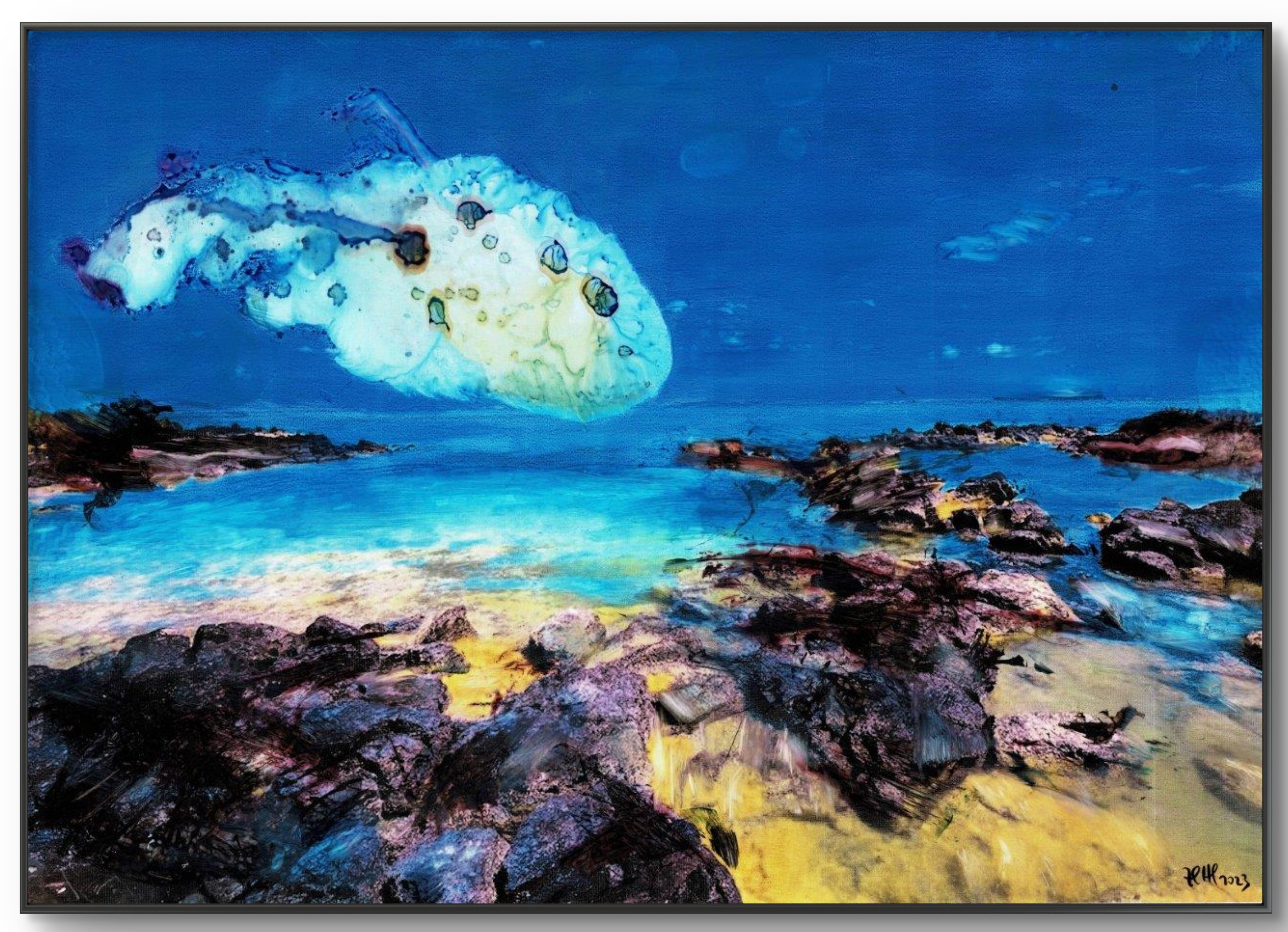
The Empty Boat — 虚舟 (Xū Zhōu)
Which painting best represents where I stand in 2026? The Empty Boat begins with Zhuangzi, ego and a rather unusual fish, while a second painting leads to a different question: what happens when a painter stops asking what a work still needs and begins asking what it wants to get rid of?
-

A Conversation with a Skull
In this post, I share one of my favorite Daoist stories: Zhuangzi’s “The Death’s-Head.” It offers a clear, direct perspective on life, death, and the burdens we carry. To accompany the text, I included several of my own skull paintings that reflect my thoughts on form, emptiness, and the natural balance of yin and yang.
-
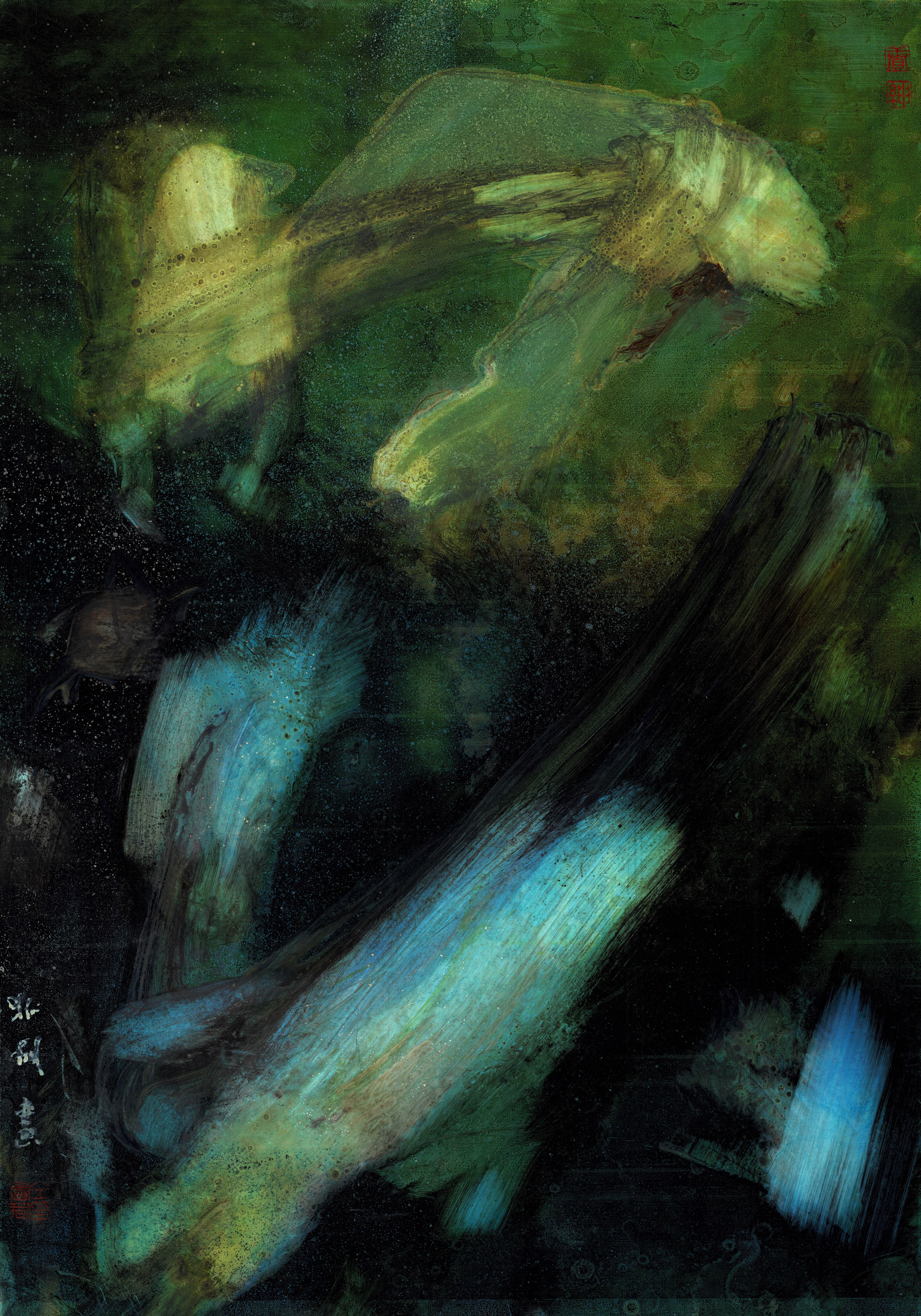
Light as State of Being: Light in Painting and Contemporary Ink Art
“Light as State of Being” explores the depiction of light in painting – from the academic studio through the Impressionists to my own attempt to make Ur-light and cosmic light tangible in images.
-

Dot and Emptiness: The Essence of Chinese Art
A lecture on the dot and emptiness in Chinese painting — how Daoist and Zen principles turn a single brushstroke into a universe, illustrated through Liang Kai’s “Li Bai Strolling.”
-
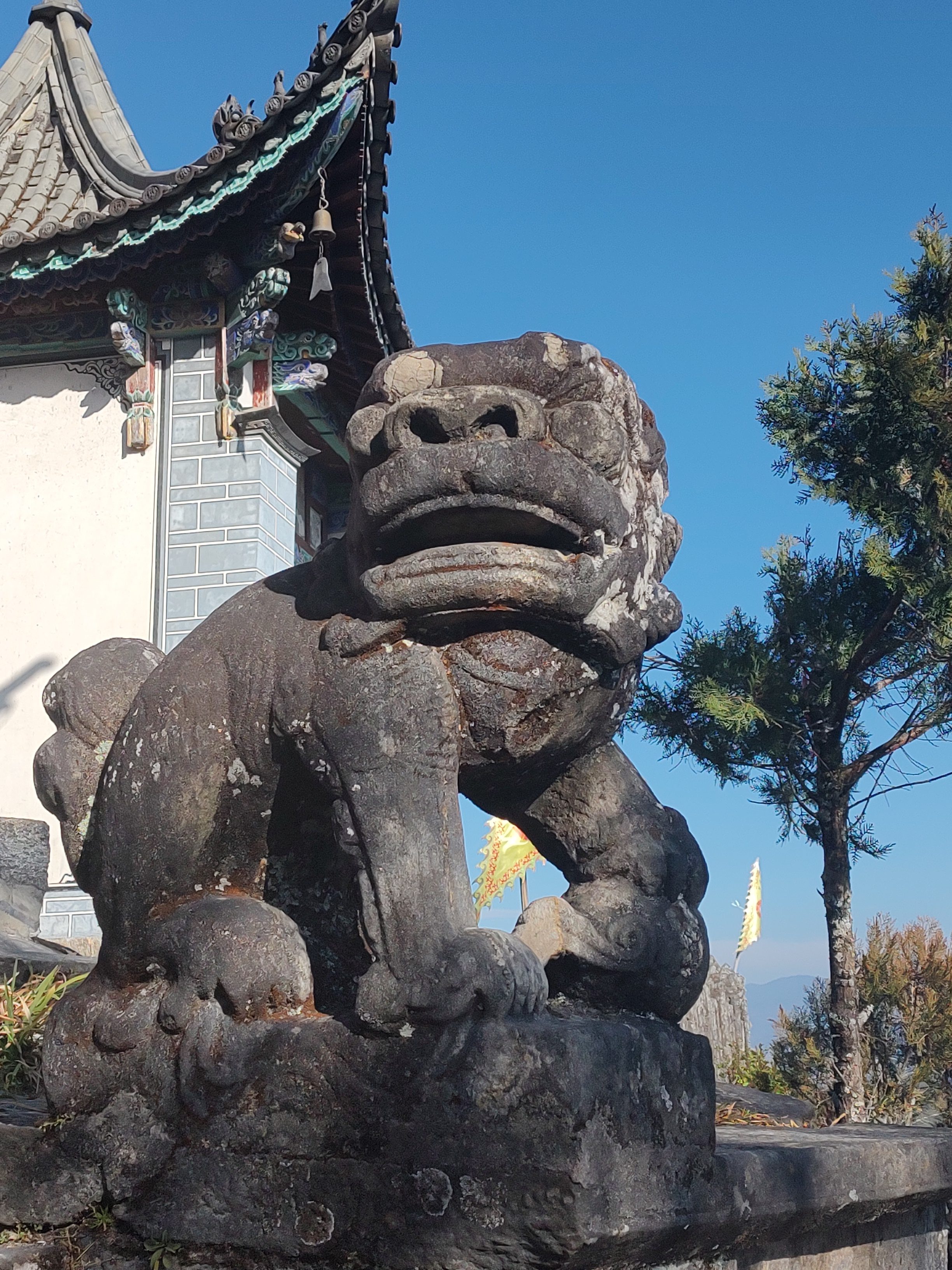
Pure Dao – Shi Dong Si 石洞寺
A visit to Shi Dong Si, the Stone Cave Temple in Yunnan, exploring Daoist ideas of Yin and Yang, Chinese underworld paintings, temple architecture and the balance of shadow and light.
-
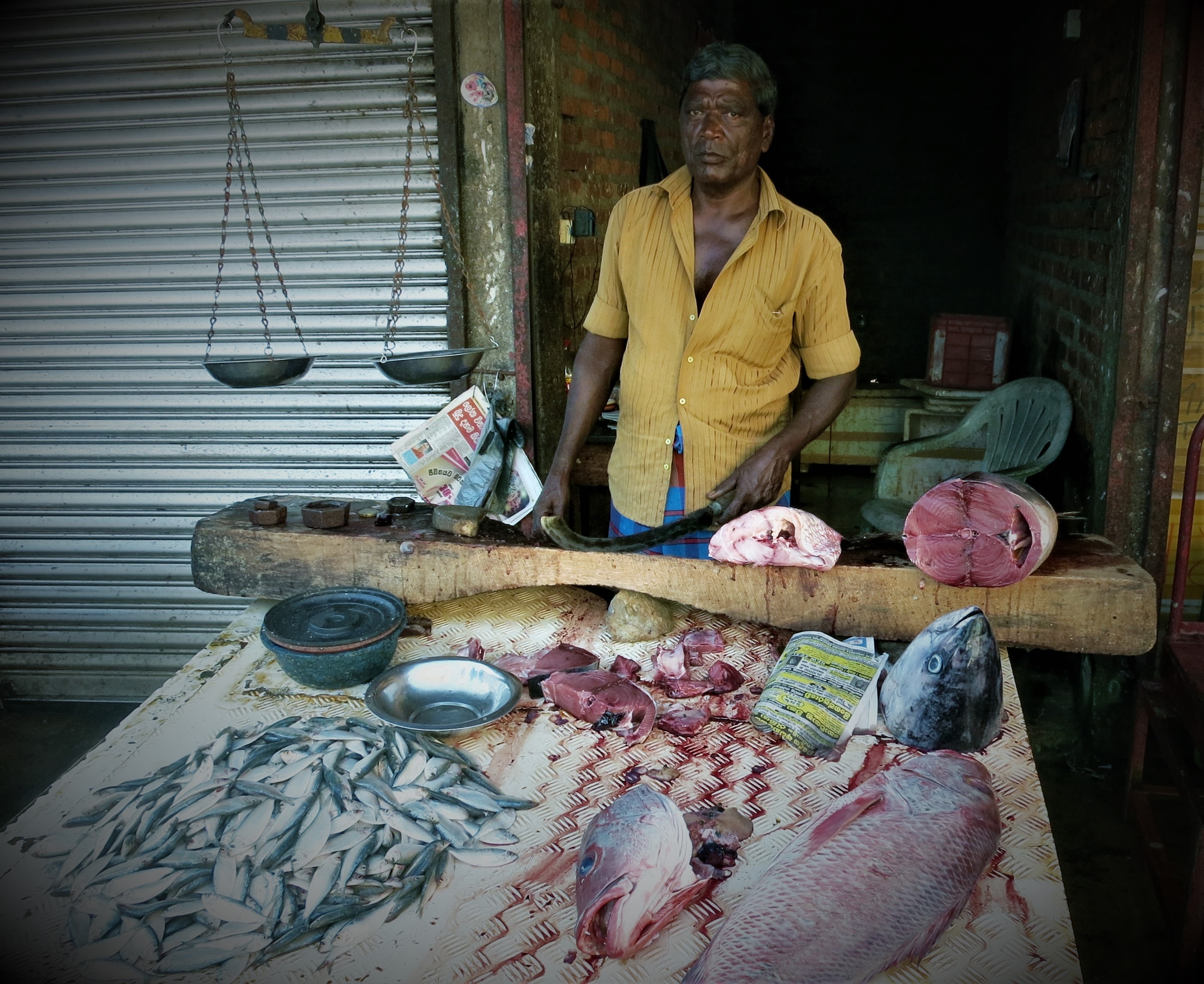
Dao and Zen again: Applying Eastern Philosophy to Contemporary Ink Painting
Tao and Zen, along with minimalism, became my focus during a forced pause due to illness. This short article shares how fever dreams led to abstract works that explore the tension between Yin and Yang—an attempt to artistically grasp our world, which has been thrown off balance.
-

Autumn Reflections
Autumn Reflections explores the connection between poetry, calligraphy, and painting through a series of original semi-haiku.
-
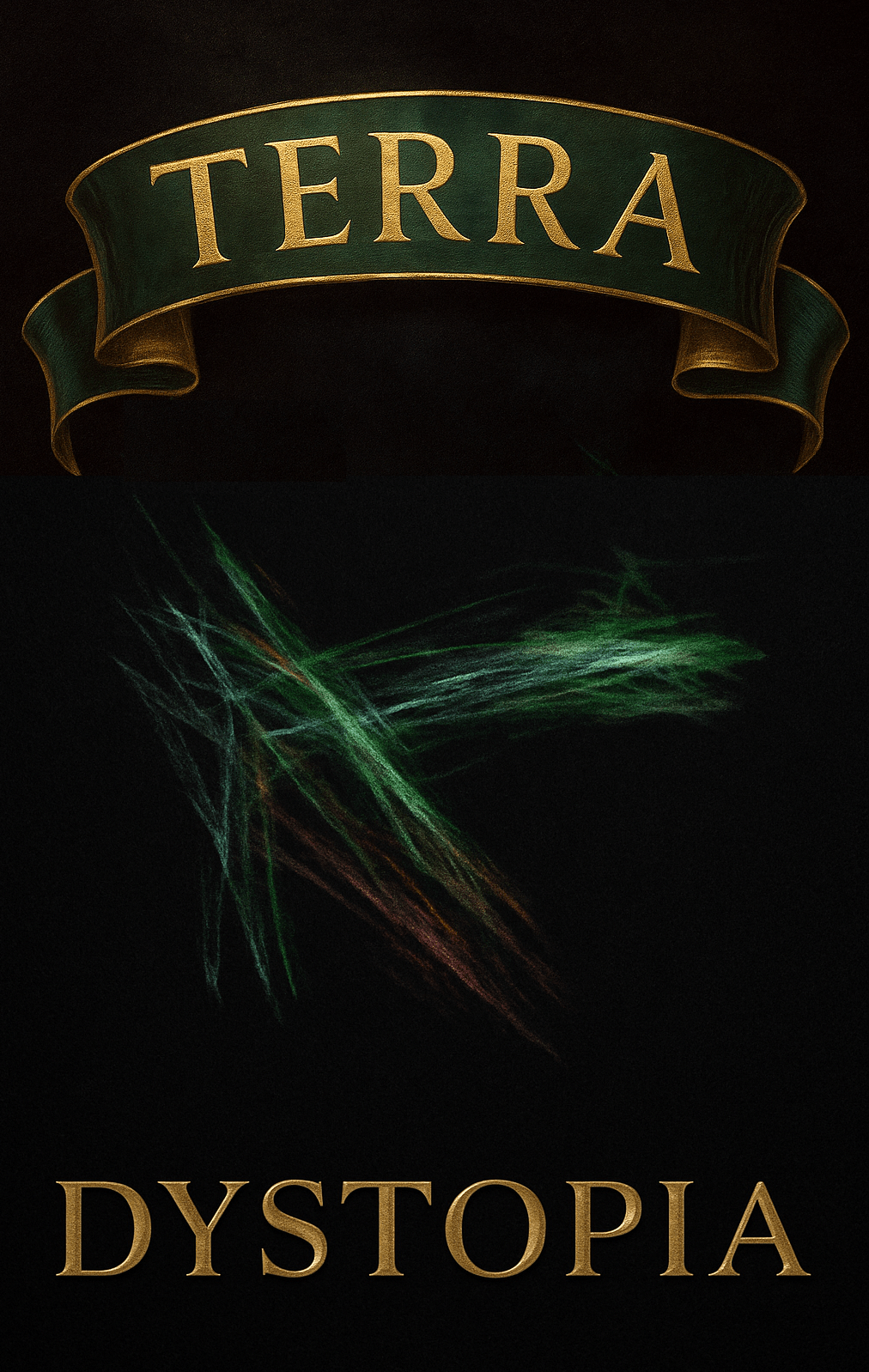
Terra Dystopia
Terra Dystopia, a new series of artworks, serves as the starting point for an essay on the core characteristics of a dystopian society, questioning how many of these once-fictional traits have become our reality.
-
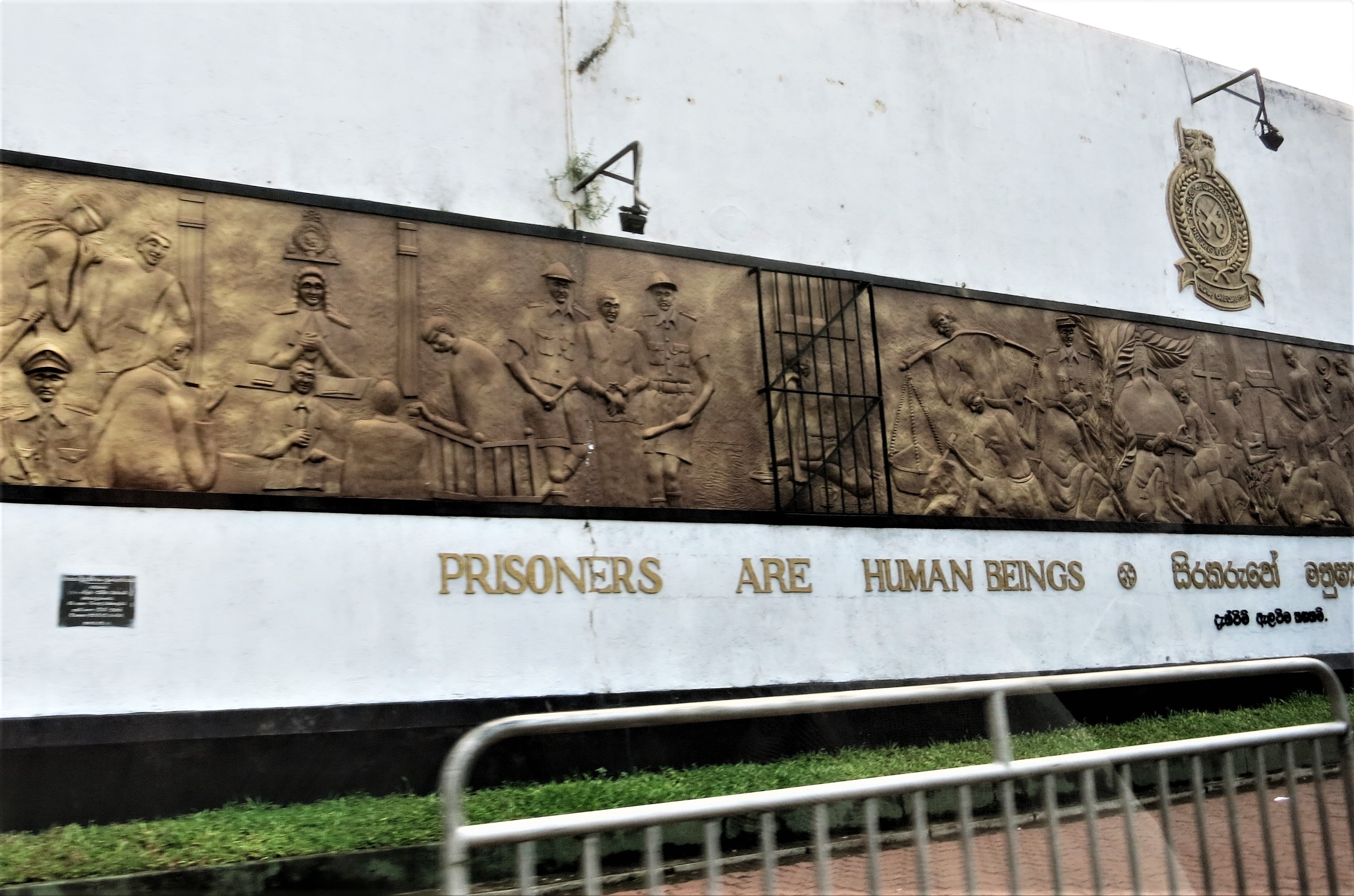
On Giving, Taking, and What Truly Matters
From a Cambodian tuk-tuk driver to quantum physics, explore the profound layers behind the Dalai Lama’s simple advice: “Be kind.” A journey into the power of giving and true connection.
-

Spring Potpourri
Spring potpourri. Embrace spring! My latest post shares moments of peace found in nature’s embrace, as well as delicious seasonal delights.
-
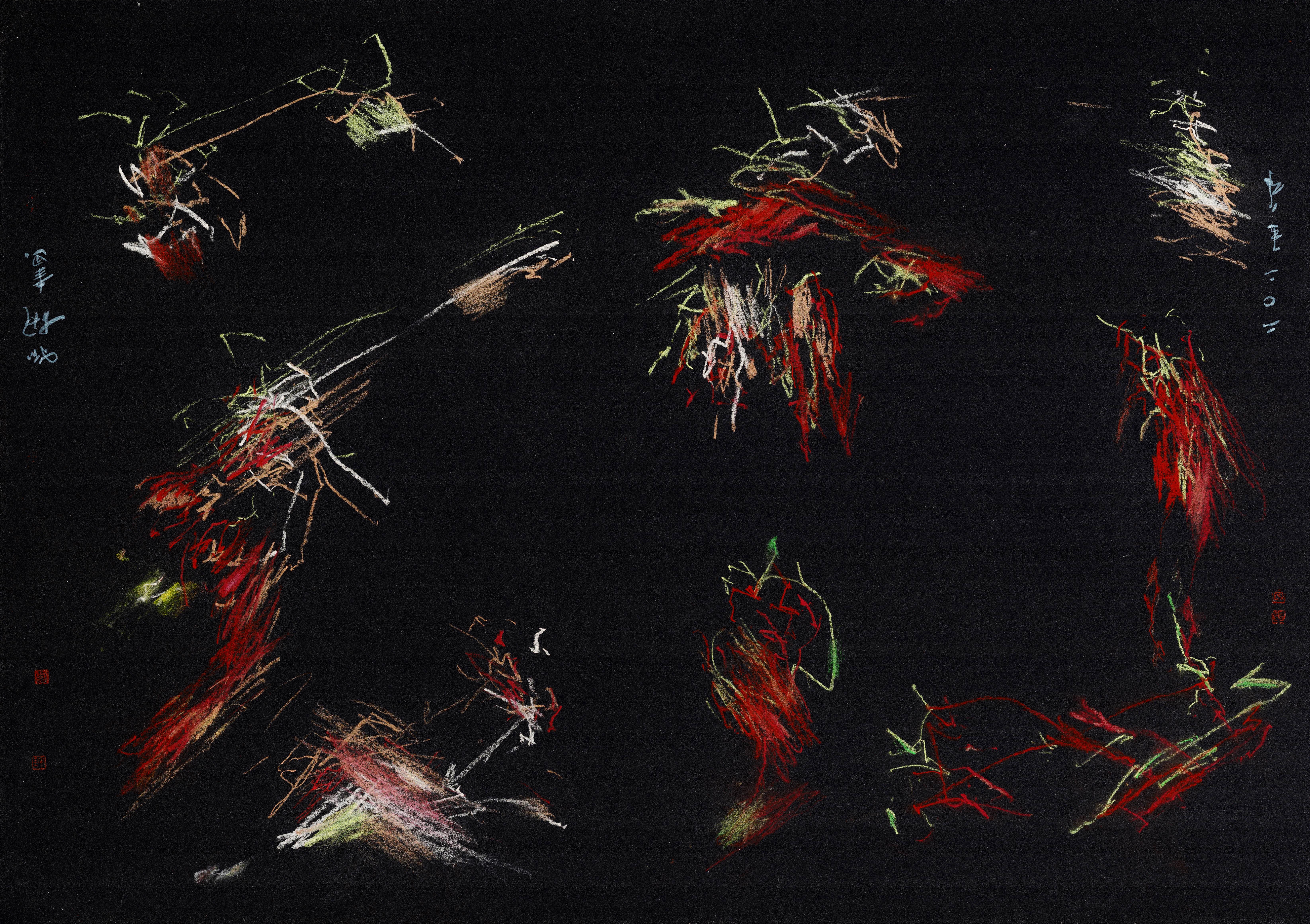
Nothingness in Color
Nothingness in Color continues the thought experiment that began with the journey to the Zen master—evolving beyond monochrome, embracing color, and preserving the essence of minimalism
-
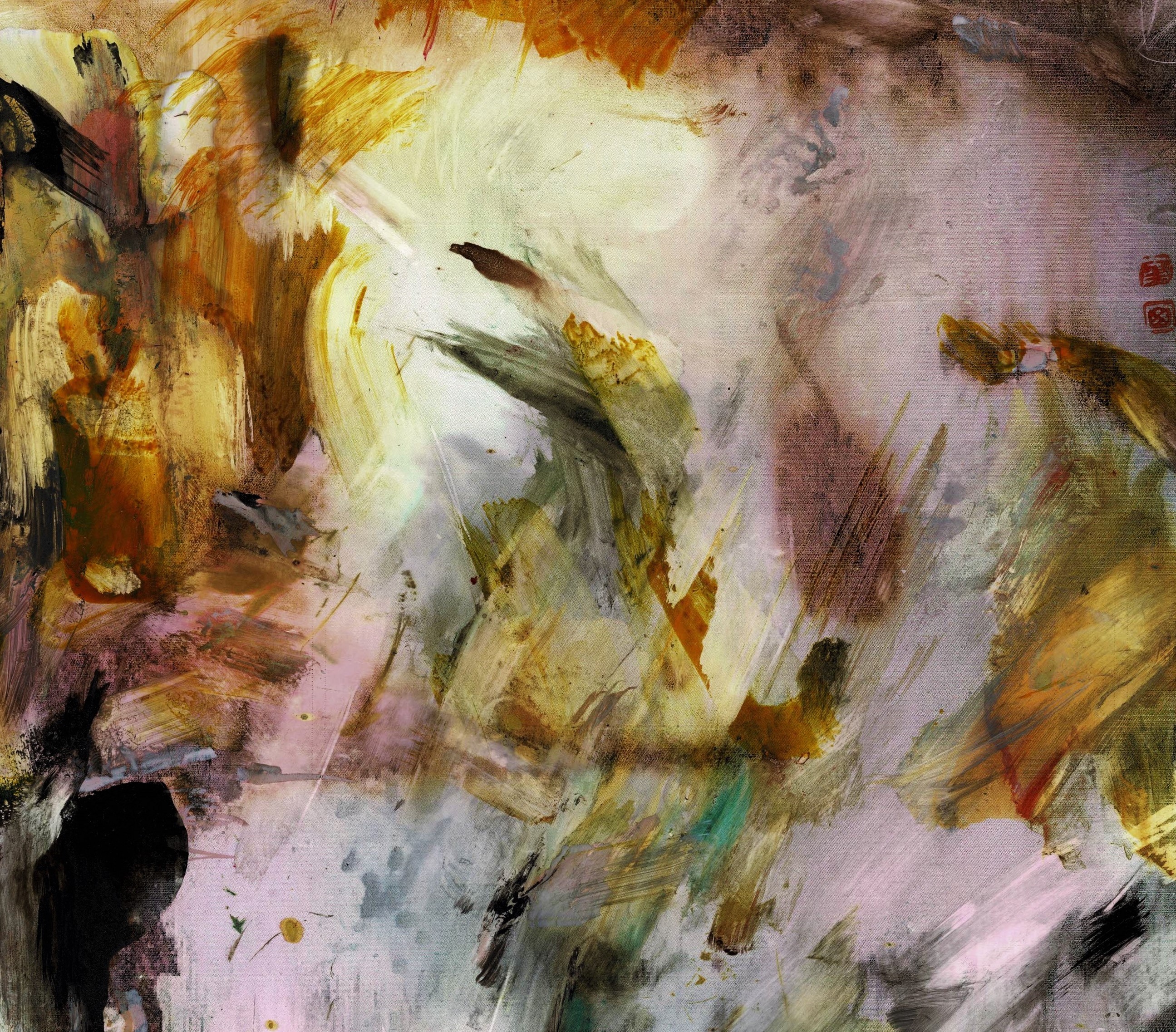
Goodbye to the Winter
In traditional Chinese painting, the unpainted white space is often considered more important than the black ink. In this post, I challenge this balance of opposites by painting on black paper, shifting the focus so the unpainted black areas demand special attention. I share three new abstract works that explore the journey from winter’s darkness…
-
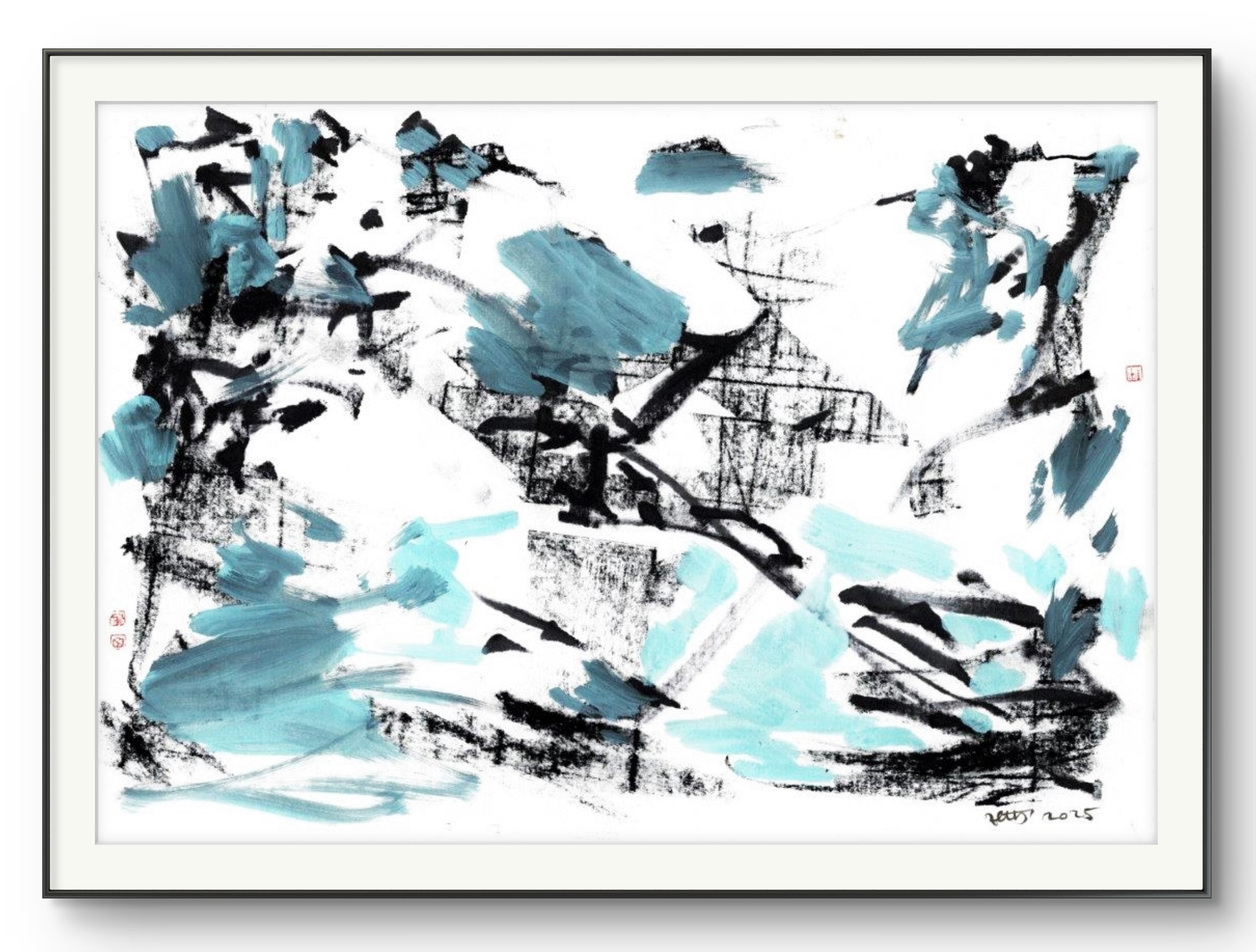
Depression: A Journey Through the Long Winter.
A long, seemingly endless winter is finally behind me. I tried to channel this extended dark period into my art, looking deep within myself. In this post, I share these new works. They are not a collection of horrors, but rather a creative passage through the cold and darkness before the promise of spring brings…
-

Meditation of the Zen Master
In this third and final part of our journey to the Zen Master, I share key insights into my understanding of Zen. Using my artwork, I explore these concepts and the essential balance of opposites that shapes both Zen and Dao. We also continue our playful experiment with AI analyzing the images, focusing on the…
-
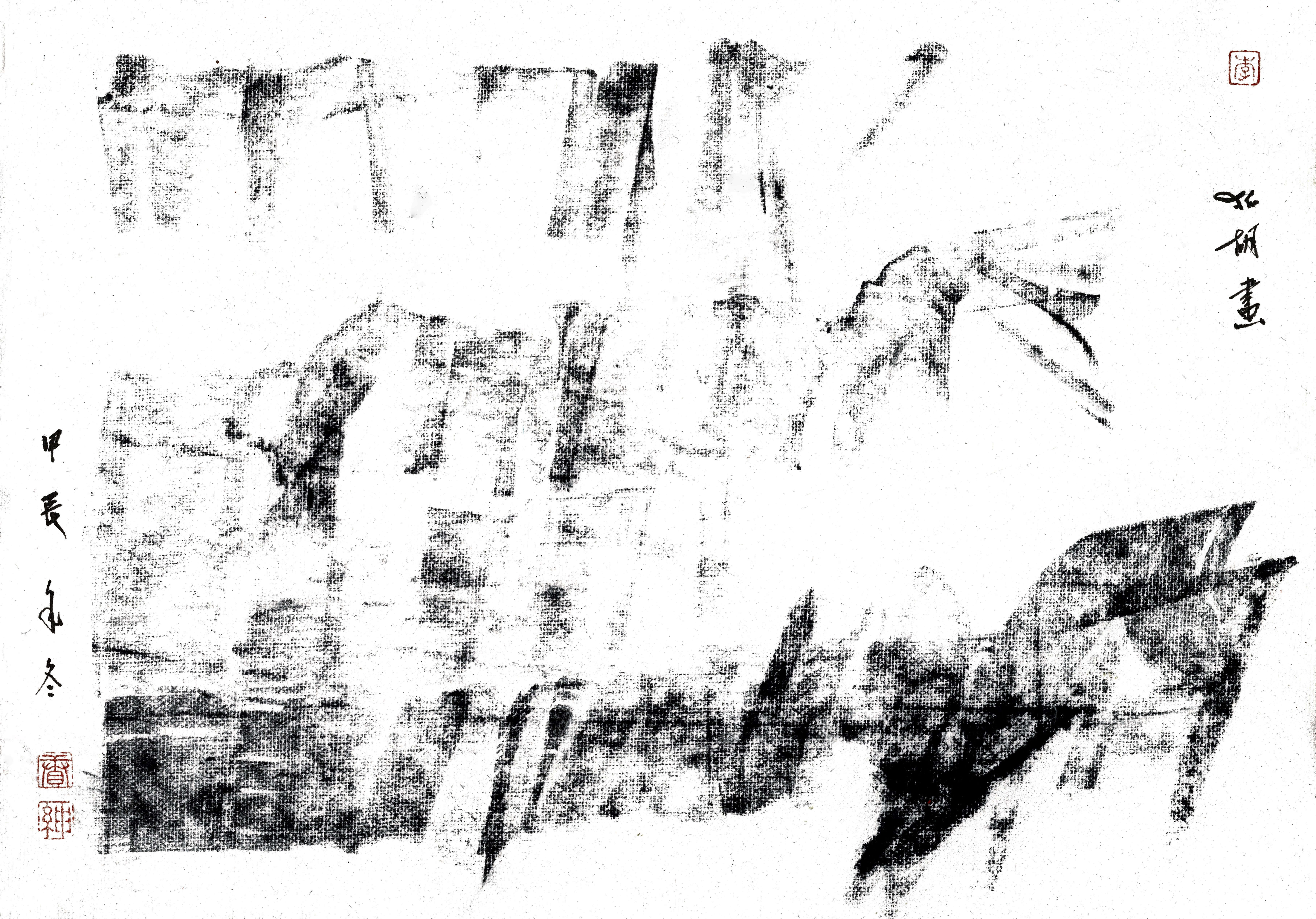
Journey to the Zen Master
In the second part of our journey to the Zen Master, I reflect on what originally sparked this project: my past experiences traveling on the Trans-Siberian Railway. I share an unexpected photo that connects to part one and explain why I discarded my initial concept of depicting a child’s journey. Instead, as the series progresses,…
-
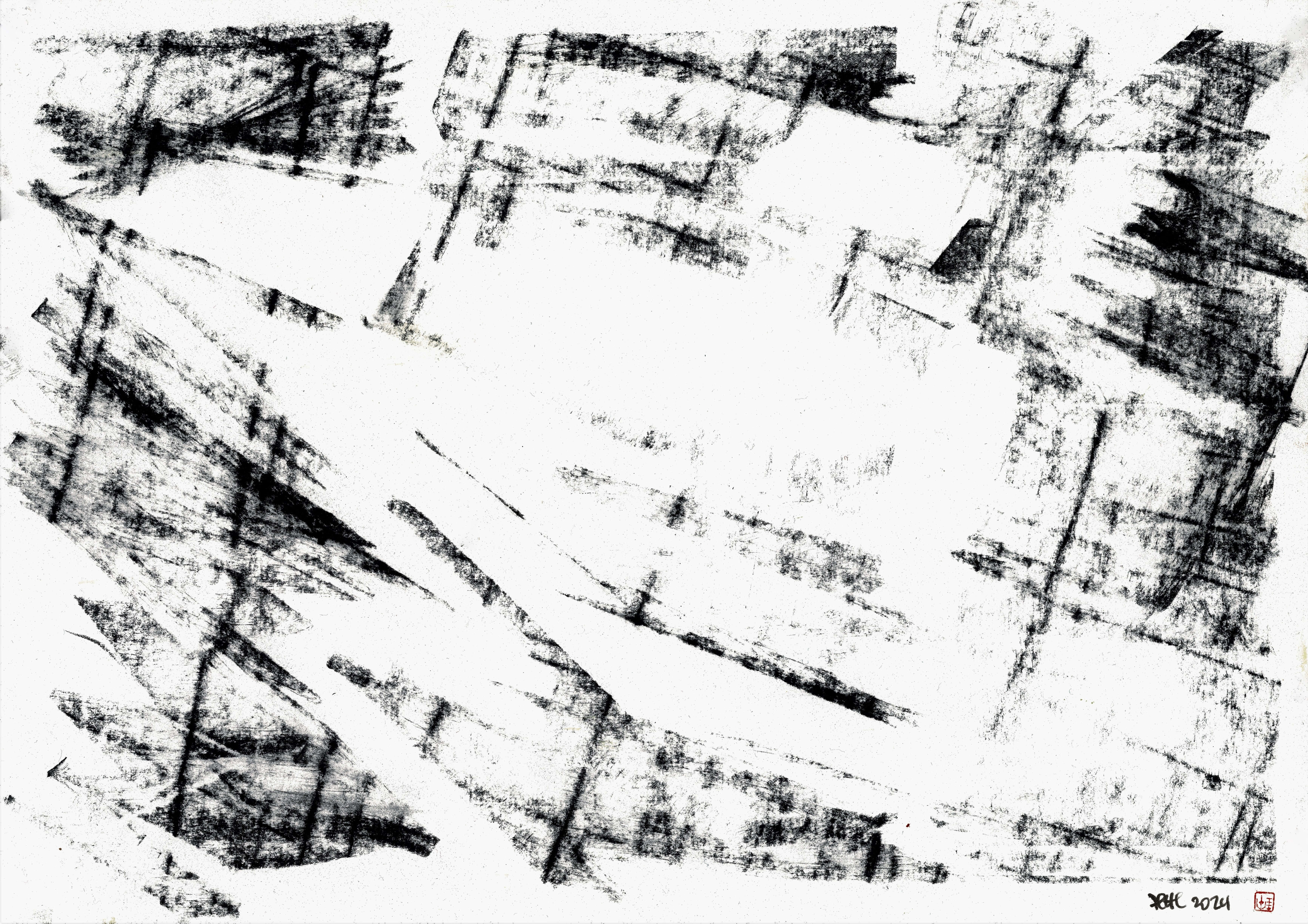
The Journey to the Zen Master
In the first part of our journey to the Zen Master, I reflect on my five-decade philosophical connection to Zen and Daoism. Since I do not have a physical master, this journey is purely a mental exercise. In this series, I attempt to capture an abstract experience through my artwork, highlighting the essential balance of…
-
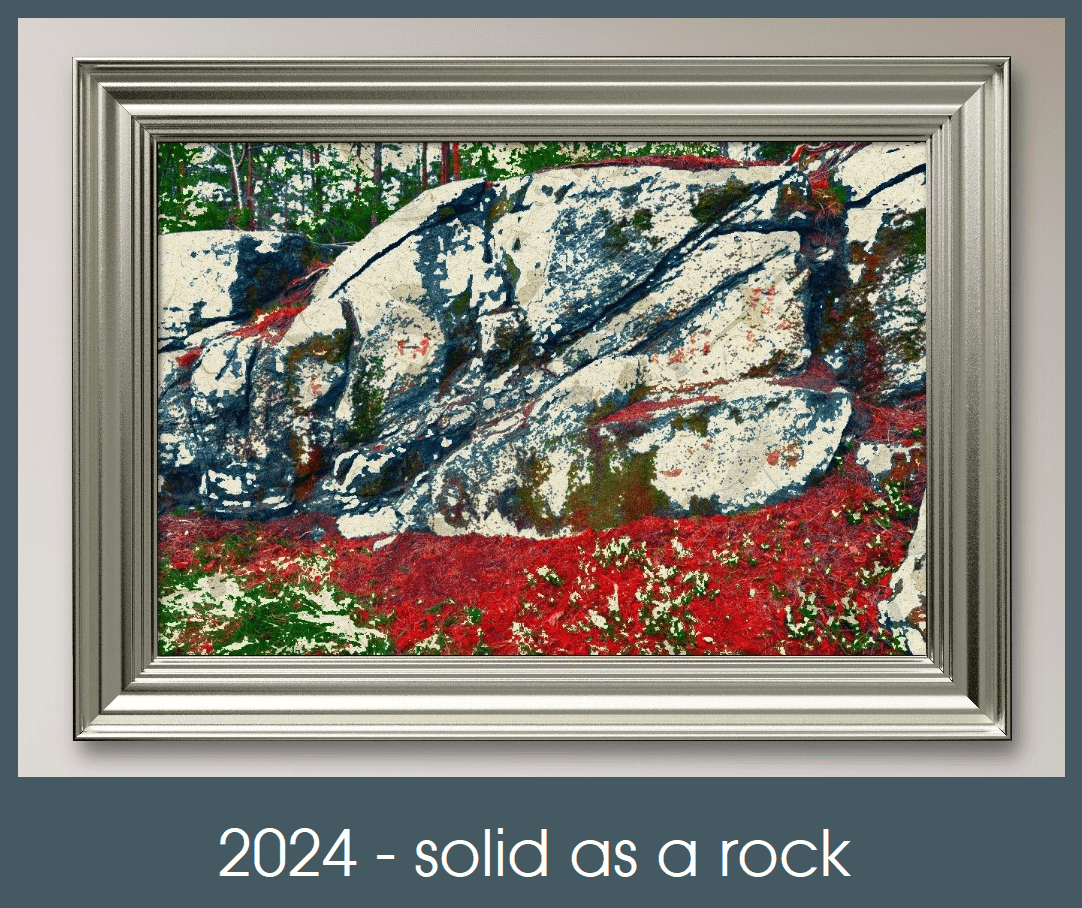
The Dao of Annual Planning in 2024
A look at annual artistic planning and how creative priorities evolve over time. The article reflects on long‑term projects, shifting focus, the balance between structure and intuition, and the ongoing process of aligning artistic goals with personal development.
-
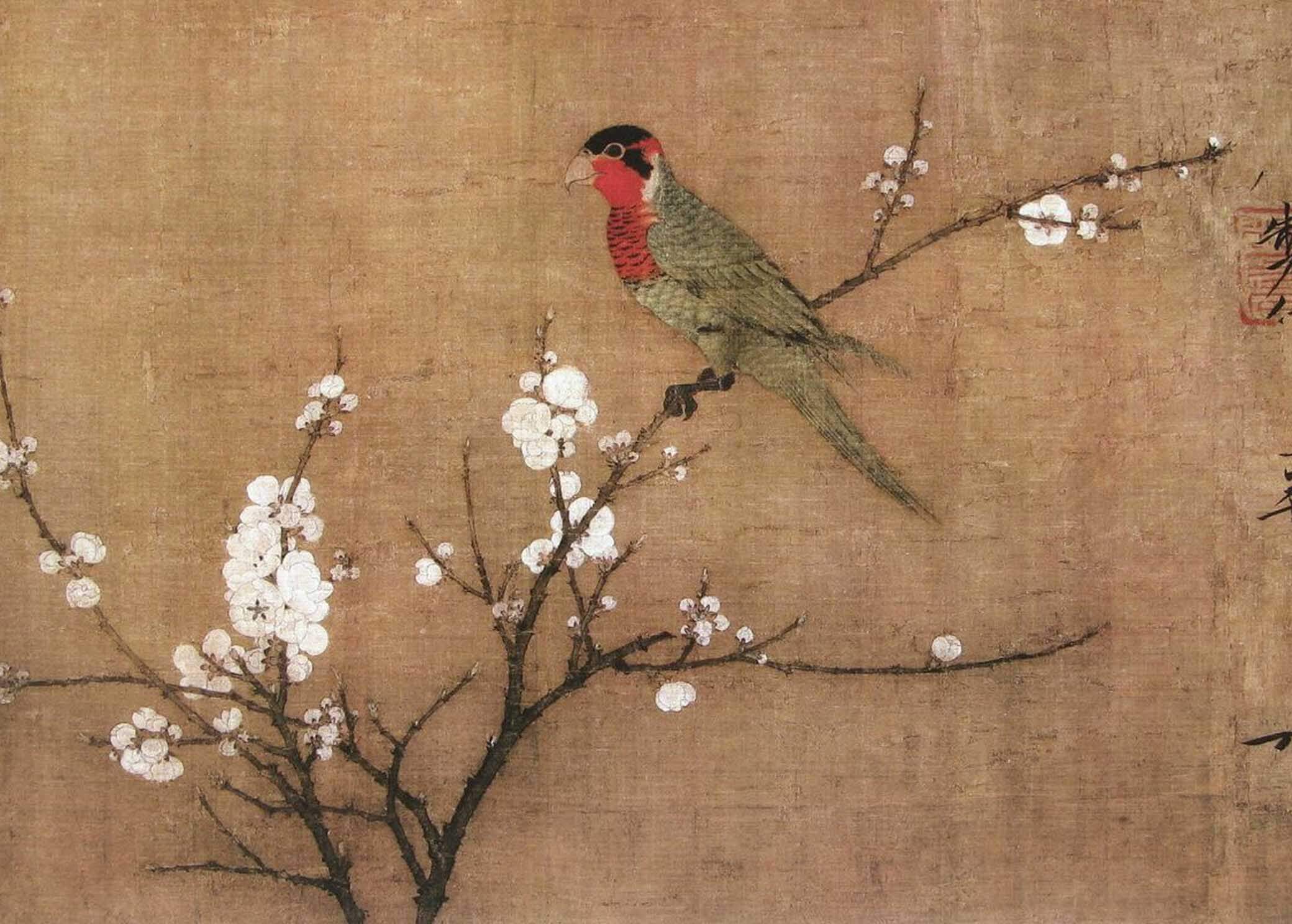
Emperor Huizong: When Rulers Still Loved Art
A reflection on Emperor Hui Zong’s unique artistic vision, his elegant brushwork, Daoist‑inspired aesthetics and the refined cultural atmosphere of his court. The article explores how his sensitivity, poetry and innovation shaped Chinese art and continue to resonate today.
-
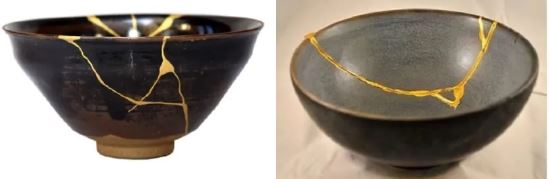
Wabi Sabi and the Aesthetics of Imperfection
In this article, I share my personal approach to Wabi Sabi, a philosophy deeply rooted in Zen Buddhism and Daoism. Going beyond the well-known art of repairing broken pottery, I explore the natural balance of perfection and imperfection through my own recent paintings.
-

Theme and Variations
In the series “Theme and Variations about a Blossom in Autumn,” the delicate image of a fading blossom takes center stage, offering an allusion to the graceful aging of a young lady.
-
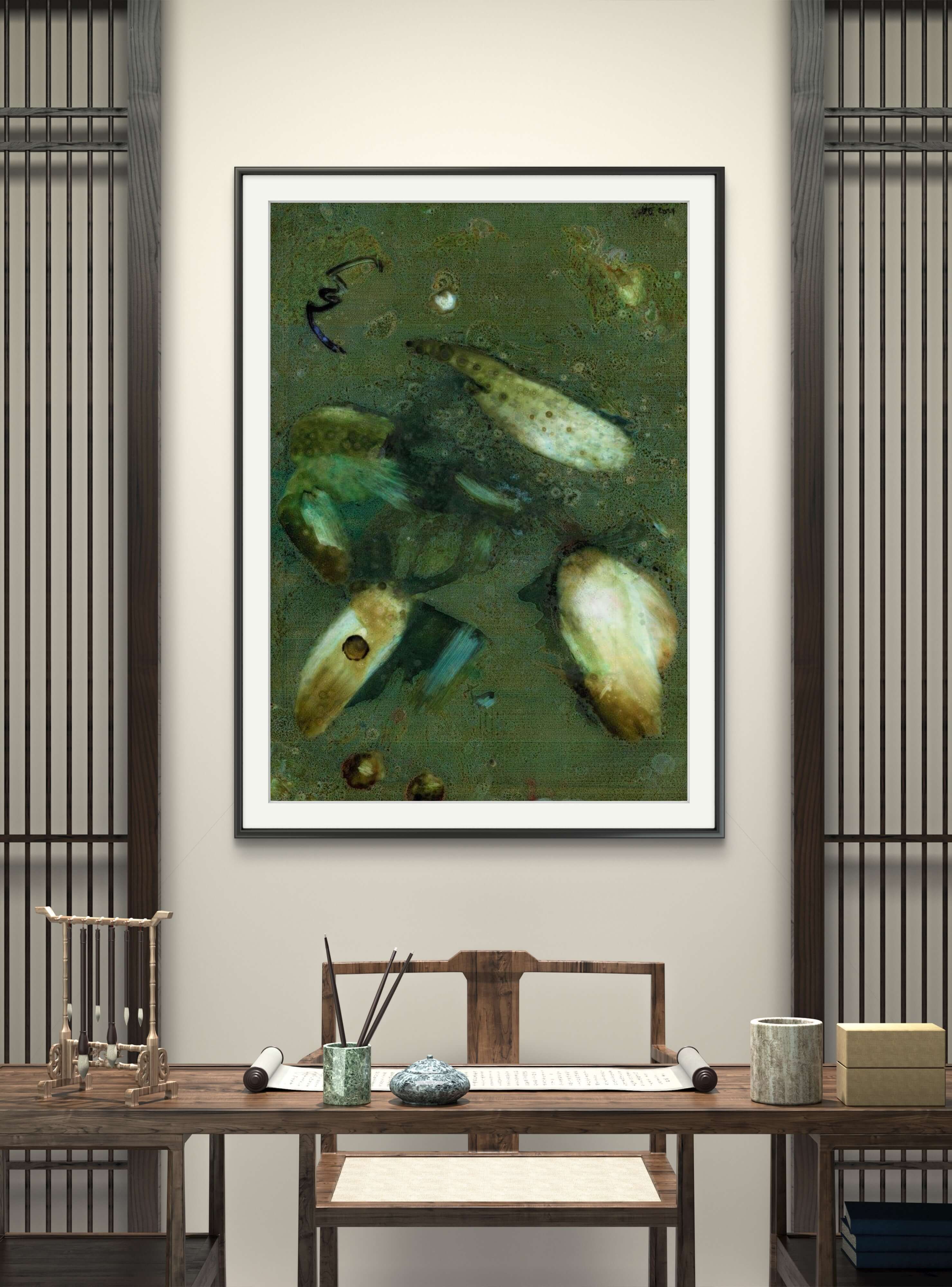
Daoist Aspects in My Paintings
A deep dive into Daoist influences in contemporary ink painting, focusing on emptiness, opposites, Zen elements and the interplay with quantum‑physics concepts. This article reflects on Nothingness, minimalism, perception and the resonance between philosophy and artistic practice.
-
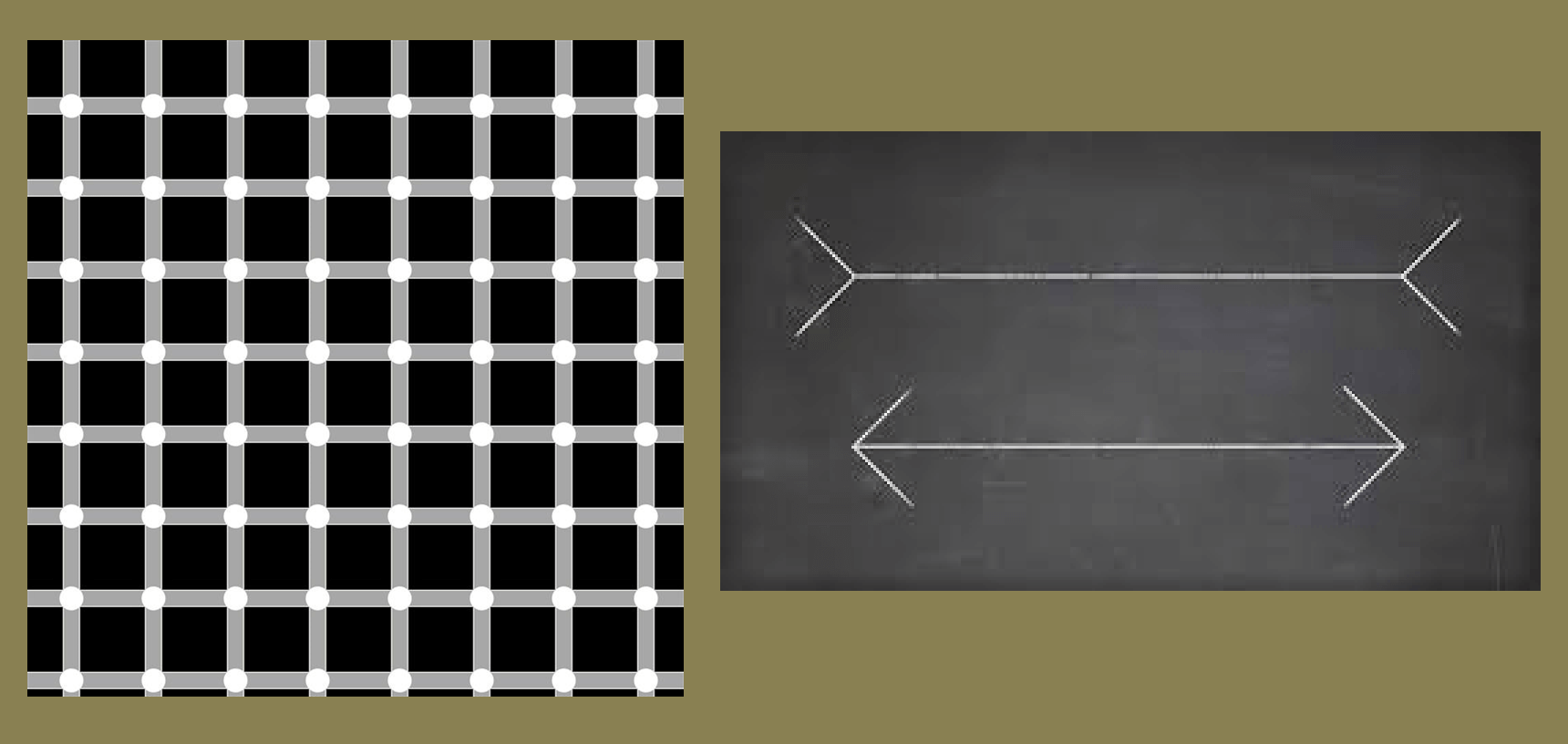
What is Reality? What is Nothingness?
What is reality? Our understanding of it constantly evolves—from once believing the Earth was flat to now observing the universe through the Hubble Space Telescope and quantum computing. In this post, I examine how modern science and different philosophical traditions perceive reality and nothingness. It is especially fascinating to see how quantum physics is beginning…
-

Visit of the old Zen Master and other Nonzens
I don’t actually know a physical Zen master, but his presence is still felt. In this post, I explore him as a teacher through a few grains of wisdom and semi-haiku. I also share my attempts to visually portray this master by finding the exact line where the concrete and the abstract meet. It is…
-
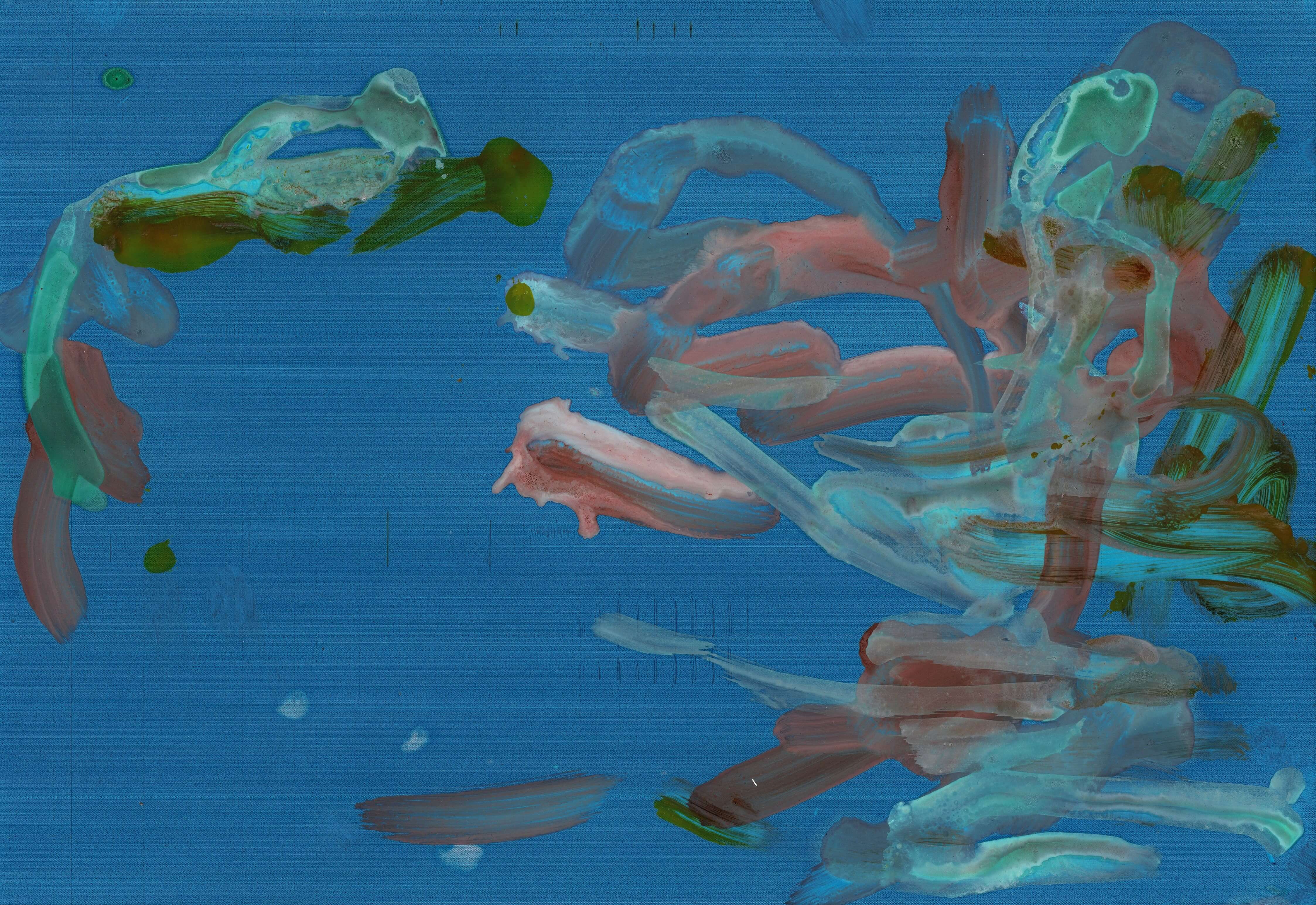
Summer Inventory
I conduct a summer inventory twice a year to bring a sense of order to my paintings. In this post, I share a diverse collection of hidden works and high-quality “leftovers” that did not quite fit into previous articles. Revisiting and reworking these forgotten pieces reflects the essential balance of opposites—finding value in what was…
-
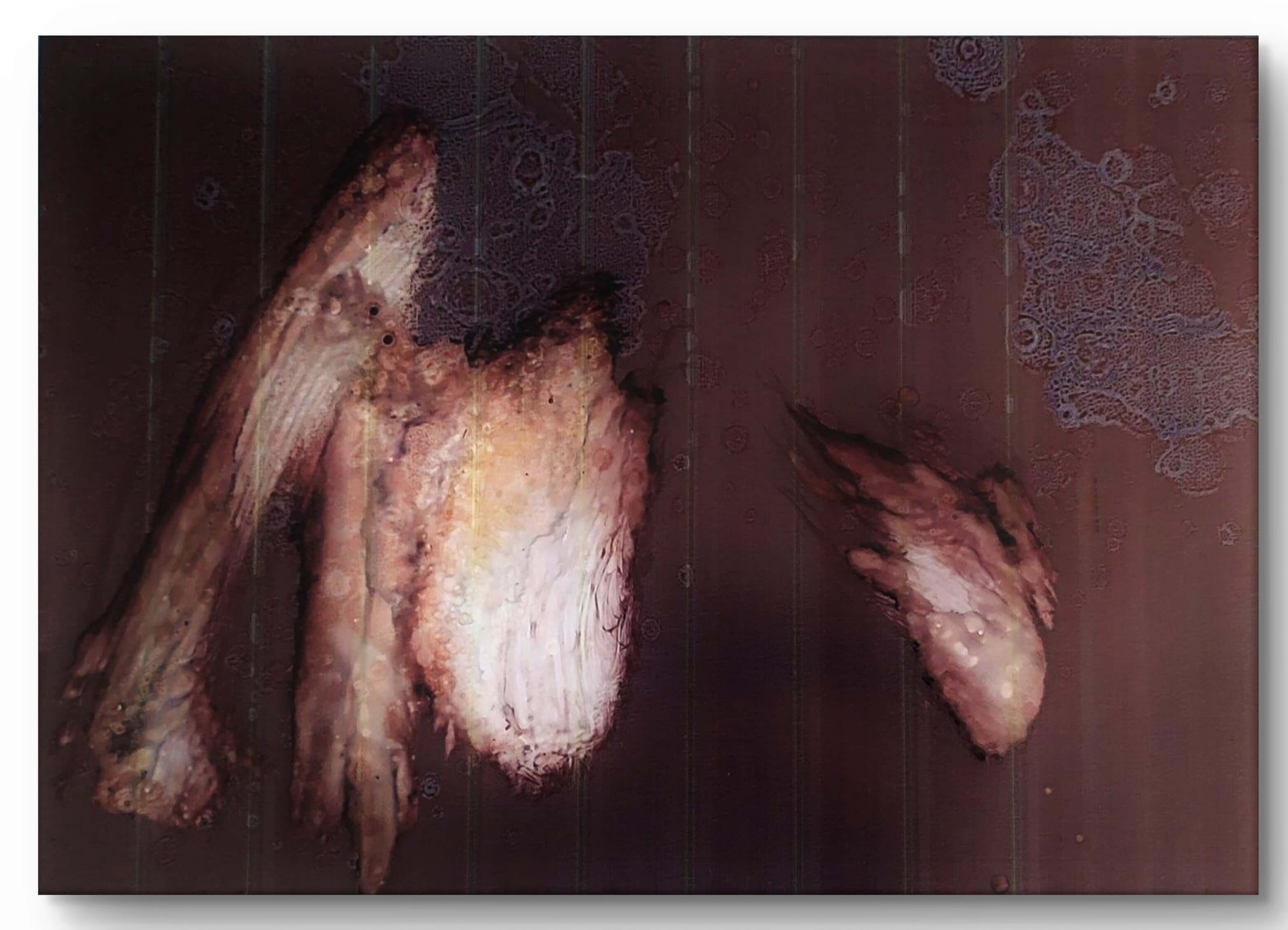
Can We Hear a Painting?
Can music be translated into painting? An exploration of rhythm, silence and sound through abstract art inspired by Wagner, Bruckner, Bach, Shakuhachi, Arvo Pärt and Brian Eno.
-
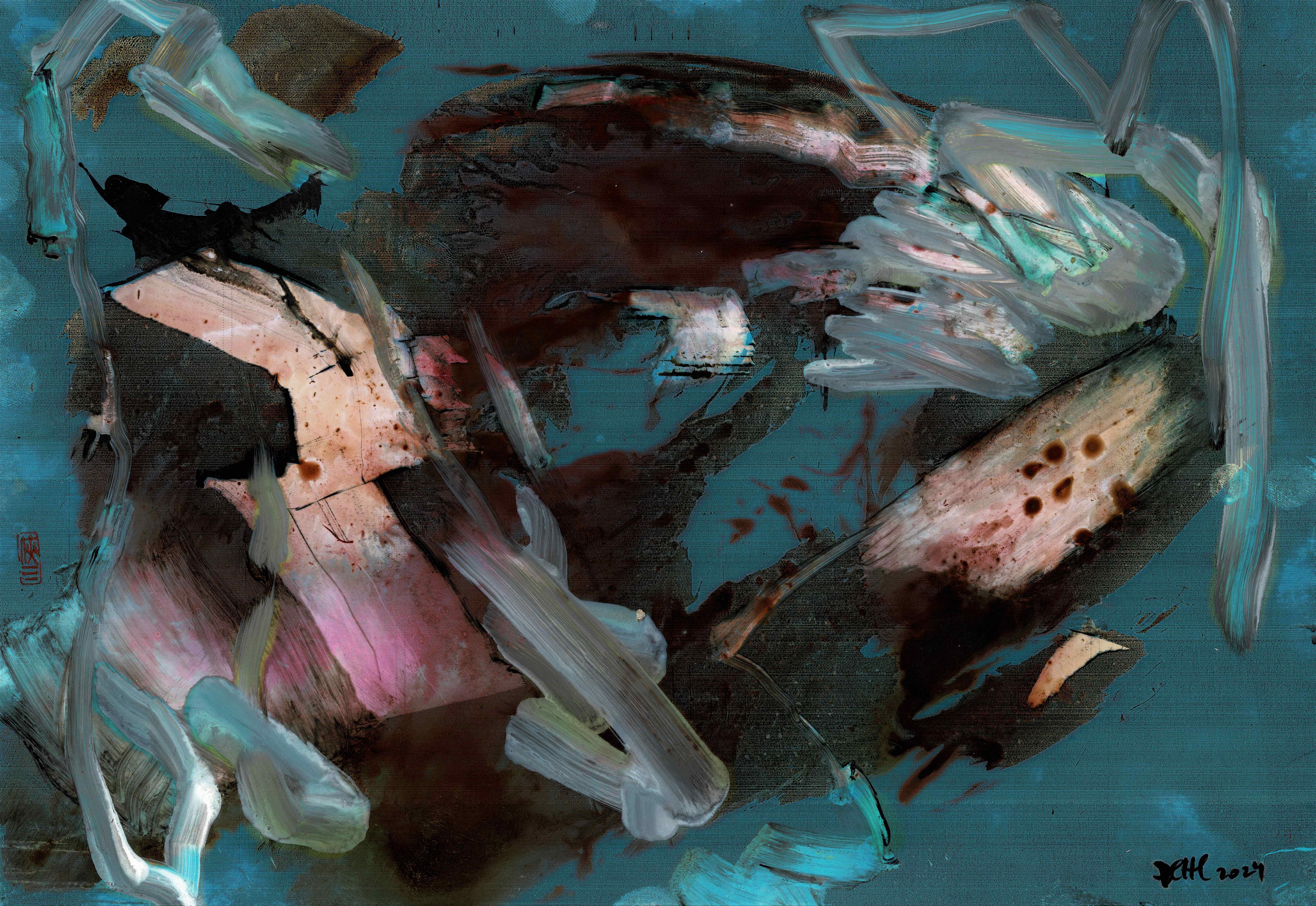
Emptiness, Space, and Depth
Many artists explore space and depth in their work, qualities that are often less prominent in modern painting. In this post, I examine these themes and share how navigating a recent crisis led me to simplify and reduce my own art to its core. This process of release is deeply inspired by Zen Buddhism and…
-
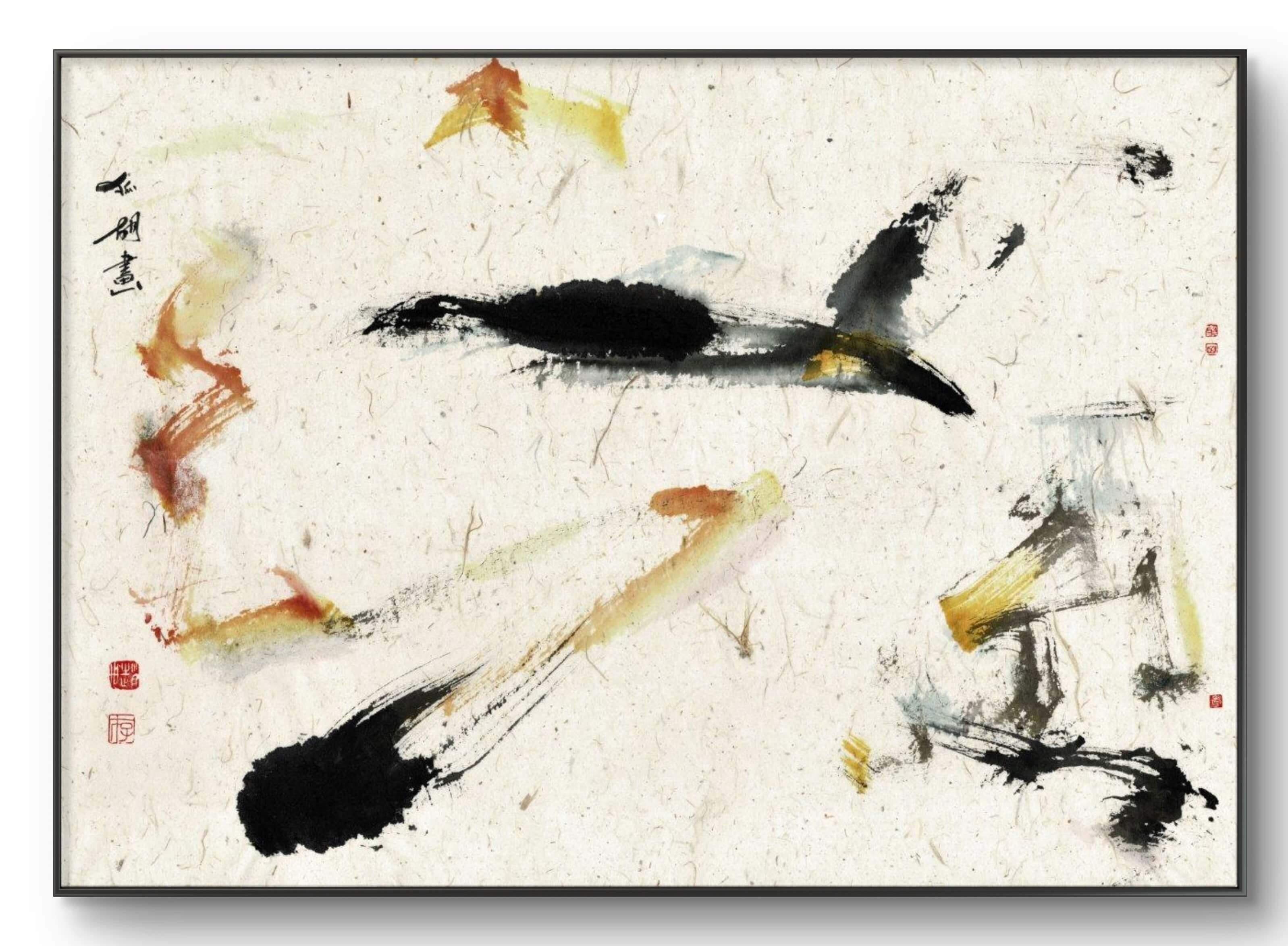
Essence in Art: Less is More
A reflection on the essence in art, exploring reduction, clarity and presence. The article examines how removing the non‑essential reveals deeper meaning, how simplicity sharpens perception, and how artistic expression becomes more direct when guided by essential qualities.
-
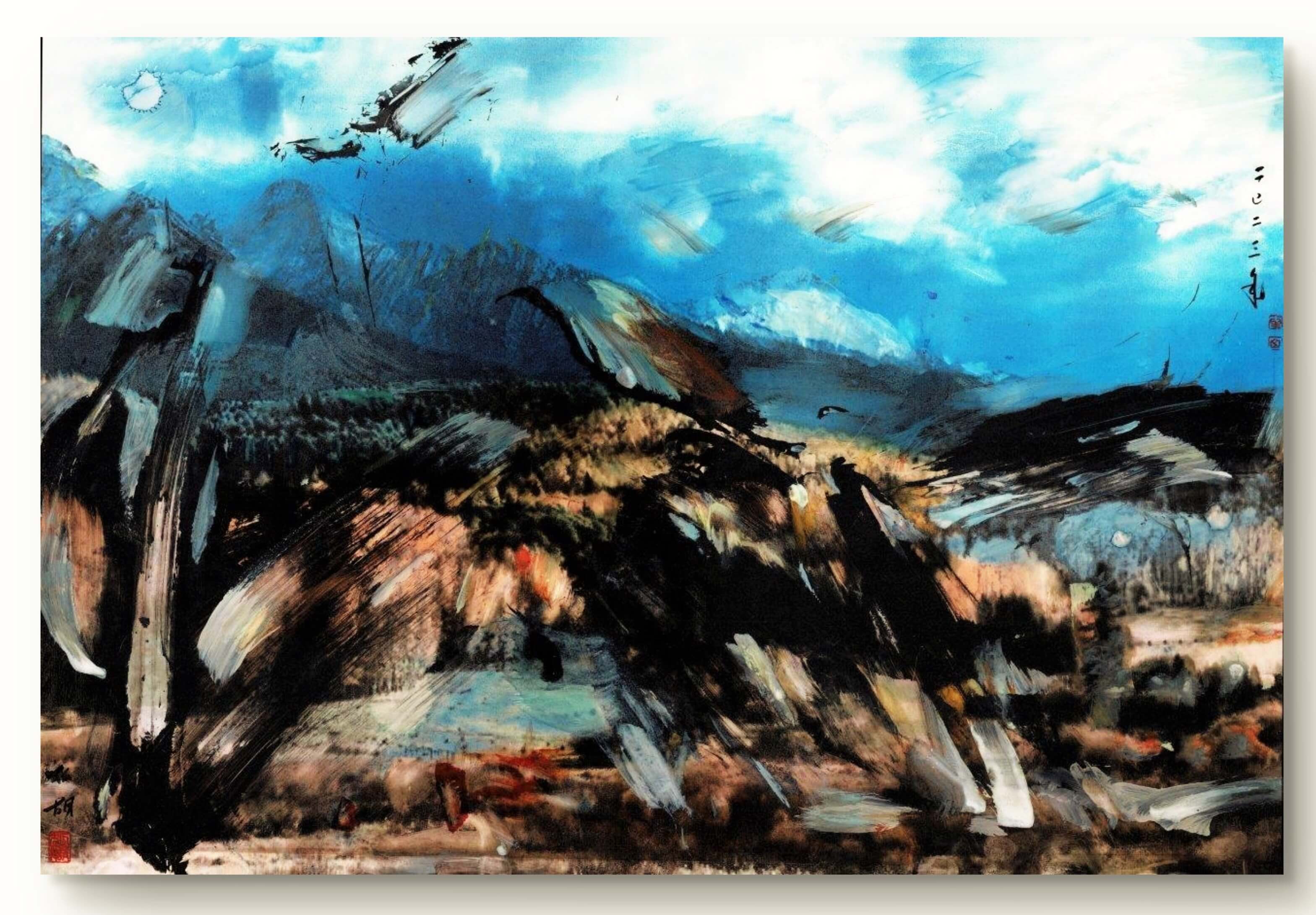
Between Calligraphy and Painting
An exploration of how years of practicing Chinese calligraphy influence my paintings, from expressive landscapes to monochrome painted calligraphy.
-
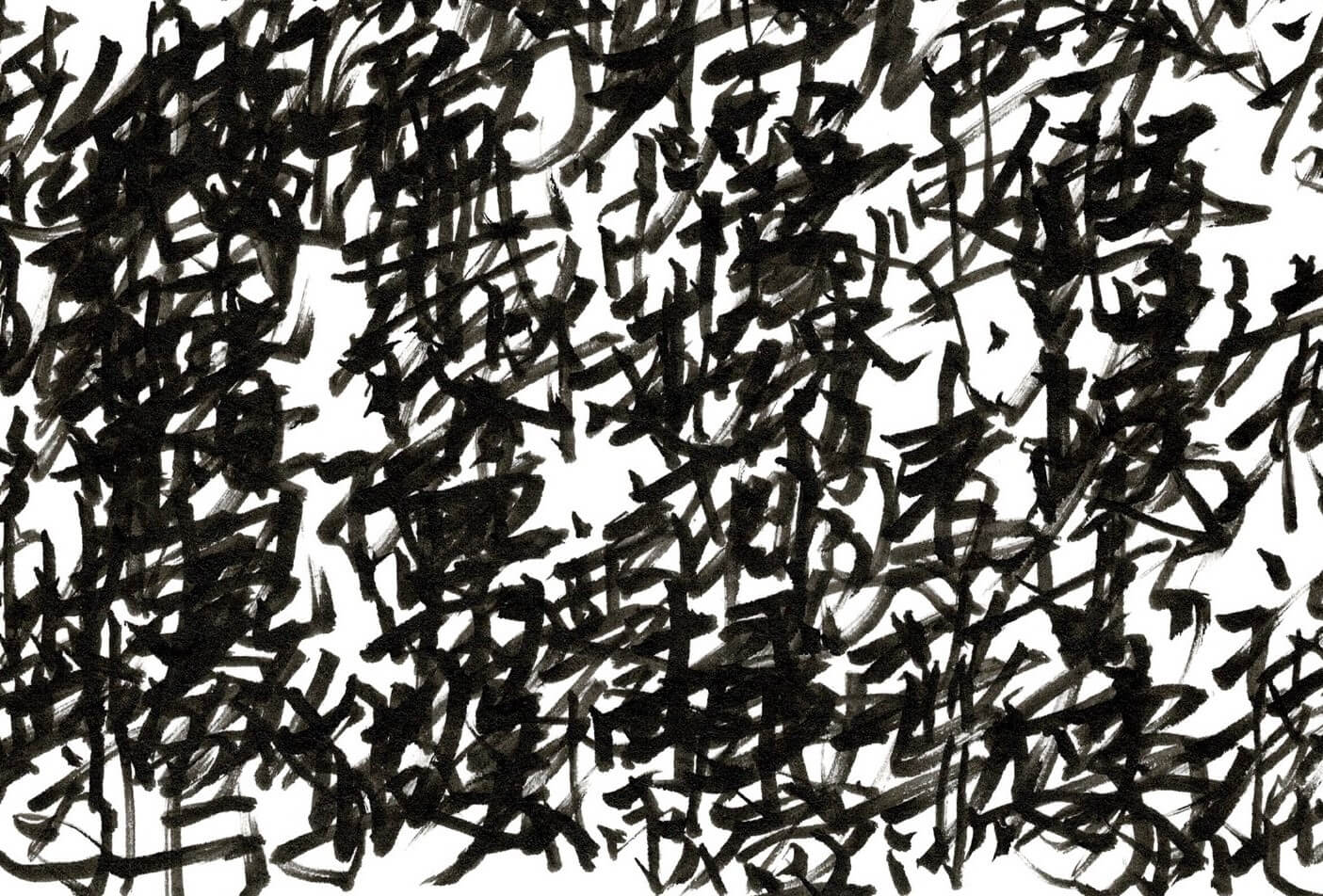
Red Dao and Black Zen: Painted Calligraphy
Red Dao and Black Zen offers a closer look at my painted calligraphy process, where repeated layers of Chinese writing gradually transform text into image.
-

2024 How do you set it up?
Despite the current world situation, I am welcoming the New Year with an optimistic, Daoist mindset. In this post, I want to take a moment to thank my readers for their continued support and share a surprisingly positive forecast for 2024, based on a rather unusual metric: twenty years of spam emails.
-

Wu Wei: Effortless Action in Daoism and Chinese Painting
An exploration of Wu Wei (無為), the Daoist principle of effortless action, through Zhuangzi’s Cook Ding, Chinese painting, Qi and spontaneous artistic practice.
-

Day Dream Job
A reflection on daydreaming as a creative state, exploring drifting thoughts, intuitive imagery and gentle abstraction. The article examines how imagination flows into artistic expression, how wandering attention reveals new motifs, and how daydreams shape subtle shifts in perception.
-

Between Here and There
A reflection on the threshold between here and there — between waking and dreaming, expectation and authenticity. The article explores new works from the ‘Exit’ series, dramatic scenes from the Magic Sea project, and a childlike depiction of the fever‑night creeper, highlighting how perception shifts across states and artistic intentions.
-

And The Beat Goes On
A reflection on ongoing artistic projects and reduced posting frequency. The article presents new Magic Sea imagery, experiments with wood and elephant‑dung paper, and a Firebird piece inspired by Stravinsky, all tied to the attempt to paint more directly and less intellectually — with the beat simply continuing.
-

The Flow of Qi in Chinese Ink Painting
A personal exploration of Chinese painting, examining the flow of Qi, negative space and compositional movement through two experimental ink works.
-
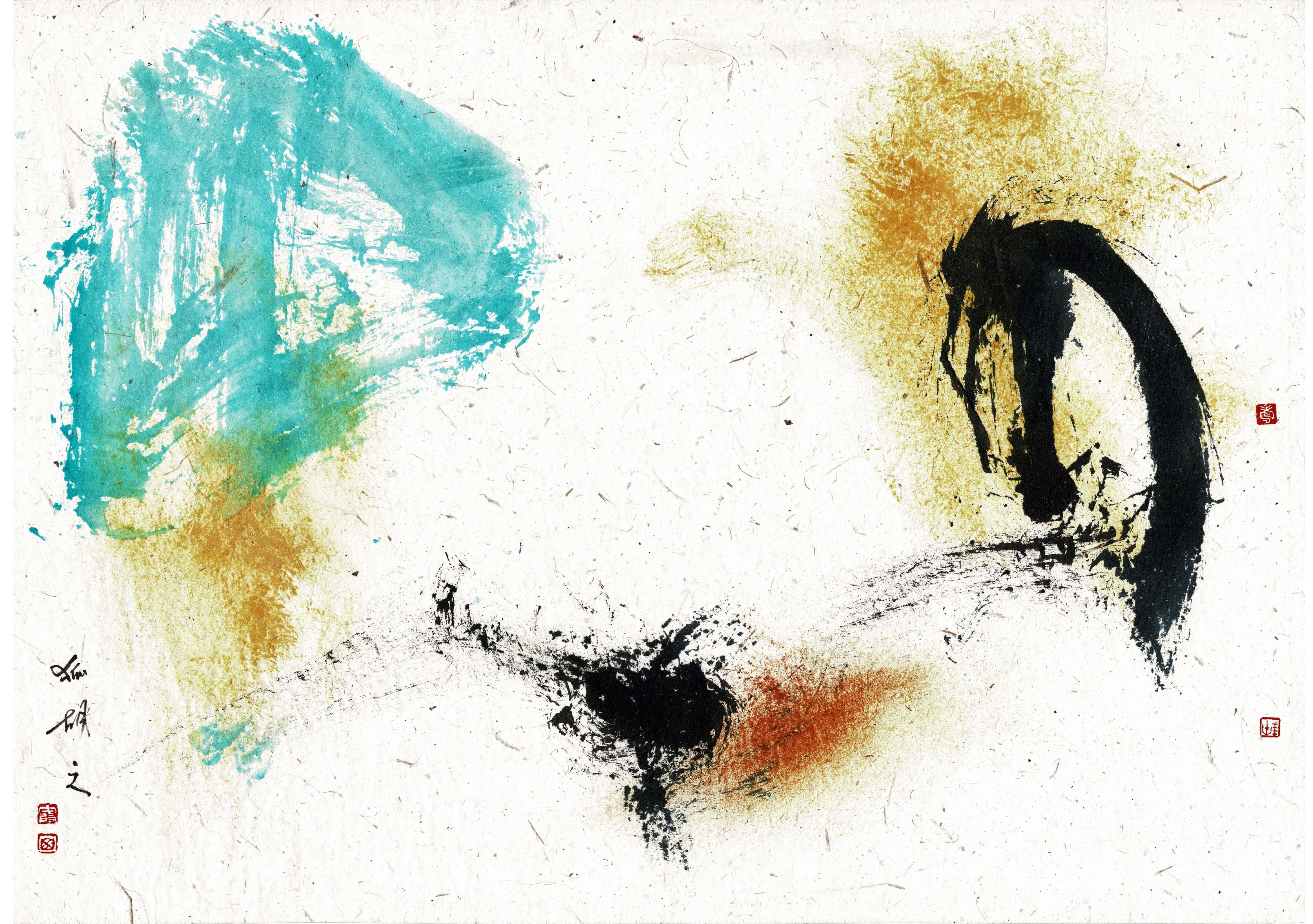
Wabi-Sabi, Japanese Paper & the Beauty of Empty Space
On wabi-sabi minimalism, the sensory beauty of Japanese and Chinese paper, and Tanizaki Jun’ichiro’s reflections on white space and shadow in Asian aesthetics
-

What game shall we play today?
About knowing and believing. Quantum physicist Anton Zeilinger: “Sciences are good at measuring something, but cannot say anything about our being”.
-

Bada Shanren & the Daoist Concept of Ziran (Naturalness)
Ziran is a fundamental concept in Taoism that can be understood as “naturalness” or “spontaneity.” It refers to the inherent nature and self-so of all things, emphasizing the importance of following the natural flow of the universe rather than resisting or attempting to control it.
-
Ego vs. Self in Daoism: A Western & Asian View
We all have an ego, but a misguided one can lead to suffering for ourselves and others. In this post, I contrast the Western understanding of the ego with the perspectives of Daoism and Zen Buddhism, and explore how an untamed ego can make even the most powerful people stumble.
-
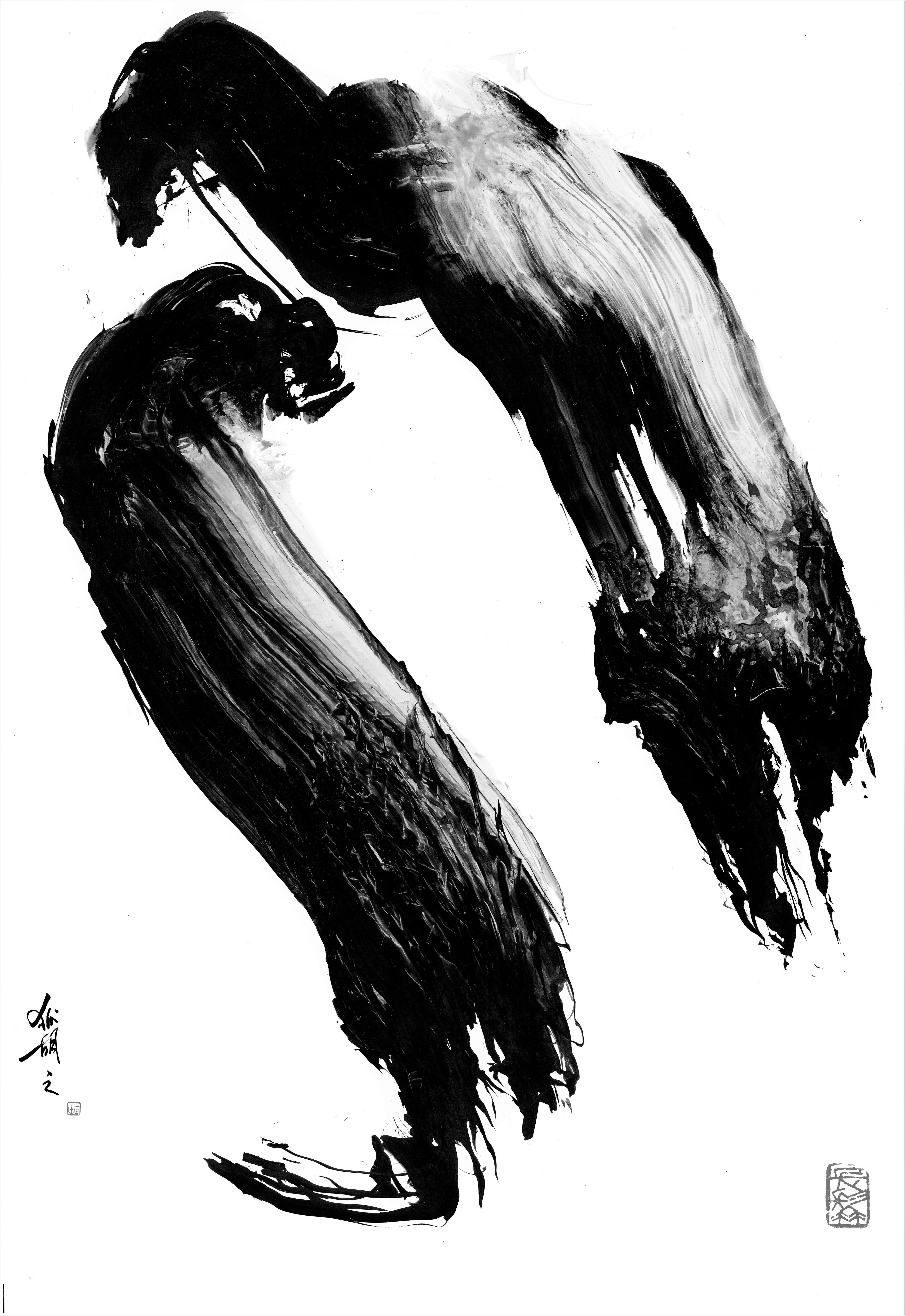
Project in the home straight – almost
As I mentioned after the Theodor Storm project, I am currently illustrating a new book by Prof. Wolfgang Kubin called “Das Buch der Zähren” (The Book of Tears). This project comes with specific challenges, starting with the archaic title and the requirement that all illustrations be printed in black and white. Since many of my…
-
Daoist talks (VI) Principles of Dao in Painting
As discussed in my previous art theory articles, Chinese painting over the last millennium is deeply rooted in Daoist ideas. It is safe to say that Chinese xie-yi (freehand painting) is essentially applied Daoism. Today, I examine an often overlooked aspect of Asian art theory that is crucial for understanding this style: living in harmony…
-
gone they are
A calm note on depression and how it can sit in the background of daily life. The post touches on hesitation, the difficulty of speaking openly, and the way art can hold a mood without exaggeration. It stays understated, pairing the text with a small ink work that mirrors the tone.
-

Dao and Zen in Chinese Painting: An AI Experiment
A Christmas conversation in 2022 led me to ask AI about Dao and Zen in Chinese painting. I share its response alongside my paintings and reflect on the limits of labels, the appeal of spontaneous brushwork and my own position as an artist.
-
Liang Kai: The Story of Eight Eminent Monks – Daoist talks (IV)
As both a painter and an art historian, Liang Kai’s “The Story of Eight Eminent Monks” holds a special place in my heart. In this post, I examine this important scroll and discuss the fluid boundaries between Daoism, Zen, and Buddhism in China. Unlike the strict religious divisions often found in the West, Chinese philosophy…
-

Daoist Talks (III): The Cosmos in One Dot
In this third Daoist Talk, Friedrich Zettl explores the dot as the smallest yet most powerful element of Chinese painting. Drawing on Daoist philosophy, mindfulness, xieyi and the work of Shi Tao, the essay examines how a single brushstroke can express the principles of nature, consciousness and the cosmos.
-

Three New Abstract Ink Paintings on Zen and Dao
Three strikes: Today I would like to present 3 newer works and will not write much about them. The first is a play on Zen thought. In the sense of what was said above, it remains without further explanations.
-

Daoist Talks (II): The Basics
In Daoist Talks II, Friedrich Zettl explores the relationship between Daoism and Chinese painting, from xieyi and calligraphy to yin and yang, qi, wu wei and the different ways Chinese and Western artists approach nature.
-

Hakuin’s Koan: The Sound of One Hand Clapping
I will continue posting new articles every two weeks. Today, we revisit the challenging concept of the “existence of the nonexistence” through Hakuin Ekaku’s famous kōan, “The sound of one hand clapping.” I am sharing an older painting where I explored this paradox graphically. Rather than literally illustrating a sound, this piece of Zen-inspired art…
-

Daoist Talks (I): Zhuangzi’s Butterfly Dream in Ink Painting
Daoist Talks (I): While many beginners approach Daoism and Asian art theory through Laozi’s complex Dao De Jing, I find Zhuangzi’s profound and humorous stories much more accessible. Today, I revisit his famous butterfly dream—a key story about dissolving the boundary between subject and object. I also want to ask for your feedback. If you…
-

From Daoism to Zen in Chinese Painting
An introduction to Daoism’s role in Chinese ink painting, tracing its evolution into Zen Buddhist aesthetics through two recent works and the six laws of Xie He.
-

Zen and the Arts: Emptiness, Simplicity and Presence
An introduction to Zen aesthetics in painting and calligraphy, exploring emptiness, simplicity, spontaneity and the importance of direct artistic experience.
-

Études – Small Studies and Quiet Experiments
Etudes: If one looks up the English-language equivalent of the French term études in conventional dictionaries, the result is generally “studies”. Only when you translate it from a music-theoretical point of view do you come up with “etudes”.
-
Cats in Chinese Painting
A brief note on cats in Chinese painting. The post comments on symbolism, traditional brushwork and the way this motif shifts between elegance and humour. It pairs the reflection with a small ink sketch that keeps the tone light and direct.
-

The Meaning of a Dot in Chinese Painting & Calligraphy
On the surprising depth of a single dot in Chinese calligraphy — qi, the play of opposites, and how a beginner learns to paint with meaning.
-

New Abstract Surrealist Ink Paintings
Why stepping away from an unfinished painting matters — three new abstract surrealist works and reflections on knowing when to stop.
-

Waltzing Corona: A Triptych on Balance and Yin-Yang
An abstract triptych reflecting on Vienna’s ball season during the pandemic, explained through Chinese principles of balance and yin-yang.
-

Gestural Painting: A Step Further
New gestural abstraction paintings exploring psychology, blending Chinese calligraphy with Western concepts.
-

The Essence of Chinese Painting: Emptiness and the Meaning of White
An exploration of emptiness and negative space in Chinese painting, from Daoist and Chan thought to the works of Bada Shanren and Liang Kai.
-

Mu Qi’s Six Persimmons: An Interpretation
An interpretation of Mu Qi’s celebrated Six Persimmons, examining its composition, symbolism, expressive brushwork and connection to Chan Buddhism and traditional Chinese ink painting.
-

Zha Shibiao: A Simple Painting and Yet a Treasure
Two intertwined trees, a boatman and an inscription: a close reading of Zha Shibiao’s album leaf, with reflections on brushwork, host and guest, and the space beyond the marks.
-

The Essence of Chinese Painting (III)
How does a painting guide the eye? I explore beginning, development, turn and resolution through Pan Tianshou’s compositions, implied connections and the active role of empty space.