
Yunnan Spring greetings (V)
Shi Dong Si: A Glimpse into the Shadow and Light of the Dao
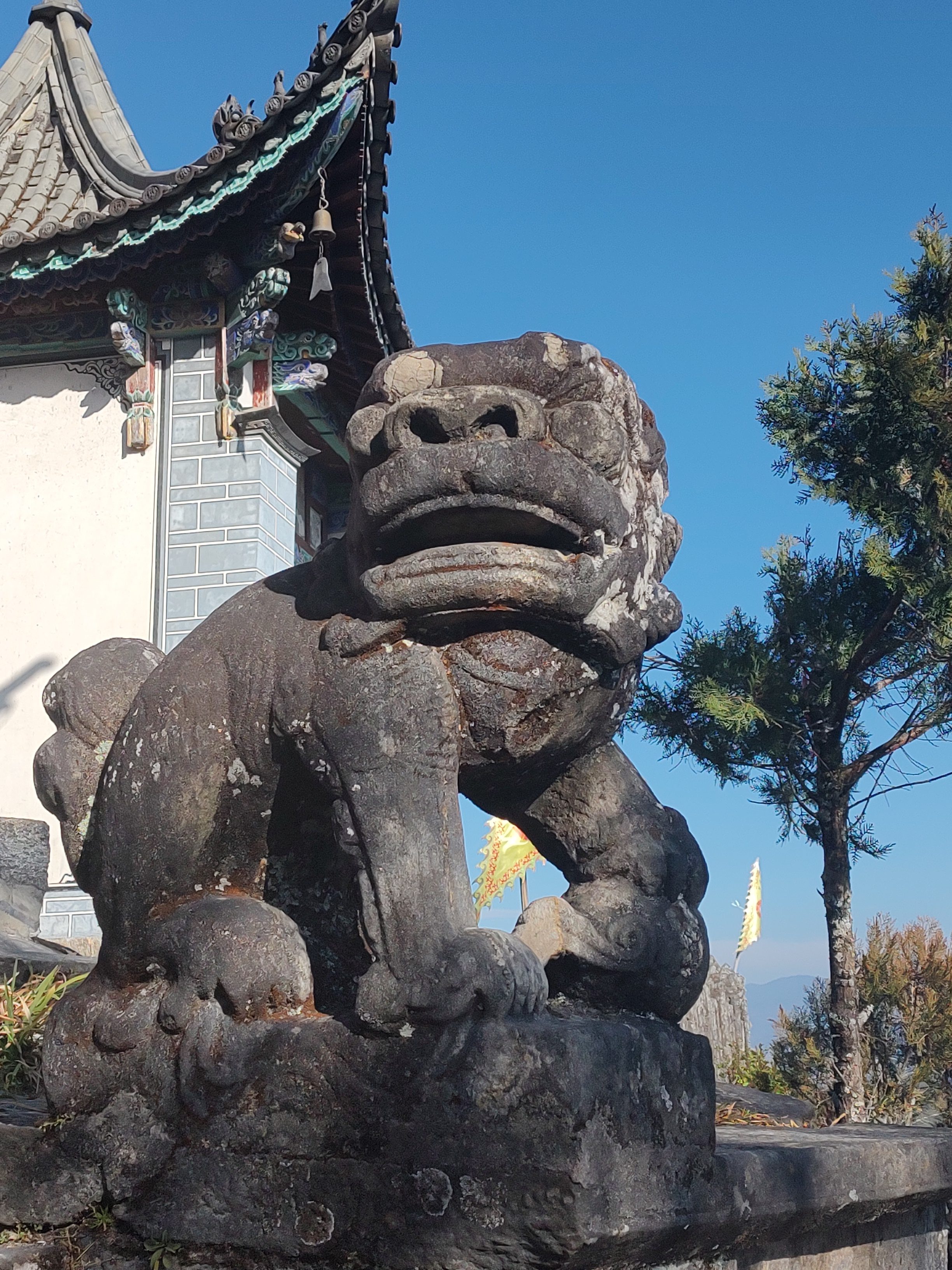
I recently visited Shi Dong Si (石洞寺Stone Cave Temple), a place that feels almost suspended in time. It’s not just the architecture—the curved eaves and the weathered stone bridge—but the atmosphere. There is a distinct sense of “Pure Dao” here, a quiet but powerful presence that seems to emerge from the interplay of opposites. The Shidong Temple itself is a unique site built into the natural rock formations and caves, dating back to the Qianlong period (1794) of the Qing Dynasty.

Shi Dong Si 石洞寺
The temple seems to embody something of the Daoist interplay of Yin and Yang. Solid cliffs and stone structures meet flowing water and lush vegetation; permanence is set against movement, shadow against light. Crossing the bridge feels like moving between these worlds—leaving the noise of the ordinary behind and entering a space that invites reflection.

Crossing the bridge feels like moving between these worlds—leaving the noise of the ordinary behind and entering a space designed for reflection.


The stunning paintings at Shi Dong Si 石洞寺
Inside, the experience deepens. Inside, the experience deepens. Among the most striking features are six paintings depicting scenes of judgment and punishment in the underworld. Such imagery belongs to a complex Chinese religious tradition in which Buddhist, Daoist and popular beliefs became closely intertwined. The bureaucratic organization of the afterlife—with judges, courts and consequences for human actions—gave moral order a vivid visual form.

Shidian Yanluo (十殿阎罗): The Ten Kings of the Underworld

Seen from a Daoist perspective, these images also suggest another kind of balance. Light is understood through darkness, life against death, harmony against disorder. In the quiet atmosphere of Shi Dong Si, the disturbing paintings therefore seem less like a contradiction than another side of the same world.

Historically, such images were meant to guide moral conduct, showing the bureaucratic courts of the underworld where every action has a reaction. They remind us that the universe demands balance. Seeing them in this tranquil setting was a powerful reminder: peace isn’t the absence of darkness, but the understanding of it.

Diyu Tu (地狱图): Pictures of Hell / Hell Scrolls


Looking Up: A Promise of Harmony

While the paintings on the walls remind visitors of moral consequences and the shadows of the underworld, the ceiling tells a different story. It depicts a Fenghuang (Chinese phoenix) among blooming peonies. In Chinese visual culture, the Fenghuang is associated with virtue, harmony and auspicious order, while the peony traditionally symbolizes wealth, prosperity and beauty. Here, surrounded by the darker imagery of the underworld, the motif creates a striking visual counterpoint.


The White Pagoda near Shi Dong Si
Not far from Shi Dong Si stands this striking white pagoda, its tiers rising above the dense forest canopy. Seen from a distance, its geometric structure forms a remarkable contrast with the surrounding mountains and vegetation.

This pagoda is part of the architectural heritage of the Dali and Lincang regions.
More Yunnan Spring Greetings: Part I – Spring Greetings · Part II – Just Shaxi · Part III – Density, Depth, Tradition and Authenticity · Part IV – Every Day an Adventure · Part V – Pure Dao · Part VI – Along the Tea Road · Part VII – South of the Clouds · Part VIII – Customs, Traditions and Religion · Part IX – Buddha’s Light · Part X – Afterthoughts on the Yunnan Journey
Related articles: Wu Wei: Effortless Action in Daoism and Chinese Painting | From Daoism to Zen in Chinese Painting | Cats in Chinese Painting
Explore Art & Writing
Art Portfolio → Featured Artworks → Arts & Philosophy Journal → All Articles
Explore Asian Art Essays for writing on Chinese painting, calligraphy, aesthetics and art history.
Available Artworks
Original works are available on FriedrichZettl.com and Saatchi Art


Leave a Reply