
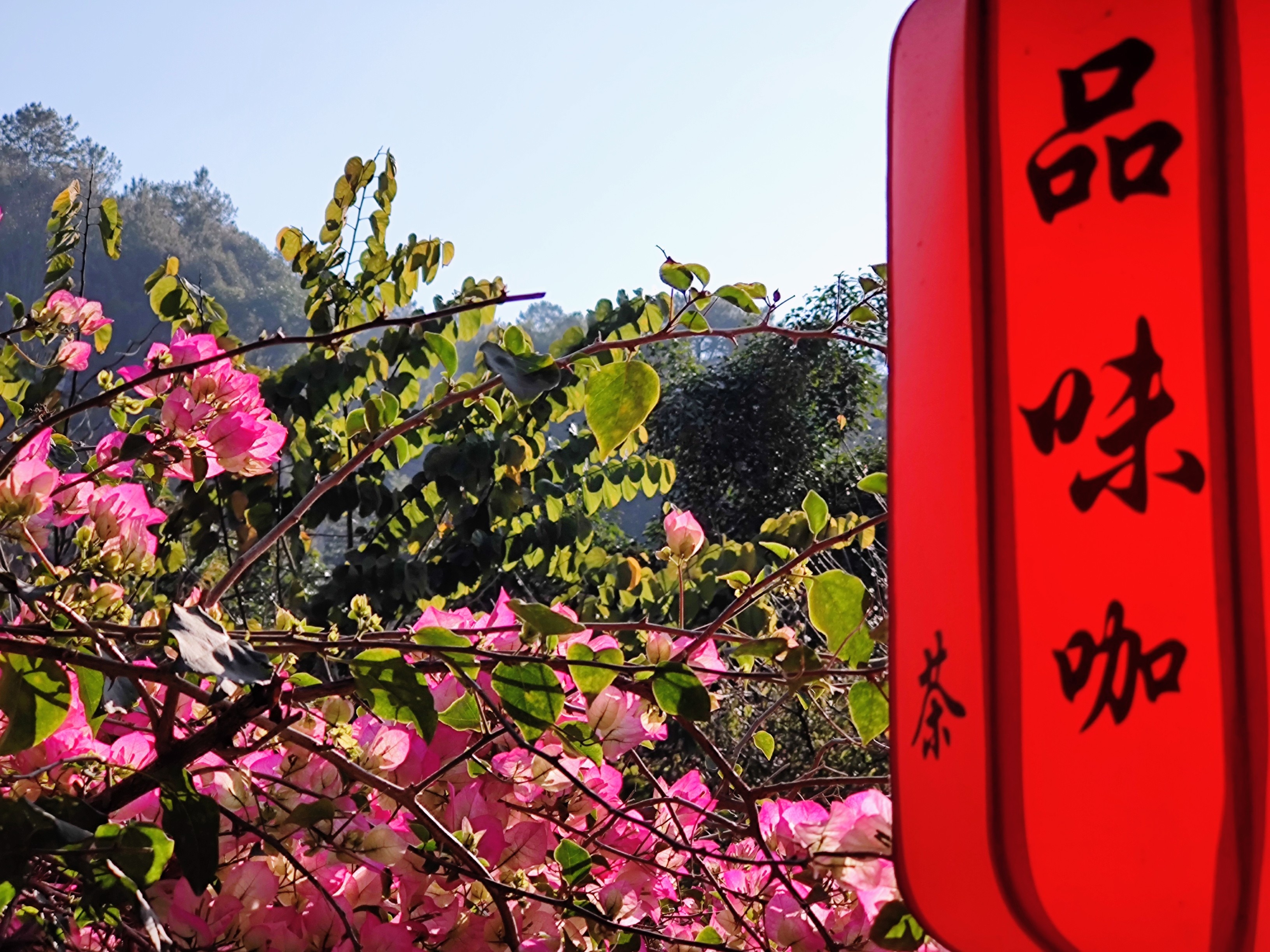
Yunnan Spring Greetings (VI):
Along the ancient tea road: From Fengqing, we took a taxi to Lushi (鲁史), another vital stop on the Ancient Tea Horse Road. Although only 80 km away, the drive took over four hours. We wound our way down from 2,000 meters altitude through sometimes dangerous switchbacks, only to climb back up again multiple times.

The reward for this white-knuckle drive was breathtaking scenery and the crossing of the Mekong River.


Lushi: The Forgotten Village

Lushi was once a crucial hub where tea from the mountains was collected and packed for the long journey to Tibet.

Known historically as a “Little Shanghai” due to its bustling trade, it served as a sanctuary for caravan muleteers. Its unique layout, designed according to Feng Shui principles around a central market square, remains one of the best-preserved examples of a Tea Horse Road trading post.


The first walk through the village is striking. The alleys are paved with stone, mostly worn and crumbling, yet the houses still radiate a historic splendor.

However, a glance into the courtyards reveals deep poverty.

You see mostly older folks, the few children are, as always, adorable.


Restaurants are scarce and humble. Here is the entrance to the only acceptable one….

…..and its kitchen viewed from the outside:

The food, however, was surprisingly good. Since cars cannot navigate these narrow alleys, mules still transport heavy goods like sand, just as they did centuries ago.


High-Tech in the Highlands
In stark contrast, our hotel offered pure luxury. From heated toilet seats and automatic flushing to voice-controlled room infrastructure. “Xiao Yi, Xiao Yi, set the temperature to 24°.” The only thing I had to do myself was take off my socks. And then there was the breathtaking view through the French windows, even from my bed. Here we are, back at Yin and Yang.


On to Lincang
We had a female driver who had to drive the entire dangerous route back, partly at night. She drove us from Lushi to Lincang (临沧)—another four hours away—before facing a ten-hour return trip. An incredibly tough job.

Speaking of accommodation, Lincang offered an upgrade even from Lushi. The hotel here adds robot service to the mix.

Whether you order local delicacies found online, a bottle of wine, or a trendy anti-wrinkle cream, a delivery person drops it at the reception. From there, a robot takes over, calls the elevator, and delivers the goods right to the room door.
After the first third of the trip, dedicated to Daoist and Buddhist temples and endless stair-climbing, we are now moving more horizontally, focusing on landscape and nature. Mostly, at least.


The following photos are from a day trip to Wulao Shan (五老山). Impressive spring landscapes and a rustic farmers’ market.


The Good Life
People here live modest lives, yet you see so many happy faces. Chatting with them, the reason becomes obvious: they inhabit a beautiful spot with pristine air and spring water. Their food is “organic” by default, often grown right in their own backyards. There isn’t a doctor nearby—but with a lifestyle this healthy, who needs one?


Lincang was surprising in many ways, especially due to an unexpected invitation which I will cover in a later post. The reception took place in a historic tavern where tea caravans stopped hundreds of years ago. The artfully designed wooden panel wall is original from that time, bringing us right back to the Ancient Tea Horse Road.

Nakeli
The same applies to Nakeli (那柯里). Equally significant and visually pleasing, it has recently mutated into a tourist hotspot since President Xi Jinping visited the location.


More Yunnan Spring Greetings: Part I, Part II, Part III, Part IV, Part V, Part VI, Part VII, Part VIII, Part IX, Part X
Related articles: south-of-the-clouds I pure-dao I just-shaxi-and-feng-yu
Explore Friedrich Zettl’s Art and Ideas→
Art Portfolio → Asian Art Essays → Journal → Articles Archive


Leave a Reply