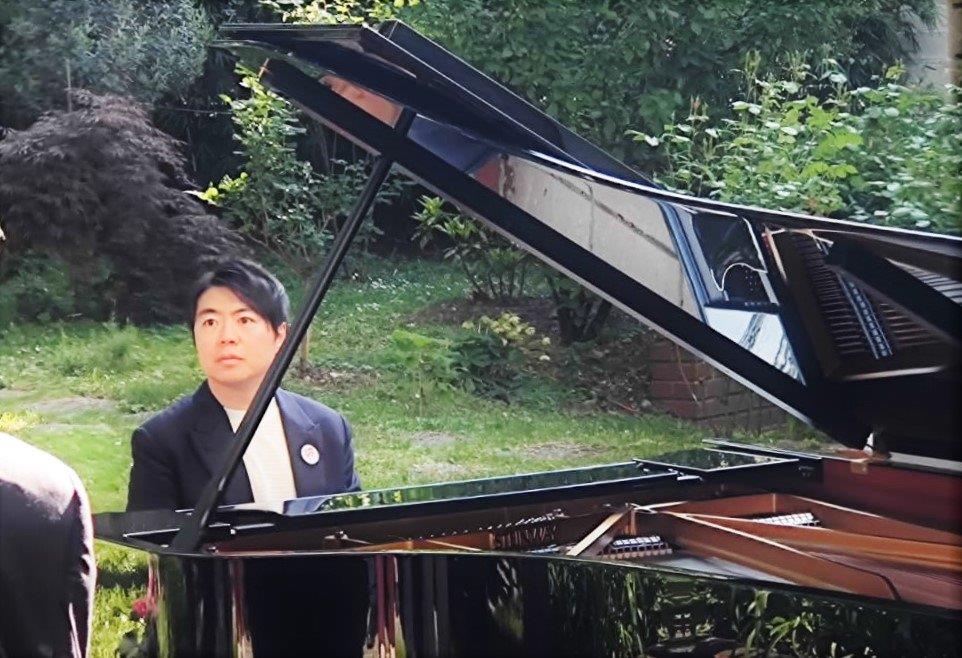
Lang Lang in Vienna

Lang Lang in Vienna and Other Music Anecdotes

Music as the Ultimate Currency of Cultural Exchange

Lang Lang’s recent performance in Vienna is the perfect catalyst for a few thoughts and old music anecdotes I want to share today.

Viewing music as the primary currency of cultural exchange is an idea that struck me decades ago. When we trade goods internationally, we rely on banknotes and coins. In the cultural realm, music has always been the natural choice. That is why concerts have consistently served as a proven vehicle for bringing different cultures together. [1]

Lang Lang in Vienna

I was invited back to the garden party of the Chinese Ambassador, Qi Mei, this year—an event I look forward to every season. In previous years, the guest list was quite small, mostly limited to politicians and business leaders. My repeated invitations are more likely because I regularly co-organized, initiated, and carried out cultural projects in the past. This has obviously not been forgotten. [2]

Lang Lang and Zettl Friedrich at the Chinese Embassy in Vienna
Lang Lang and the author at the Chinese Embassy in Vienna, May 20, 2026.

Usually, Chinese students from the Vienna University of Music provided the musical backdrop, which was always a pleasure. This year, additionally, a very special guest took the stage: Lang Lang. (郎朗) Anyone with an interest in music knows him as one of the most influential and successful concert pianists of our time. On top of that, the great pianist Rudolf Buchbinder was also in attendance—an artist whose recordings have brought me joy for decades. Experiencing Lang Lang live in such an intimate setting brought back a flood of memories and associations related to music, some of which I want to explore in this more personal article.

Lang Lang, Rudolf Buchbinder, Heinz Fischer
From left to right: Pianist Lang Lang, virtuoso Rudolf Buchbinder, and former Austrian President Heinz Fischer

Early observations

During my early days in Vienna, I constantly noticed Japanese, and later South Korean, students walking around with violin or cello cases. I remember a major misconception I had back then: I assumed Asian musicians could never truly understand or interpret the music of Mozart or Schubert deeply enough, simply because it is so uniquely rooted in Vienna and its culture. What a mistake. Today, Dame Mitsuko Uchida is one of my absolute favorite interpreters of Mozart and Schubert. And I am equally captivated by the virtuosity of Lang Lang, who continues to bring fresh energy to classical music.

I left my parents’ home when I was just 15 ½ years old. Today, that makes you a young adult; back then, you were still considered a child. To make matters more challenging, I tried to stand on my own two feet right from the start, basically refusing any support. The music charts at the time were dominated by bands like Mungo Jerry or, at best, the Small Faces. Personally, I had settled somewhere between Jimi Hendrix, Pink Floyd, and Led Zeppelin. And then came Viktring. [3]

The Viktring Music Forum

Friedrich Gulda moved the festival to Viktring in 1972. Looking back, that era—especially 1972 and 1973—was the absolute pinnacle of the forum’s history. Giants like Ornette Coleman, Dollar Brand (Abdullah Ibrahim), and Charlie Haden performed there. So did Gulda himself, alongside Don Cherry. [4]

Don Cherry & Dollar Brand Poster and Photo of the young Don Cherry
Left: Historical announcement for Don Cherry & Dollar Brand at Musikforum Schloss Viktring, 1972. Right: Don Cherry in concert (By jazzenthusiast – Self-photographed, Public Domain via Wikimedia Commons).

A Morning Jog with Don Cherry

Don Cherry, one of the most significant jazz icons of his era (younger generations probably know his daughter, Neneh Cherry), was one of the most impressive musicians at the festival. On the morning of his performance, coincidence had it that Don Cherry and I went for a jog together. It was a beautiful summer morning, running along a great path through the woods. We pushed ourselves hard. As we finished our loop, we walked the final stretch.

Right next to the path was a stream. Hot and sweaty from the run, we stripped off our clothes and jumped into the cool water to refresh ourselves.

Suddenly, out of nowhere, a policeman appeared on the bank—someone had probably tipped him off that there was “long-haired rabble” hanging around the area. He started lecturing us about “causing a public nuisance by skinny-dipping” and demanded a 25-schilling fine. My memory is a bit hazy, but I think I let Don do the talking. Since he spoke no German and the officer spoke no English, we got away with a simple warning. We had a great laugh about it afterward, while I used my basic English to explain the concept of “causing a public nuisance” to him. A public nuisance—in the middle of the woods, with nobody around but the trees and a stream?

Friedrich Gulda’s 1973 Scandal

Friedrich Gulda had originally launched the festival in Ossiach (operating as the Musikforum Ossiach from 1969 to 1971) before moving it to Viktring for 1972 and 1973. The final year in Ossiach, 1971, had ended in a massive scandal.

Friedrich Gulda autograph
Friedrich Gulda autograph – personal collection

Now, Gulda’s performance in Viktring was scheduled for the evening. About 50-60 chairs were set up outdoors. The front rows were packed with local VIPs: I assume the mayor and his wife, the local bank director, the school principal, and some similar local celebrities. We long-hairs sat all the way in the back—behind many empty seats.

Paul and Limpe Fuchs (the duo known as Anima) took the stage. Then Gulda sat down at an electrically amplified clavichord and began attacking it with a knife and fork. This exact scene became the central talking point of that scandalous concert in the monastery courtyard. Striking the strings with silverware amplified the chaotic nature of the performance. Many traditional audience members in formal evening wear were so shocked that they walked out mid-concert.

The front rows emptied instantly. But then, once only the long-hairs were left sticking it out, Gulda played Bach’s Well-Tempered Clavier. A completely new world opened up for me. Bach has been a permanent fixture in my music collection ever since. [5]

About a year later in Vienna, I was walking past a high-end music shop in the city center during my lunch break. Everything inside was way out of my budget, but I walked in anyway, asked to try an electric guitar, and started messing around. Mid-riff, I heard a voice behind me in a thick Viennese dialect: “You have to play it like this.” I turned around—it was Gulda, correcting my guitar playing from across the room at a keyboard.

The Perks of 1970s Social Democracy

The war had been over for barely 40 years. The country was slowly moving away from hardship and entering an era of optimism. After years of conservative rule, the Socialists won the election, and Bruno Kreisky became Chancellor. A “red chancellor,” and Jewish on top of that!

Kreisky also appointed a woman to a key cabinet position—Hertha Firnberg as Minister of Science and Research—who proved to be just as phenomenal. Among other reforms, her ministry issued a decree ensuring that unsold rush tickets at federal theaters and concert halls, including the State Opera and the Musikverein, were made available to students for just 20 schillings (roughly $1.50). [6]

I was never any good at flirting, but I apparently caught the eye of one of the usherettes. One evening, she looked at me and asked, “Your usual spot?” before handing me a ticket for the stalls, ground floor, 5th row center.

Vienna has always been the heart of classical music, but that specific era was truly extraordinary. And so, because of those cheap student tickets, I was able to see countless legends live: Emil Gilels, Igor and David Oistrach, Nathan Milstein, and many others.

Embracing Diversity

In an earlier article, “When Stars Were Born,” I wrote about our club, Bona Mente, where several big names from the regional pop scene used to rehearse when starting their careers. Harri Stojka and, most famously, Falco went on to achieve international fame. Stefan Weber and his Drahdiwaberl band were always good for a scandal.

For me, loving classical music while simultaneously obsessing over jazz, blues, and eventually rock was never a contradiction. It was simply enjoying the sheer variety of cultural expression. That perspective hasn’t changed. A lifelong appreciation for cultural diversity has shaped how I interact with the world and has immensely enriched my life. And for that I am very grateful to my fate.

Stefan Weber and Falco, Photo: Franz Hausner, © Wien Museum
Stefan Weber (left) and Falco (right) captured in a striking moment. (Photo: Franz Hausner, © Wien Museum). Initially, during their time at our club, they were still a band. Then Hansi Hölzl left and became Falco.

footnotes:

[1] In the context of 20th-century diplomacy, cultural diplomacy—particularly through classical music and jazz—frequently served as a soft-power tool to maintain international dialogue and bridge political divides during periods of geopolitical tension.

[2] Many of these cultural initiatives stemmed from the author’s involvement with the Austrian Society for Chinese Studies (ÖGCF). The independent projects, particularly in the field of cinema, included organizing the largest retrospective of Chinese film history to date, which featured a curation of 41 historical and contemporary films showcased as part of the Viennale (Vienna International Film Festival).

[3] Viktring Forum: Originally a Cistercian monastery founded in 1142, Stift Viktring (near Klagenfurt, Carinthia) became a historical hub for avant-garde music when Friedrich Gulda relocated his festival there in 1972. It established a legacy of experimental art that continues to influence the region’s cultural landscape. The July 1973 performance at the Viktring Music Forum remains one of Austria’s most infamous avant-garde music scandals.

[4] Don Cherry (1936–1995) was a pioneer of world jazz and avant-garde music. His appearance at the Viktring Music Forum occurred during a highly prolific period of his career, shortly before he extensively integrated traditional non-Western instruments and philosophies into his compositions.

[5] Many years later, when I had a small office, for 2-3 years I played Bach’s Goldberg Variations almost every morning as the first thing I did.

[6] Almost everyone seemed to love him; no Austrian chancellor since has ever achieved such high approval ratings, earning three consecutive absolute majorities in 1971, 1975, and 1979. Under Chancellor Bruno Kreisky and Minister Hertha Firnberg, Austria introduced sweeping educational and cultural accessibility reforms in the 1970s. The 20-schilling student ticket initiative was part of a deliberate political effort to democratize high culture and open elite institutions like the Vienna State Opera to the youth.


by

Comments

60 responses to “Lang Lang in Vienna and Other Music Anecdotes”

  1. davisbrotherlylove avatar

    Fascinating!

    1. Zettl Fine Arts avatar

      Thank you so much! All the best!

  2. Michael Sammut avatar

    Interesting indeed!

  3. Spira avatar

    ( First read: loving your article.
    I am in the middle of hosting a two day piano recital for children. Will return to read again and comment. )
    Have a great weekend, Friedrich.

    1. Zettl Fine Arts avatar

      Thank you so much, Nick! A two-day piano recital for children sounds not only exciting but also promises lots of fun – despite all the hard work. I used to organize painting workshops for children, and it was wonderful. I wish you much joy and success with your project! Cheers!

  4. Stan Stewart - muz4now avatar

    I wish I could come up with something more elegant to say.
    Wow!

    1. Zettl Fine Arts avatar

      You are always so kind, dear Stan! This is another one of those articles I wasn’t sure whether to write. But I’m sure most readers will understand it correctly. My very best regards from Vienna! f

      1. Stan Stewart - muz4now avatar

        Truly wonderful to read of your experiences. Obviously, some of these jazz and classical musicians are among my heroes.

      2. Zettl Fine Arts avatar

        I am glad to hear! 1973, when I tramped there, I had never heared of musicians like Dollar Brand and a new door opened. It was a wonderful time period. Quite “innocent” in a way.

      3. Stan Stewart - muz4now avatar

        I think I know what you mean. “The parade of firsts” I sometimes call it.

      4. Zettl Fine Arts avatar

        Definitely, “The parade of firsts” or avantgarde in it’s best sense.

  5. […] Lang Lang in Vienna and Other Music Anecdotes […]

  6. Dana at Regular Girl Devos avatar

    Wonderful musical memories!

    1. Zettl Fine Arts avatar

      Thank you very much! Maybe a bit too private but I thought it could be interesting for others as we live in different parts of the world 🙂

      1. Dana at Regular Girl Devos avatar

        Yes, thank you!

  7. Ashley avatar

    An amazing post, Friedrich! Now these truly are the real Tales from Vienna Woods! Wonderful! 👏🙇‍♂️👏

    1. Zettl Fine Arts avatar

      Thank you so much, dear Ashley! Ha, “the real Tales from Vienna Woods!” 🙂 At least the “house-trained” ones. Back then we had a strong urge for rebellion and provocation – and yet a lot of art came out of it.

  8. graysummers avatar

    Brilliant read Friedrich. Unlike yourself and Stan, most of this is new found musical territory for myself. Having never heard these artists, I shall now have to go on a journey. I will write down the names you mention here, access YouTube and see, and listen, to your early 1970s inspirations. This is why you should indeed share these thoughts. New music is always a worthwhile adventure.

    I have a blog friend who is a harmonica (harp) player from Australia. He has given me so many links to various Australian musical artists I had never heard of before too. It is always nice to find new artists on YouTube by chance. Even better when the songs and artists are suggestions from others. It builds a picture to their quirky, interesting, serious, fun filled, reflective, etc. nature and characteristics when in certain times of their life.

    All the best Friedrich.

    1. Zettl Fine Arts avatar

      Thank you so much, Gray! I didn’t want to go into too much detail in the article, since this kind of music isn’t for everyone—but I knew it would resonate with you.

      If you look back at that era, the contrast to today is fascinating. Today, streaming algorithms largely dictate what gets heard. The rules of the game are rigid: go mainstream and you’re in; go avant-garde and you’re out. Back then, a handful of record labels held all the power, often forcing artists into strict, outdated racial and commercial stereotypes. If you were a Black artist, you were funneled into Motown and expected to completely submit to a commercial image—much like the heavily managed Jackson 5 in their early days.

      Classical music was just as rigid; when Gulda first dared to perform in a turtleneck instead of a tuxedo, it caused a storm of outrage. The musicians I mentioned were determined to break out of these confining boxes, searching for entirely new forms of expression. That is precisely why they earned their place in history.

      There is a specific musical style that has always been particularly close to my heart. Today, the term for it can sound a bit dated, but back then it was quite revolutionary: Fusion. Several of the artists I wrote about were pioneering this exact crossover in its earliest days.

      If you like, I would be more than happy to send you a few links to tracks that perfectly illustrate my article. All the best Gray.

      1. graysummers avatar

        Thank you Friedrich. Yes. It would be good to get some links. It will target your love of this type of music. Whilst aware of what true fusion entails, as opposed to music rooted in a particular style, but influenced by other genres, I have not listened to early Fusion like Jazz/Funk, Jazz/Rock, etc. There has been a wide range of eclectic listening over the decades from my own part. Many musical genres and, indeed, fusion of some forms has been a part of my favourite sounds. These may be loosely based when titling True Fusion, but I adore the synergies involved. Deep Forest, Groove Armada, Malcom McClaren, John Lydon with his Public Image Limited period, Kid Creole and the Coconuts, etc. But early Fusion? Not at all.

        We toured with The Specials in 1980. This was when they were promoting their second album More Specials. Jerry Dammers, the keyboard player and song writer took on board influences to enhance his Ska base. So Muzak, Northern Soul, Rockabilly, and other forms were mixed within the album’s structure. I remember it as a haunting sound vibe. I love that album. Jazz? I never really listened at all. There was a copy of Kenton in HiFi (Stan Kenton) with original jazz style, heavy with piano, in the house when I was young. I suppose it was instrumental, excuse the pun, in my avoidance of anything jazz music related after listening to it.

        Concerning the music of nowadays? You are spot on. Streaming, with all the various listening platforms, can bring about promoting and steering listeners to specific targeted genres. Highlighting what to listen to akin to visiting a supermarket that strategically places items in areas that influence buying. YouTube is a platform I do love. Because many uploads are from ordinary people. So you can go down rabbit holes into so many discoveries. If I do find a musician or a band? I follow up and order the CDs or Vinyl. Tactile music listening. Especially Vinyl.

        Thank you for your reply Friedrich. And of course, it will be very interesting to hear your favourite memories.

        All the best.

      2. Zettl Fine Arts avatar

        Ha, yes, back then we also associated Stan Kenton & Co. or big band sound with jazz, so we were a bit skeptical. You’ve given me so many keywords, and I’ll check some of them out, especially The Specials.

        Yes, YouTube is a good resource for me too.

        Regarding musical examples: For a classical music example, I let AI do the work 🙂 Same piece, three performers. I think that shows quite well how, for example, Asians and Europeans interpret it.

        A perfect piece for this experiment is Mozart’s Piano Sonata No. 16 in C major, KV 545 (famously known as the Sonata facile). While it appears simple on the surface, its articulation and phrasing instantly reveal each pianist’s unique signature.

        Here are the links to their performances on YouTube:

        Lang Lang (modern, expressive, fluid):
        Lang Lang approaches the piece with a brilliant, pearlescent virtuosity, fully utilizing the dynamic range of the modern grand piano.
        👉 Lang Lang – Mozart: Sonata in C, K. 545, Allegro

        Dame Mitsuko Uchida (Precise, profound, classically balanced):
        Uchida is widely regarded as one of the most insightful Mozart interpreters of our time. Her phrasing is incredibly transparent, breathing the elegance of the traditional Viennese classical style. You can hear her interpretation of the second movement here:
        👉 Dame Mitsuko Uchida – Mozart: Sonata in C, K. 545, 2nd Mov.

        Friedrich Gulda (Structured, rhythmically sharp, unadorned):
        Gulda’s Mozart is defined by a nearly metronomic, rhythmic rigor and a very direct, dry touch—completely stripped of romantic sentimentality, creating a fascinating contrast to Lang Lang. (Since his K. 545 recordings are often region-blocked on YouTube, his performance of the stylistically similar Sonata No. 12 in F major perfectly captures his signature Mozart style):
        👉 Friedrich Gulda – Mozart: Piano Sonata No. 12 in F Major, K. 332, III. Allegro assai

        A quick tip for the listening journey:
        Pay close attention to the tempo and the use of the pedal. While Uchida uses the pedal with immense subtlety to preserve 18th-century clarity, Gulda plays even ‘drier’ and more rhythmically accented. Lang Lang, by contrast, gives the lines an almost operatic, modern sweep.

        Enjoy the comparison!”

      3. graysummers avatar

        Thank you Friedrich. I have opened the links you have here and then sent the YT videos forwards to my own Messenger page. That way I can easily go between the three to watch and compare. I also screen shot the descriptions you include here. I will also send that to Messenger. So, again, can be guided by the suggestions whilst watching. This is really appreciated.

        Concerning The Specials? Their second album, ‘More Specials’ is very different in mood from their first ska album. We supported about 18 to 20 gig dates with them and so I got to witness all those live gigs. My memory is awful! After that, we put out a vinyl 45 single and then supported the band Madness. So it was a very special time in my life’s experiences.

        As you know, due to total Aphantasia, I have no visual mind’s eye memory to bring back those scenes I witnessed. But I remember that the crowds received us positively. So it was a really enjoyable vibe. There may be no picture memories in my mind…..but putting the vinyl album onto the turntable? I still get chills. Very emotional too.

        Once again, thank you Friedrich for your time in doing this. 🙏🏽

      4. Zettl Fine Arts avatar

        Thank you so much, Gray! I finally got around to watching/listening to The Specials and More Specials. Yes, very refreshing, and you can really feel the joy they had in their work.

        You shouldn’t overemphasize the visual memories – they’re not very strong for me either. We tend to remember events that were formative, new, or challenging for us.

        My friend Nick posted a wonderful link today to a completely different Mozart interpreter, which adds a nice dimension to the picture: https://youtu.be/dxoSLIVWyjs?is=uhim65eq1Z5cytn- But the list would be long, of course, and would be beyond the scope of this discussion. All the best and much fun and success with your music!

      5. graysummers avatar

        Thank you Friedrich. I suppose, when speaking to my brother and sister and their abilities to recall childhood events clearly and concisely visually, they help support those little forgotten treasured, gentle memories. So it brings a fuller picture of what has happened through life. As you say, these formative, new and challenging events are very much respected and therefore remembered. And your own writing and memories, despite not being strong visually, are truly fascinating Friedrich.

        I’m pleased you liked The Specials listen. They are a well respected band for both their music and their ideology regarding so many human rights’ subjects. Today I will dive into the, now four, links you sent.

        Cheers. And all the best too. 🙏🏽

    2. SoundEagle 🦅ೋღஜஇ avatar

      Dear Friedrich Zettl 狐胡 and Gray,
      I have enjoyed reading your lively conversations here and have come to join you in reflecting on the significance of the post here about “Lang Lang in Vienna and Other Music Anecdotes”. In any case, I love how you two express yourselves, and have decided to offer a comment.
      Gray, I am delighted that your “blog friend who is a harmonica (harp) player from Australia” has introduced you to Australian musicians. You are a citizen from Wales, Friedrich from Austria and I from Australian. Speaking of Austria and Australian, there was the fantastic Austria-Australia song-and-dance routine in the 2026 Eurovision Song Contest recently hosted in Vienna, Austria. The “Austria-Australia” routine was a light-hearted, self-referential interval act that poked fun at the frequent confusion between the two similarly named nations. The routine highlighted this mix-up through the following elements. The “Kangaroo” Chant featured a tongue-in-cheek call-and-response sing-along with the audience, where performers chanted “I say kanga, you say roo!” The act included Australian Stereotypes such as a massive, human-sized kangaroo mascot appearing on stage and a chorus line featuring the kangaroo twerking. A large, highly visible “No Kangaroos in Austria” sign was prominently projected behind the dancers to hammer the joke home. This interval act was a comedic interlude, distinct from Australia’s official competition entry, which was a performance of the power ballad “Eclipse” by Delta Goodrem.
      Now, let us return to the genre of classical music, and in particular, piano music. Asian artists are getting very prominent. Lang Lang hosted the first UK TV series the piano, whereas Andrea Lam, a native of Sydney, Australia, hosted both the first and second Australian TV series the piano. Her father, Dr Paul Lam, was born in China, and her mother was born in Vietnam. She has released a new album called “Matthew Hindson: Sad Piano” on ABC Classic, featuring 13 intimate, contemporary solo piano pieces composed by renowned Australian composer Matthew Hindson.
      I agree with both of you that there is a great deal of distilled wisdom in being observant about music and how interpretation and technique can make a great deal of difference. For example, Glenn Gould’s interpretations of JS Bach are legendary because of his unprecedented, surgical clarity and his anti-Romantic approach to the instrument. Instead of using the piano to create a rich, blended wash of sound, Gould treated Bach’s polyphonic music as an intricate, crystalline puzzle. Prior to Gould, many pianists played Bach with heavy sustain pedals and exaggerated emotional sweeping. Gould rejected this, opting for dry, crisp and objective phrasing that mirrored how the music would sound on a harpsichord, which was the keyboard instrument used in Bach’s lifetime. He was unafraid to take extreme liberties with speed by playing certain passages at breakneck, rapid-fire precision or slowing them down to a meditative pace. Gould’s finger-tapping technique allowed each note to remain distinct, ensuring every single musical “voice” could be heard clearly without getting muddy.
      Moreover, the brand of piano can also make a difference in the music insofar as dictating the instrument’s “voice” (tone) and “touch” (action). Although a skilled pianist can play any style of music on any piano, artists usually gravitate towards specific brands based on their repertoire. For classical music, performers often prefer the complex resonance and warm, blending tones of European pianos to bring out the depth of Bach, Chopin or Beethoven. In pop, rock or jazz music, pianos with brighter, sharper attacks are generally preferred because they cut through the sounds of drums, guitars and vocals. Brands like Yamaha are known for a bright, cutting sound that excels in pop, jazz or orchestral settings in which the piano needs to punch through a mix. European brands like Bösendorfer or Blüthner typically offer a darker, mellower, and highly resonant tone favoured for classical romantic music. Instruments like Steinway & Sons feature a broad dynamic range with a singing treble, whilst Fazioli delivers unparalleled clarity and precision across all registers. I would like to mention that Richard Lipp & Sohn was a highly regarded German piano manufacturer founded in Stuttgart in 1831 by Richard Lipp, known for producing high-quality, durable instruments. Renowned for their warm, rich tone and meticulous craftsmanship, these vintage instruments were popular throughout Europe and Australia, often featuring unique, durable action springs. Richard Lipp & Sohn pianos are often compared to top-tier brands like Steinway or Bösendorfer in terms of build quality and tonal depth. They are valued by collectors and musicians, particularly in Australia and Europe, offering a very rich, warm bass and a singing treble that many people find more soulful than modern mass-produced pianos.
      Hand span can be a distinct advantage. Rachmaninov’s third piano concerto is a great challenge to play. Virtuosity aside, he had a great advantage: having very large hand and long fingers. However, Fats Waller had hands that could stretch a 13th! Even Rachmaninov could only stretch a 12th. Most folks can cover only an octave or slightly more. I always struggle to play his pieces.
      Rachmaninov’s two piano sonatas are also masterpieces. I hope that he had composed more. Indeed, Martha Argerich’s rendition of one of the sonatas is exceptional, as is her performance of Rachmaninov’s Third Piano Concerto.
      Speaking of piano sonatas, I have composed three, the first and third being the most demanding on the pianist. The first two had been performed by David Pitman (whose large hands can stretch an 11th) in the recital hall of a Conservatorium of Music. It seems that the most often performed of my sonata movements by my colleagues from the music department is “The Last Rag“, which is the second movement of my Second Piano Sonata entitled “The Time Beyond“. You are very welcome to listen to the music and examine (and even print out) the musical scores of “The Last Rag” presented in a special post published at my main website. The post is entitled “🎼🎹—THE—🎹—LAST—🎹—RAG—🎹🎵🎶“, which is available to you at
      https://soundeagle.wordpress.com/2020/04/12/the-last-rag/
      You will be pleased to know that “The Last Rag” also comes with its own rhyming poem, which I conceived immediately after composing the music. There are also at least four videos for you to savour.
      There are two versions of the said movement to choose from. You can listen to them as well as watch the videos, and also download the scores if you want to learn to play it yourself.
      Yours sincerely,
      SoundEagle🦅

      1. Zettl Fine Arts avatar

        Dear SoundEagle 🦅ೋღஜஇ, so, I’ve now checked out the links to your wonderful music. Truly wonderful! Your “The Last Rag” would also be perfect for painting to. I had no idea you were such an extraordinary musician. Your music is of the highest quality! Now I’ll listen to more of it.

        Regarding your reply: I can’t comment on the Eurovision Song Contest. I’m a television refuser, and that kind of entertainment would trigger reactions in me comparable to claustrophobia or acrophobia. I can imagine the scene with the kangaroo, and of course, there’s nothing wrong with entertainment, but the long-standing tendency to infantilize everything is unbearable for me.

        Now to the point! Thank you for your perspective on pianos and performers, especially Glenn Gould, who is, in my opinion, the absolute best when it comes to Bach. My association with his interpretations of the Goldberg Variations: He dissects each one into its components, tries to discover where Bach left his soul in the piece, reassembles it, and hums to himself as he does so.

        I don’t go to concerts very often anymore, but Martha Argerich (especially with Mischa Maisky) are must-sees. Among the Chinese, I particularly like Yuja Wang.

        Today, with YouTube, we have the opportunity to discover and compare so many performers.

        Thanks again and best of luck! Sincerely, Friedrich

      2. SoundEagle 🦅ೋღஜஇ avatar

        Dear Friedrich Zettl 狐胡,

        I am glad that you mentioned Yuja Wang. Whilst she has performed highly acclaimed concerts in Australia, such as her solo recitals and concerto appearances with the Sydney Symphony Orchestra, her career launched internationally through other major milestones. Even though she had never competed in the International Sydney Piano Competition, her early competition accolades include prizes at the Ettlingen International Competition for Young Pianists and the Sendai International Music Competition, followed by her major breakthrough as a high-profile substitute for Martha Argerich in 2007. Global superstars Lang Lang (who won first prize in 1994) and Yuja Wang (third prize in 1998) both earned pivotal early career recognition through the Ettlingen International Piano Competition.

        Thank you for bestowing on me such encouraging feedback and compliment. I look forward to your submitting a comment to my said post as the cherished tokens of your esteemed visit, your refined musicality and your savouring “The Last Rag“, the second movement of my Second Piano Sonata entitled “The Time Beyond“. In your forthcoming comment, please kindly satisfy my curiosity for knowing which version of “The Last Rag” you prefer and why. Thank you in anticipation.

        If you indeed intend to produce one or multiple paintings based on your auditioning and appreciation of “The Last Rag“, then please kindly inform me on their completion. I often have a particular affinity with the abstractions depicted in paintings of Jo Bertini, Grace Crowley and Ralph Balson. For example, Jo Bertini’s 2022 painting entitled “Breath of the Last Wild River” is so vibrant, dynamic and eye-catching that it reminds me of some of my large quartz clusters on display in my living room. Of course, what artistic style(s) or genre(s) you will choose for your painting(s) inspired by “The Last Rag” should completely be at your discretion.

        It seems that we have a number of things in common, namely, our love of art, calligraphy and music, and perhaps even our promoting other artists, either by championing them and/or critiquing their works. Also, as a lover, collector, composer and connoisseur of art and music, I like to think about and comment on art when time permits and circumstance prevails. You can see an example in the multimedia post of mine promoting the works of John Clinock. The post is entitled “🦅 SoundEagle in John Clinock’s Art Rat Cafe 🎨🖼“, in which I have made a detailed analysis on the techniques used in abstract painting. The direct link is available at

        https://soundeagle.wordpress.com/2013/01/06/soundeagle-in-john-clinocks-art-rat-cafe/

        Yours sincerely,
        SoundEagle🦅

      3. Zettl Fine Arts avatar

        Dear SoundEagle 🦅ೋღஜஇ, thank you so much for your kind words! I’m currently in the middle of a task that’s not only taking up all my time. I’ll get back to you in more detail in a day or two and will have checked the links by then.

        Thanks again and see you later! Sincerely, Friedrich

      4. Zettl Fine Arts avatar

        Dear SoundEagle 🦅ೋღஜஇ, instead of a long reply, I’d like to suggest the following, which you might prefer: I’m currently working on a visual interpretation of your piece “The Last Rag.” I’m planning a post about translating music into painting and would like to focus on your piece. Please let me know if you’d prefer not to be included (I think you might enjoy the article).

        Thanks again and see you later! Sincerely, Friedrich

      5. SoundEagle 🦅ೋღஜஇ avatar

        Dear Friedrich Zettl 狐胡,

        Please feel free to experiment away. I look forward to savouring the creative results of your translating musicality into artistry. It will be no less than a labour of love and also a befitting representation of our mutual rapport and artistic resonance.

        Yours sincerely,
        SoundEagle🦅

      6. graysummers avatar

        Thank you for this reply. It goes so very, very deep regarding information here. I went out into the internet and accessed your site from there. As your WP pages and posts have a huge amount of information on a number of themes, I shall have to revisit a few times to work my way around it. But I did listen to the piano pieces of The Last Rag that you have guided us to and saw that pianists had played your older and more recent dated compositions at some incredible places.

        I have a favourite book called Cloud Atlas by David Mitchell. The film of this book has a composer’s story within the storyline. The piece that is often played in the film has a similar haunting atmosphere to your own The Last Rag piece. I really enjoyed your work.

        Once again, thank you for the time you have taken in giving this awesome information and guidance. It is much appreciated. I have to admit, it does need a few reads to get understanding of all you have written. Brilliant. But, I myself am no musician at such levels. I play bass guitar, strum a bit of six string guitar and try to get a melody or two down with my songwriting. So there is no way that I could even begin to get to this level of yours.

        Thank you once again. 🙏🏽 All the best.

      7. SoundEagle 🦅ೋღஜஇ avatar

        Dear Gray,

        You are very welcome! It is very clear that we both really enjoy our conversations here. I am delighted by your feedback here, and would be very grateful if you could be so kind as to submit a comment to my said post entitled “🎼🎹—THE—🎹—LAST—🎹—RAG—🎹🎵🎶” as a token of your visit and feedback for posterity. Please feel free to copy and paste your previous reply to my earlier comment as part of your forthcoming comment to be submitted to the comments section of the post, to which your said reply clearly pertains and also belongs. You may indeed expand on your comment if you have additional matters to convey about the post and any salient aspects of its contents. Thank you in anticipation.

        Yours sincerely,
        SoundEagle🦅

      8. graysummers avatar

        Okay. I shall certainly do that. Thank you for your reply. 🙏🏽

  9. Misky avatar

    I absolutely adore this article, which gives a sense of what moves the hand that holds your brush. It is the architecture of an artist.

    1. Zettl Fine Arts avatar

      Thank you so much, dear Marilyn, for your kind words! One of the biggest things that holds us back is the ‘little boxes’ we so often confine ourselves to. Music genres are just one example; clothing or even designer glasses are others. The artists I mentioned each found a way to transcend these boundaries and, in doing so, expand our world. It’s a vast topic, and I could only touch upon a few aspects of it here.

      1. Misky avatar

        Yes, little boxes, and how to break out of them.

        I recently wrote something that caused a person to write me privately, noting that my ‘voice’ had changed, and asked why. ‘Because I am more than a single minute in an hour,” I replied. She didn’t reply, and I didn’t spend time considering why.

        For me, my voice shifts with weather, light, shadow, sounds, and music, and often when another person’s voice enters my periphery — when I allow it to blend with my own — that it when depth enters my voice. Perhaps this reply is too ethereal … but your article has given me great thought about what I write, and whether it’s art or not.

      2. Zettl Fine Arts avatar

        You shouldn’t spend a single minute thinking about whether what you write is art or not! That’s top-notch. I’m very envious of your high art, and I’m in good company. That your reader couldn’t grasp your wonderful answer—well, sometimes I think hardly anyone understands a text properly anymore if no smileys are added. This canned laughter for computers….

      3. Misky avatar

        Thank you, Friedrich.

  10. swabby429 avatar

    You have a very storied history that few people can match. It’s no wonder that you continue to push the envelopes of artistic expression.

    1. Zettl Fine Arts avatar

      Thank you so much! Old man. A lot accumulates over time. All the best!

  11. Stacey C. Johnson avatar
    Stacey C. Johnson

    These stories are a delight, and I also love the photos you included, Friedrich! Cheers : )

    1. Zettl Fine Arts avatar

      Thank you so much, Stacey! Our generation discovered and experienced music in a completely different way, and I wanted to share that. While elsewhere Woodstock was already changing the music scene, we were still very conservative here.

  12. Dawn Pisturino avatar

    Music, like math, is a universal language!

    1. Zettl Fine Arts avatar

      I’m not sure I understand your argument correctly: mathematics in Ulaanbaatar is of course almost the same as in Vienna, but the music sounds completely different, from the instruments and tempos to the compositions. Even if we take the same classical piece, for example, a piano piece by Schubert, an Asian musician like Lang Lang will interpret it differently than a Friedrich Gulda. And that’s where the appeal lies.

  13. Spira avatar

    Good morning, Friedrich.
    After a successful weekend, filled with children who have faced and conquered the dragon of live piano performance, there is nothing I’d rather do on this morning than diving back into your article; but also to the wonderful discussions happening in your comments section!

    There isn’t anything I would like to add, so that the echo of these discussions can reverberate.
    Except of a couple of thoughts.

    Starting from your latest comment: I had exactly this discussion with the little pianists-to-be. The magic of individual interpretation that follows the level of playing the correct notes.

    As a stress reliever on my opening speech, I told the guests and parents : If you hear any wrong note played, that was not a mistake. Your children are simply playing jazz!

    I agree totally with what you expressed in your discussion with Marilyn about the little boxes we confine ourselves to; no wonder my music blog is named Breaking Boundaries.

    I will express a heartfelt Thank You, Friedrich, for an article that is indeed music to our ears and hearts – along with a new piano piece I was listening before I read your reply to Gray about Mozart’s Sonata.
    The synchronicity brought a big smile.
    https://youtu.be/dxoSLIVWyjs?is=uhim65eq1Z5cytn-

    1. Zettl Fine Arts avatar

      Thank you so much, Nick! First of all, congratulations on your successful workshop! Yes, we shouldn’t focus too much at the beginning on whether every note is perfect, but rather cultivate the joy of playing. Yes, when someone calls their blog “Breaking Boundaries,” I know they’re doing things the right way.

      Thanks for your music link! I came across Jon Batiste many years ago but lost track of him. He fits perfectly into our discussion: Gulda, perfect x 2 = Mozart as we lie in a flower meadow, enjoying his music; Lang Lang, perfect = the young, exuberant, mischievous Mozart. Jon Batiste = no striving for mainstream appeal, but rather what only Black musicians can do in jazz. (Mozart would have liked his interpredation, I am sure). Jon would have been a great fit for the Viktring program. Thank you and all the best!

  14. […] Lang Lang in Vienna and Other Music Anecdotes […]

  15. Chris Hall avatar

    How very interesting.

    1. Zettl Fine Arts avatar

      Thank you so much Chris! I am delighted 🙂 All the best!

  16. SoundEagle 🦅ೋღஜஇ avatar

    Dear Friedrich Zettl 狐胡,

    I submitted a very long comment a day ago and it has disappeared. Did you receive the comment?

    Yours sincerely,
    SoundEagle🦅

    1. Zettl Fine Arts avatar

      Dear SoundEagle 🦅ೋღஜஇ, thank you for your message! Your long and valuable response ended up in the spam folder 🙁 This is probably due to the length of the reply. I would like to review the links to your compositions first and will reply to your post later today. Many thanks in the meantime and best regards, Friedrich

      1. SoundEagle 🦅ೋღஜஇ avatar

        Dear Friedrich Zettl 狐胡,

        Thank you for your reply. My long comment has about 1078 words. About one and a half month ago, I submitted a 1182-word comment to another blog, the same thing happened, and the author of the blog was completely baffled. He resurrected my long comment, and gave me a very good reply.

        One wonders whether a comment containing more than 1000 words may run a high risk of being consigned as spam.

        Yours sincerely,
        SoundEagle🦅

      2. Zettl Fine Arts avatar

        Dear SoundEagle 🦅ೋღஜஇ, yes, it’s probably a general system setting. I check my spam folders 2-3 times a week. It’s not always clear why comments don’t make it through. I’m already looking forward to your compositions. See you later, sincerely, Friedrich

  17. Cindy Georgakas avatar

    Oh this is delightful and I can imagine how awesome Lang Lang’s performance was. He has that kind of face. I wish I could hear him playing. I can imagine you long hairs creating quite a stir and good thing your friend could talk and spared you all from a ticket. Oh for the good ole days.. Yes, a mere child in the day at 15! hahahahaha. Even if you didn’t know how to flirt, at lease she apparently did.. sounds like she had eyes for you.

    💗💗💗

  18. Zettl Fine Arts avatar

    Thanks a bunch, Cindy 🙏 I am sure you would have liked this little garden concert. Yes, those good ole days 😎 I normally force myself not to write about….My sincere thanks and best wishes are on the way 🌷☀️🎶❤️🌹❤️

  19. Priti avatar

    Interesting.well shared ✌️

    1. Zettl Fine Arts avatar

      Thank you very much! 🙏🌻☀️

      1. Priti avatar

        🙏🏼

  20. […] a lively discussion with soundeagle on my blog article about Lang Lang in Vienna, I mentioned rather casually that I could imagine painting to his piano piece The Last Rag, which […]

Leave a Reply

Discover more from Friedrich Zettl

Subscribe now to keep reading and get access to the full archive.

Continue reading