
for #ThursdayDoors
After the lovely response to my earlier collection of doors between worlds, I wanted to join #ThursdayDoors again. This time, a short journey across the Austrian border was enough. Znojmo, known in German as Znaim, lies in southern Moravia. It supplied more doors than I could reasonably ask for, along with a few reasons to look beyond them.
I shall try to keep the words brief and leave most of the talking to the photographs. I converted some from colour to black and white and adjusted the tones in others to bring out the atmosphere. As always, no Photoshop or AI image manipulation was involved.
Come In!

Doors are a good introduction to this town. There is culture, craftsmanship and a strong sense of history, but also neglect and decay. I have no particular ambition to turn every peeling wall into a meditation on mortality. Yet here, the worn surfaces were difficult to overlook.


The first streets reminded me of an old postcard in my collection. Then Gustav Meyrink’s The Golem came to mind: that imagined Prague in which houses and passages seem to have their own memories. An old shopfront did little to dispel the association. I had crossed a border, but the more interesting distance seemed to be in time.


Familiar, Yet Across the Border
Znojmo is also known by its German name, Znaim. Moravia, like neighbouring Bohemia, belonged to the Habsburg monarchy; after the Compromise of 1867, both formed part of the Austrian half of Austria-Hungary.[1] Coming from Vienna, one recognises something of the shared architectural vocabulary in the façades and entrances. The town’s medieval buildings, of course, reach much further back.
What struck me was the contrast between this familiar setting and its condition. Some corners looked less carefully tended than the Austrian towns I know. I had expected more visitors, too. On our walk, several cafés and restaurants were closed, even near the castle where we began. That was the mood of this particular day: a beautiful town with a surprising amount of quiet.


A Small Rotunda, a Long Memory
Above the Thaya valley stands the Romanesque Rotunda of St Catherine, built shortly before 1100. The river, called Dyje in Czech, curves below the town. Inside, Christian scenes share the walls with a dynastic cycle tracing the legendary origins of the Přemyslids. The paintings give this small castle chapel a significance that its modest exterior scarcely suggests.[2]


A remarkable survival, especially considering its later uses. The museum records wood storage, a pigsty, even a dance hall among the building’s less sacred chapters. Restoration began in the nineteenth century and continued in several campaigns through the twentieth. We were the only visitors on our guided tour, which made the encounter feel unusually intimate.
The castle’s glass exhibition was quiet as well. Bohemia and Moravia have long glassmaking traditions, but what held my attention here was quite immediate: the difference between painted ornament and a surface that lets the light do the decorating.


Back to Znojmo’s Doors
Only a short walk away, the surfaces became rougher again. One metal door carried so many scratched names and marks that it was difficult to separate one voice from another. I could read very little of it. The accumulation was interesting enough.


The ivy around Hotel Kárník suggested a rather different kind of story. Somewhere behind it, one could imagine Sleeping Beauty still waiting. The sign retained its promise of hospitality, while the entrance seemed to have withdrawn into a world of its own.


162 Steps and a Change of Perspective
For a different view of Znojmo, there is the climb up the Town Hall Tower. Built in the fifteenth century, it draws the eye upwards long before one reaches its entrance. Then come the 162 steps, with narrow passages and a closer acquaintance with the building’s remarkable timberwork.


From above, the separate fragments settle into a town: roofs, courtyards, church towers and the green valley beyond. Down in the lanes, my attention soon returned to the smaller things. A narrow passage, a little window, a patch of worn plaster exposing the bricks beneath.


Churches, Crowns and Small Expressions
St Nicholas dominates many of the views. Its present Gothic building was begun in 1338, after a fire, while the tower belongs to the nineteenth century. Beside it stands the much smaller St Wenceslas Chapel, built in the early sixteenth century. Elsewhere, the Church of the Holy Cross presents the more theatrical language of the Baroque; its elaborate stone portals were completed in 1726.[3]


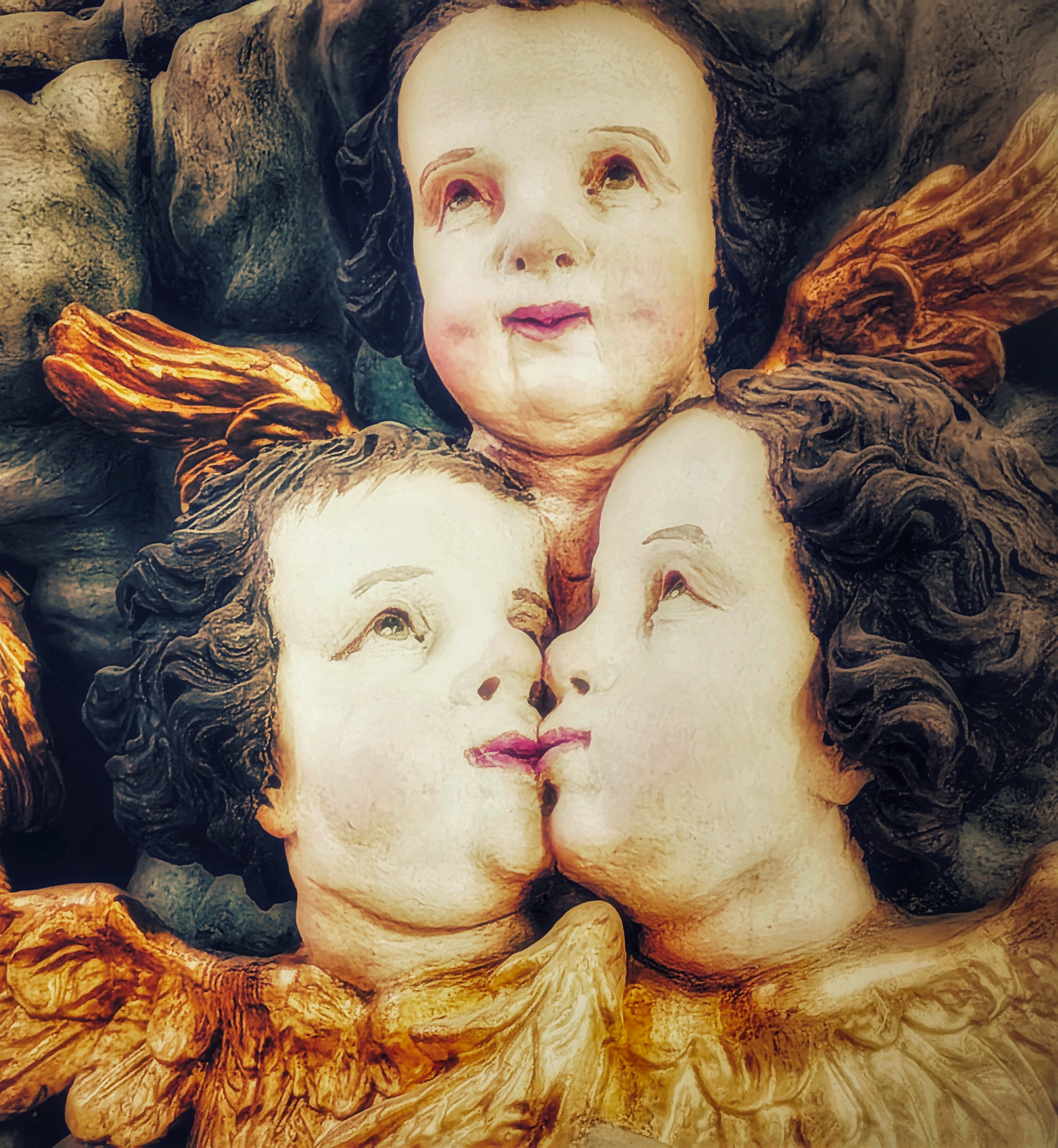
Such buildings can easily become a list of dates. Looking closely changes that. Crowned heads beneath a painted date, a solemn face, a cluster of cherubs: the scale becomes human again. Even in a church, one need not remain entirely solemn.


These small expressions pleased me. They interrupt the grandeur and remind us of the hands, and perhaps the temperaments, behind it. Then another door takes us outside of the church.


The Border Once More
By late afternoon, the light over the Thaya had softened. After so many enclosed spaces, carved faces and weathered doors, the open valley was a good place to end the walk.

Then we crossed the border again, this time in the other direction. It had been only a day trip. A few of those doors stayed with me.

Footnotes
[1] On the monarchy’s two halves and Moravia’s position after 1867, see The World of the Habsburgs: Cisleithania–Transleithania.
[2] The South Moravian Museum’s history of St Catherine’s Rotunda documents its origins, changing uses and restoration. Its Czech account describes the painted Přemyslid cycle.
[3] Building dates and church history follow the Znojmo parish’s historical overview.
Related Articles
Doors Between Worlds – China and Austria I Afterthoughts on the Yunnan Journey I
Light as State of Being
Explore Art & Writing
Art Portfolio → Featured Artworks → Arts & Philosophy Journal → All Articles
Explore Asian Art Essays for writing on Chinese painting, calligraphy, aesthetics and art history.
Available Artworks
Original works are available on FriedrichZettl.com and Saatchi Art


Leave a Reply