
And a few drawings after the encounter.
The Gift of the Green Snake may sound like a clickbait headline again, but it carries a ring of truth. Who is this Green Snake, and did I truly receive a gift from her?
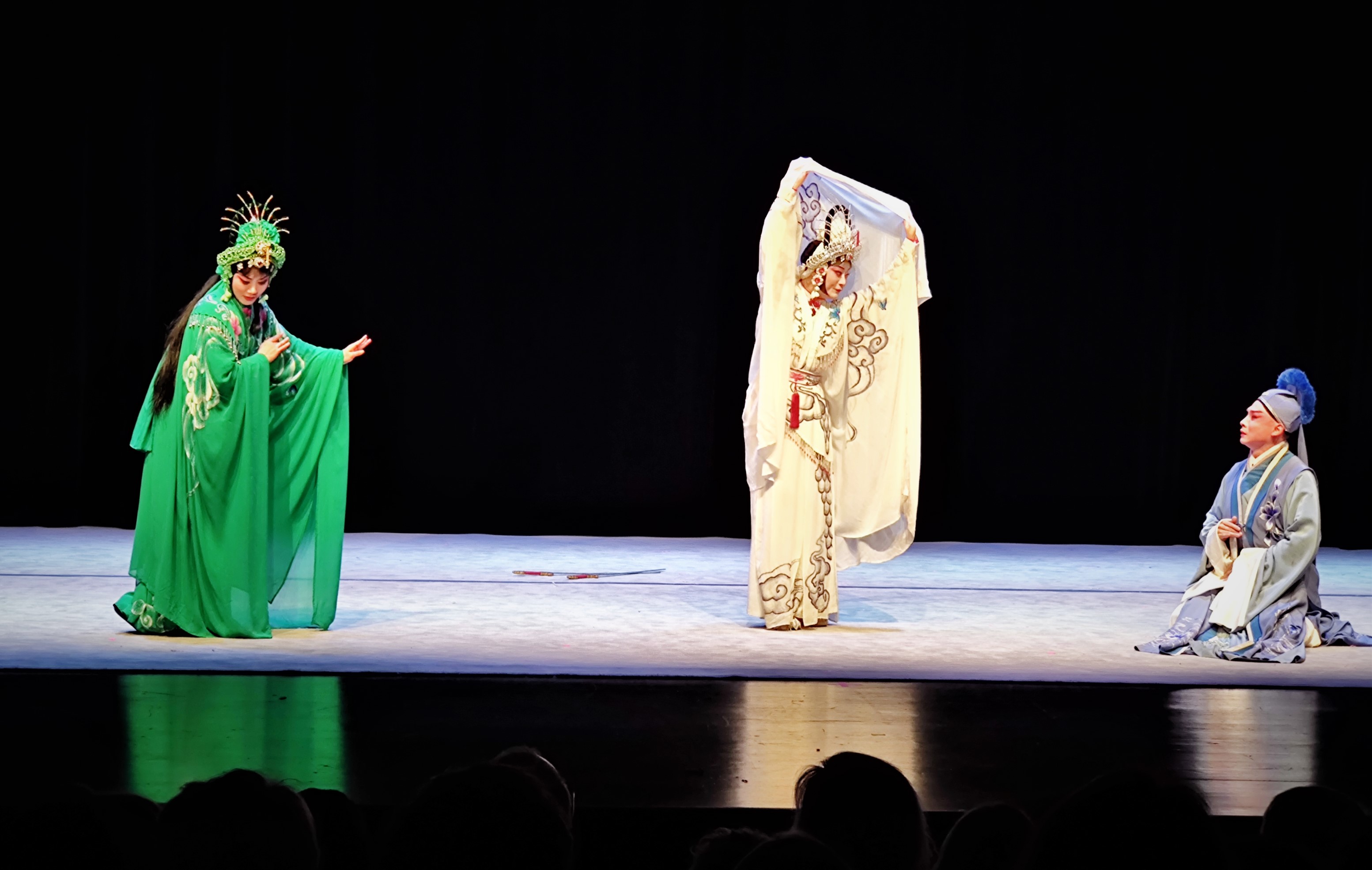
Two weeks ago, I attended the opening of a Chinese opera festival in Vienna. I had low expectations, as my recent encounters with Chinese opera through televised broadcasts left me underwhelmed. However, this performance was a revelation. It was a display of remarkable talent and perfection.
I last watched this opera 40 years ago, when it was performed as a Peking Opera. This time, it took the form of a Wu Opera. Decades ago, I often sketched scenes during Peking Opera shows, which were just minutes away from the academy where I lived. Back then, I often visited several performances each week. One memory that stands out involves an amusing tradition. As I sketched, sunflower seed husks flew past me. Nibbling on sunflower seeds and casually spitting out the husks in wide arcs was, and likely still is, a cherished custom of opera-goers in China. [sketches from the Peking Opera]

Now, about the Green Snake. She gifted me a Chinese lucky knot. The material value of the gift doesn’t matter. What made this moment unforgettable was her gesture. Stepping off the stage with several knots, she handed out a few before walking directly to me in the front row. She smiled warmly, a smile that could melt the coldest ice. That simple act brought back a flood of memories from my time in Beijing. Unlike many Western artists, stars of Chinese opera exude humility. Displaying airs or arrogance is considered vulgar and inappropriate.

The Legend of the White Snake in Chinese Opera Splendor
The tale of the White Snake takes center stage in the dazzling world of Chinese opera. The Legend of the White Snake (白蛇傳 – Bái Shé Zhuàn), the thousand-year-old White Snake and her loyal companion and maid Green Snake, remains one of China’s most cherished folk tales. It weaves a mesmerizing narrative of love, magic, tragedy, and the eternal struggle between humanity and the supernatural. Where better to experience this dramatic saga than on the vivid, colorful stage of traditional Chinese opera?
Chinese opera is far more than a performance of songs. It’s a captivating synthesis of music, singing, dance, acrobatics, acting, and intricate costumes. Stylized movements, symbolic face makeup, and emotionally charged storylines immerse the audience in a world rich with cultural depth. With over 400 regional opera styles across China, each boasts unique musical and stylistic signatures. Among the most renowned are the graceful Peking Opera, the melodic Yue Opera, and the dynamic Cantonese Opera.
Chinese Opera: A Timeless Multitasking Art
Performers in Chinese opera exhibit unparalleled mastery of stylized body language, expressing emotions and character traits through precise gestures, expressive gazes, and fluid movements. Acrobatic elements heighten the energy of fight scenes, while stunning costumes and intricate face makeup define characters’ identities and social status, adding depth to the visual storytelling.
A Slow-Motion Glimpse into The White Snake
The intricate acrobatics of Chinese opera often leave audiences in awe. During a performance, I captured a scene in slow motion, highlighting the extraordinary body control of the actors, particularly in one sequence. Themes of flying or floating hold a special resonance in my abstract work, making these scenes especially fascinating. How do performers create the illusion of flight on stage without any props? The answer lies in their unparalleled skill and artistic ingenuity.
Artistic Reflections Inspired by the Opera Encounter
The captivating performance, reconnecting with old friends, and the unique atmosphere sparked a creative idea. That very evening, I envisioned a new art series inspired by the concept of the stage in its broadest sense. Below, I share a few of my drawings from this exploration. A follow-up article will delve deeper into this theme.
The Stage as a World of Experience
The initial drawings continue the white-on-black technique introduced in my previous article [Goodbye to The Winter]. The stage and its vibrant energy create a world we can fully immerse ourselves in, especially during exceptional performances. Its actors, music, and lighting captivate us, inviting us to become a part of the unfolding narrative. These elements form the foundation of my abstract exercises on this fascinating subject.

Variation of the previous work with the creation of more space.

In my initial works, I focused on conveying these impressions with a relatively flat approach and broad strokes. This technique effectively emphasized the interplay of light and the physical presence of the manifestations, bringing their essence to life.

Later in my creative process, I stepped back from the bold expressionist style of painting. Instead, I focused on creating more room for imagination, allowing the viewer to interpret and immerse themselves in the work more deeply.

The Evolution of “Colors Is Play”
As the creative process unfolded, Colors is Play began to evolve. Initially, its expressions grew bolder and more dynamic again. Gradually, as the pages turned, the work adopted a more poetic and narrative quality. The continuation of this transformation will be explored in the next article.

Among China’s many operatic traditions, Peking Opera stands out for its vibrant colors and dramatic flair. However, my goal was not to replicate its visual details but to convey its essence—the spirit that breathes life into this mesmerizing art form.

In addition to my work on the Chinese opera stage, I experimented with applying my technique to its Western counterpart. These attempts offered a fascinating opportunity to see how the method adapts and evolves in a different cultural context.

Related articles: sketches-from-the-peking-opera I Goodbye to the Winter I the-magic-sea-project
Explore Art & Writing
Art Portfolio → Featured Artworks → Arts & Philosophy Journal → All Articles
Explore Asian Art Essays for writing on Chinese painting, calligraphy, aesthetics and art history.
Available Artworks
Original works are available on FriedrichZettl.com and Saatchi Art


Leave a Reply