
Faces at the Edge of Abstraction
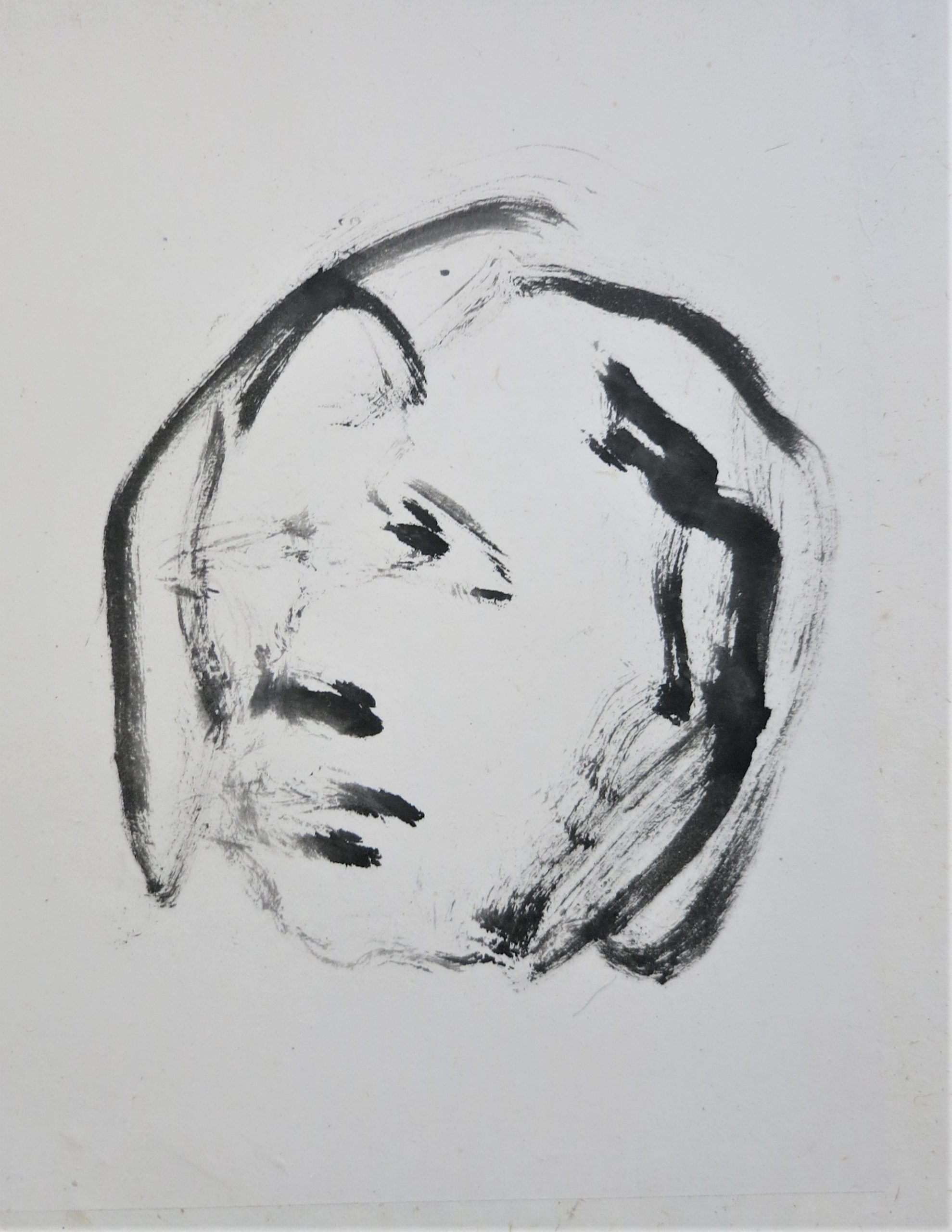
These ink portraits, dating from around 1990–1992, bring the face close to abstraction. Friedrich Zettl uses sparse lines, broken marks and diluted colour to suggest a presence without fully modelling the head. Features remain recognisable, but their relation to the surrounding paper becomes increasingly open.
1. Calligraphy as Image
The Face as Brushwork
The first group shows how much can be carried by a few marks. In Another Death, dry, interrupted strokes describe a sharply tilted head. The following portrait places a pale face above a broad red passage, while another concentrates the darker ink around one side of the face.


2. The Meditative Gaze
The more reduced portraits leave the skin largely unpainted. A dark curve can establish the hair or jaw; small accents suggest the eyes and mouth. These are distinct individuals and imagined presences rather than illustrations of a single philosophical doctrine.


3. Beyond the Face
The Final Abstraction
The later examples add blue and red to the black brushwork. In the portrait with blossoms, red spots and a flowering branch become part of the face’s setting. Elsewhere, bright cheeks interrupt the loose dark outline.


A Transition in the Portrait Archive
This series concludes the six-part historical portrait selection. The shift towards less descriptive marks can also be followed in Gestural Calligraphy and the Dreamscapes.
Related articles: Deconstructing the Image | Gestural Calligraphy | Dreamscapes
Explore Art & Writing
Art Portfolio → Featured Artworks → Arts & Philosophy Journal → All Articles
Explore Asian Art Essays for writing on Chinese painting, calligraphy, aesthetics and art history.
Available Artworks
Original works are available on FriedrichZettl.com and Saatchi Art