
From Copying to Construction
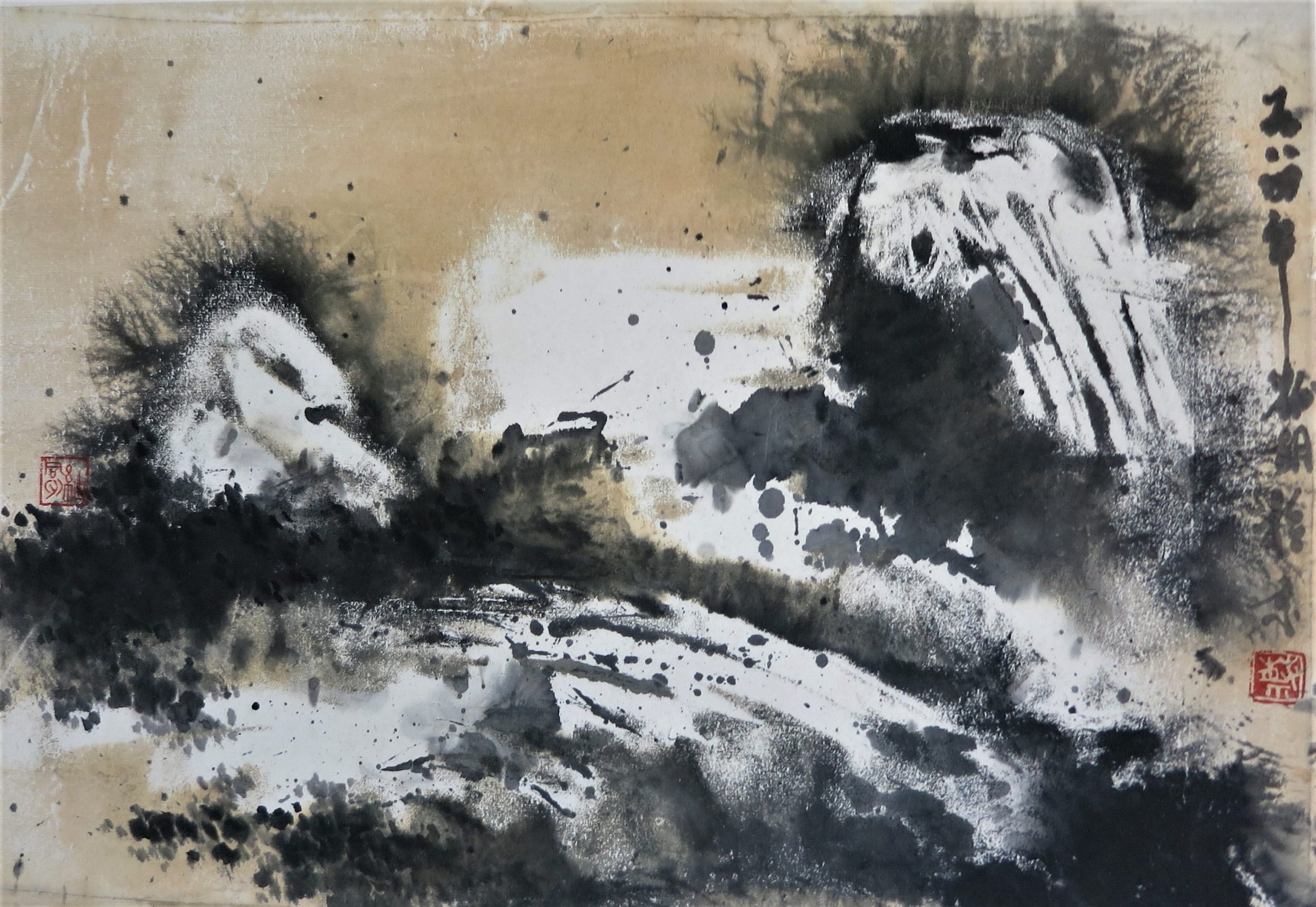
In these landscapes from 1985–1989, Friedrich Zettl moves from studies after existing models towards more independent, structural compositions. Rock masses, trees and open paper are reorganised through angular strokes, broad washes and deliberately abbreviated forms.
1. The Geometry of Rocks (Constructivism)
Strokes as Structure
The first examples retain recognisable landscape elements while loosening their connections. Dark marks gather around small light areas, and mountain-like masses are held apart by pale passages. The brushwork can suggest a ridge without tracing its complete outline.


2. The Art of Subtraction (Minimalism)
The Role of Open Paper
The more reduced works leave large areas lightly touched. A few vertical strokes establish a cliff or a tree group; irregular white shapes interrupt dark forms on a pink ground. The open paper becomes part of the composition’s structure.


3. Writing the Landscape (Xieyi)
Gesture and Definition
Later examples vary the density again. A strongly brushed tree-and-rock arrangement contrasts with a darker mountain rising behind foreground pines. A layered horizontal landscape brings finer marks and muted colour back into the image.


Towards Independent Compositions
The series connects the earlier Chinese landscape studies with later approaches to Calligraphic Constructivism. The link lies in how separate strokes establish weight, support and interval.
Related articles: The Chinese Turn | The Beauty of Blackness | Calligraphic Constructivism
Explore Art & Writing
Art Portfolio → Featured Artworks → Arts & Philosophy Journal → All Articles
Explore Asian Art Essays for writing on Chinese painting, calligraphy, aesthetics and art history.
Available Artworks
Original works are available on FriedrichZettl.com and Saatchi Art