
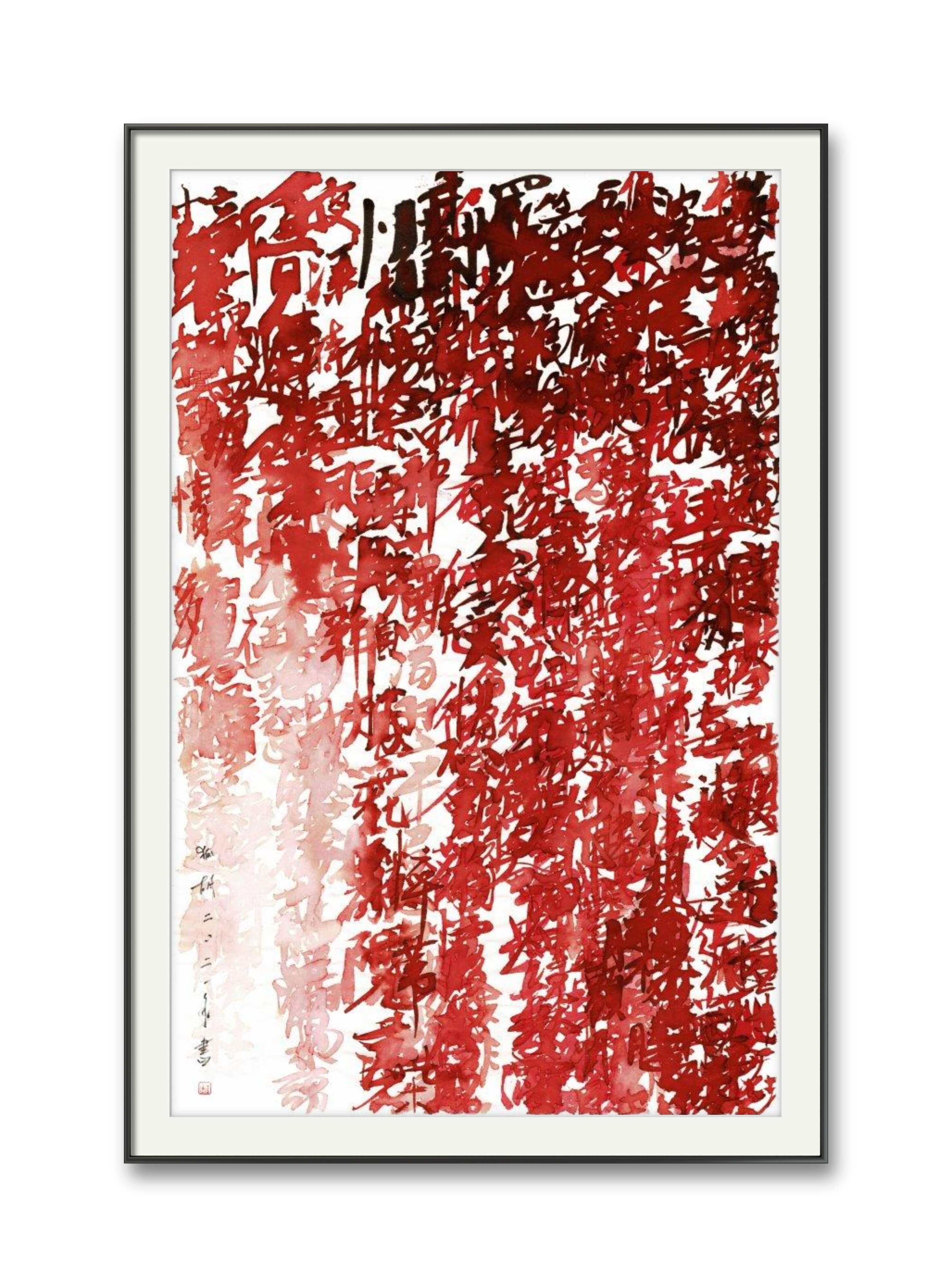
Painted Calligraphy (绘书 (huìshū)) is my personal artistic approach that combines traditional Chinese calligraphy (书法 shūfǎ), contemporary ink painting and layered writing. Instead of writing a text only once, poems, classical texts and philosophical reflections are repeatedly written over one another until language gradually transforms into abstract visual structure.
The series is rooted in decades of research into Chinese painting and calligraphy, culminating in my doctoral dissertation on the development of →xieyi painting (写意画).
The Origin: A Beijing Memory
The concept of this painted calligraphy series was born during my time as the first European student at the Central Academy of Fine Arts in Beijing (北京中央美术学院, late 1970s). Materials were scarce, and poverty was palpable. One of my classmates, Gǔ, could not afford new paper for her daily calligraphy practice.
Instead of discarding sheets, she wrote over the same paper day after day. She started with faint ink (watery gray) and gradually moved to darker shades. Over weeks, the paper turned into a black, impenetrable surface of countless overlapping characters. When she gifted me one of these sheets, I realized the artistic power of this accidental aesthetic. It reminded me of the Western “overpaintings” by Arnulf Rainer, yet it was rooted in Chinese discipline.
Monochrome Series – Black Zen
In the monochrome works, I focus on the interplay of black ink and white space. These pieces are often based on Zen koans or simple poems. The repeated writing creates a sense of depth and vibration. It is a process of “writing until silence”—where the noise of the individual words merges into a unified, quiet image.


Monochrome Painted Calligraphy Video
Multicolor Calligraphy Series
Order in Chaos: The multicolor painted calligraphy series introduces a different challenge: managing complexity. Here, I often use oil paints or colored inks on canvas and rice paper. The risk with overlays is visual chaos. Therefore, these works demand extreme discipline. I use color to structure the layers, ensuring that despite the density, a meditative harmony prevails. Often based on Haiku poetry, these works translate the brevity of the poem into the visual density of the painting.


A Meditative Practice
This technique for the painted calligraphy series is an exercise in letting go. By writing the same text repeatedly, the mind enters a state of flow. If you are interested in the philosophical background of this approach, I recommend reading my articles on Asian Art Theories.


Explore Friedrich Zettl’s Art and Ideas→
Art Portfolio → Asian Art Essays → Journal → Articles Archive